

Central North Carlina is forecasted to have temperatures in
the 90s this week, which won’t do anything to help the statewide drought.
Raleigh is experiencing its driest year on record so far.
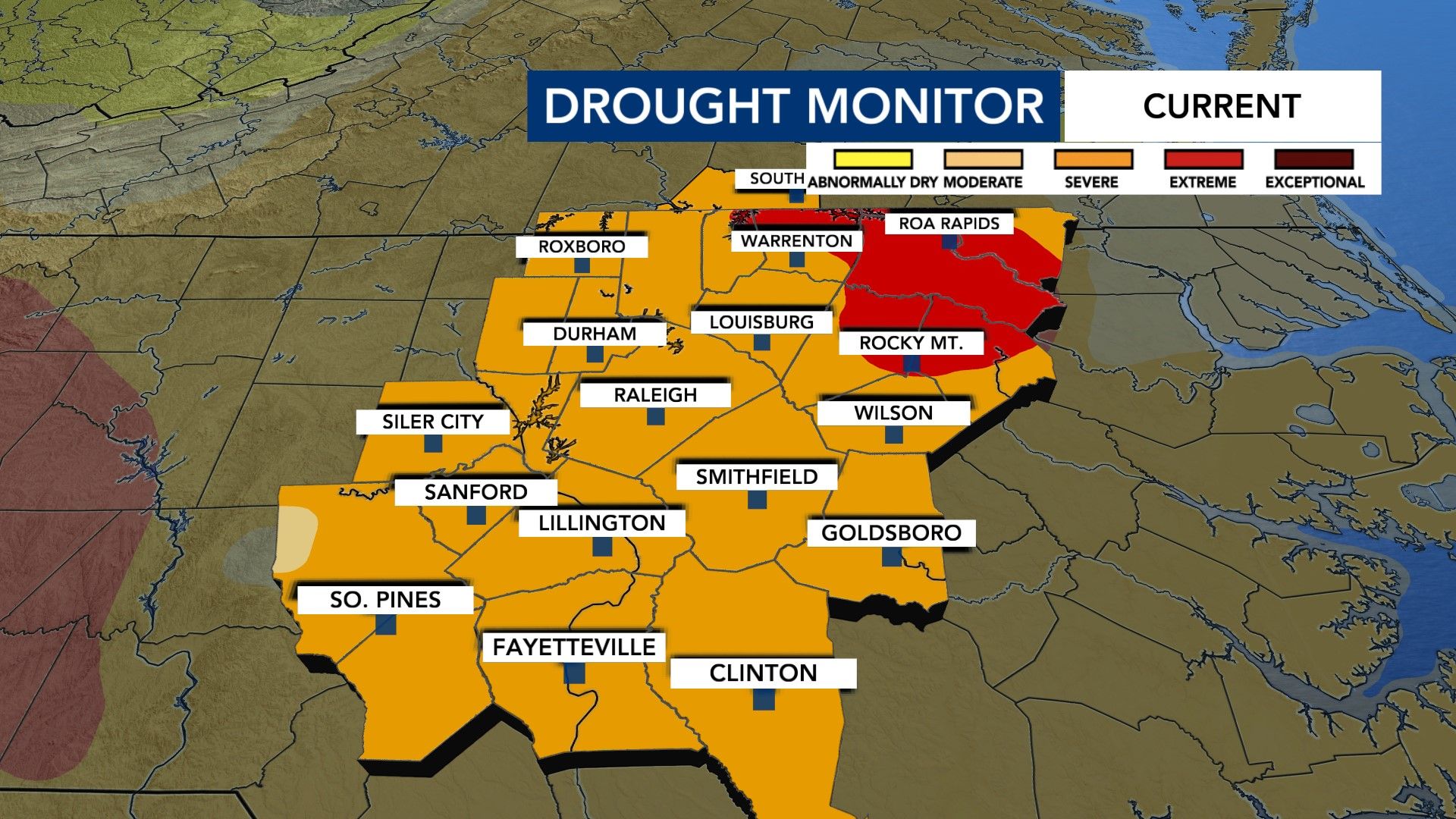
Data shows 77% of the state is in a severe drought and 17% is in an extreme
drought.
Jackie Thompson Sr. started helping his dad in 1957 on a
farm near the line between the towns of Rolesville and Wake Forest. He still
grows tobacco, wheat and soybeans. He said this year’s powdery soil isn’t going
to help.
“We’re toying with a situation we haven’t seen since about
1977,” Thompson said.
Thompson said the 90-degree temperatures will pull whatever
moisture is left from the field, where he’ll plant tobacco. His pond is so low,
he’ll only have enough water to save his wheat or irrigate a different
field.
“It’s a really concerning time right now,” Thompson said. “[If]
a farmer doesn’t pray, he doesn’t need to be farming.”
Related: Drought conditions worsening in NC as 2026 breaks record for driest year at RDU so far
According to the National Integrated Drought Information
System, North Carolina did not get more than 1 inch compared to the roughly 3 inches of
precipitation it normally does in February. Also, North Carolina did not get the nearly 3 inches it
usually does in January.
A drought not only reduces the quantity of water. It can
also lower the quality of the water, according to Thompson.
Thompson said a drought can alter carbon and nutrient levels
in the soil and create an insect outbreak. He said he tries to control what he
can by starting his tobacco in a 300-foot greenhouse.
Thompson said he relies on a bud that will grow to between
39 to 42 inches tall.
“This is the moneymaker in North Carolina,” Thompson said.