
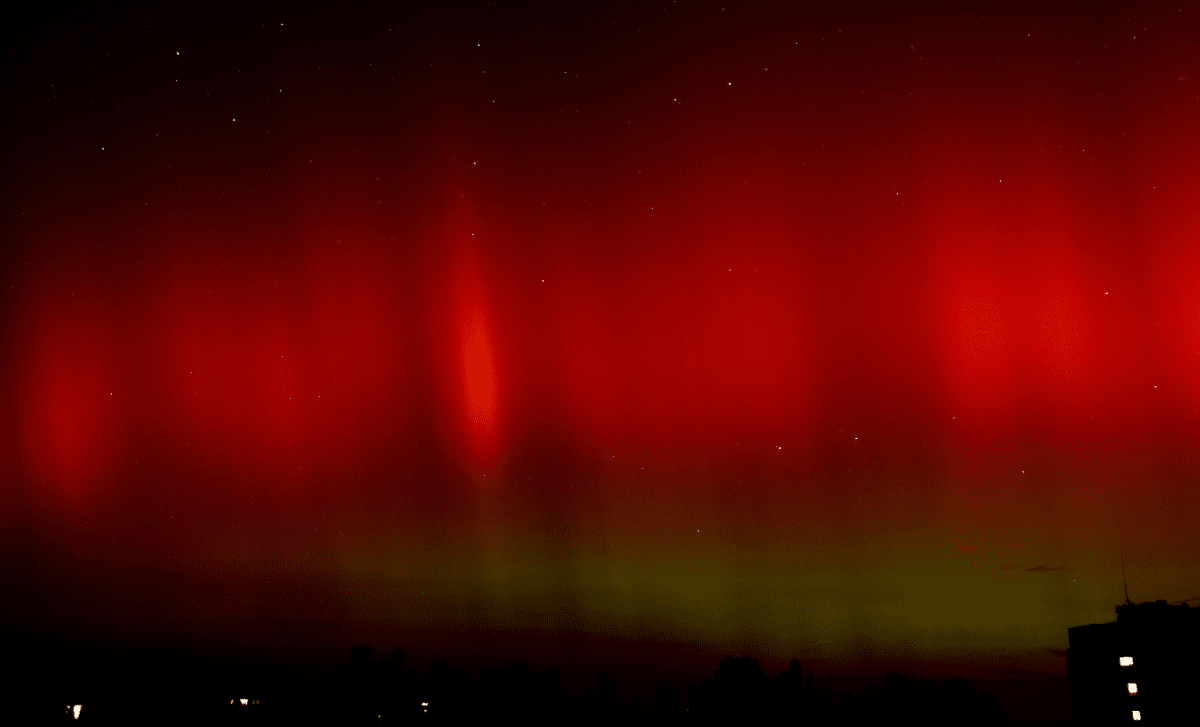
More than 800 years ago, a poet in medieval Japan observed strange “red lights in the northern sky,” an account long thought to describe an aurora caused by a solar storm. Now, thanks to cutting-edge research, scientists have confirmed that the event was indeed a powerful solar storm. In a study published in Proceedings of the Japan Academy, Series B on April 10, 2026, researchers from the Okinawa Institute of Science and Technology (OIST) have used modern technology to confirm this ancient solar event, shedding new light on the Sun’s behavior during the medieval period and its potential risks to today’s technology.
Unearthing the Solar Storms of the Past
For centuries, ancient texts have hinted at solar activity that reached Earth with enough intensity to influence the sky itself. One such event, recorded in 1204 CE by the Japanese poet Fujiwara no Teika, described “red lights in the northern sky” over Kyoto, a possible reference to the auroras often caused by solar storms. Thanks to a modern breakthrough in solar research, this observation now aligns with a confirmed solar proton event (SPE) from the same period.
Researchers from the Okinawa Institute of Science and Technology (OIST) employed an innovative technique combining historical records with tree-ring analysis to reconstruct solar activity dating back to the medieval period. Their method reveals that the solar storm described by Teika was likely part of a broader, highly active solar cycle during the late 12th century.
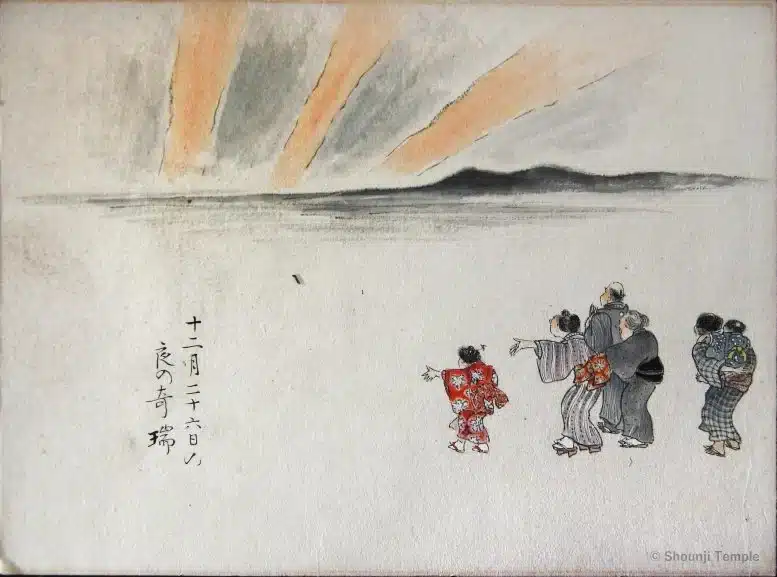 A Japanese auroral drawing showing an observation at Okazaki on 4 February 1872, as reproduced with courtesy of Shounji Temple (contrast enhanced).
Credit: Shounji Temple
Advancing Solar Storm Detection with New Technology
In this new study, published in Proceedings of the Japan Academy, Series B, the OIST team, led by Professor Hiroko Miyahara, made an important leap in solar research. They focused not just on the extreme solar events that have been the subject of previous studies but also on “sub-extreme” solar proton events, less powerful but still hazardous storms that occur more frequently. According to Miyahara,
“Previous studies on historical SPEs have focused on rare, extremely powerful events. Our paper provides a basis for detecting sub-extreme SPEs—events that occur more frequently and are around 10-30% of the size of the most extreme cases, but still hazardous.”
This finding opens new doors for understanding the frequency and impact of solar storms throughout history, which are crucial for assessing the risks posed to modern infrastructure, including satellites and space missions.
“Sub-extreme SPEs are more challenging to detect, but our method now allows us to efficiently identify them and better understand the conditions under which they are more likely to occur,” Miyahara added.
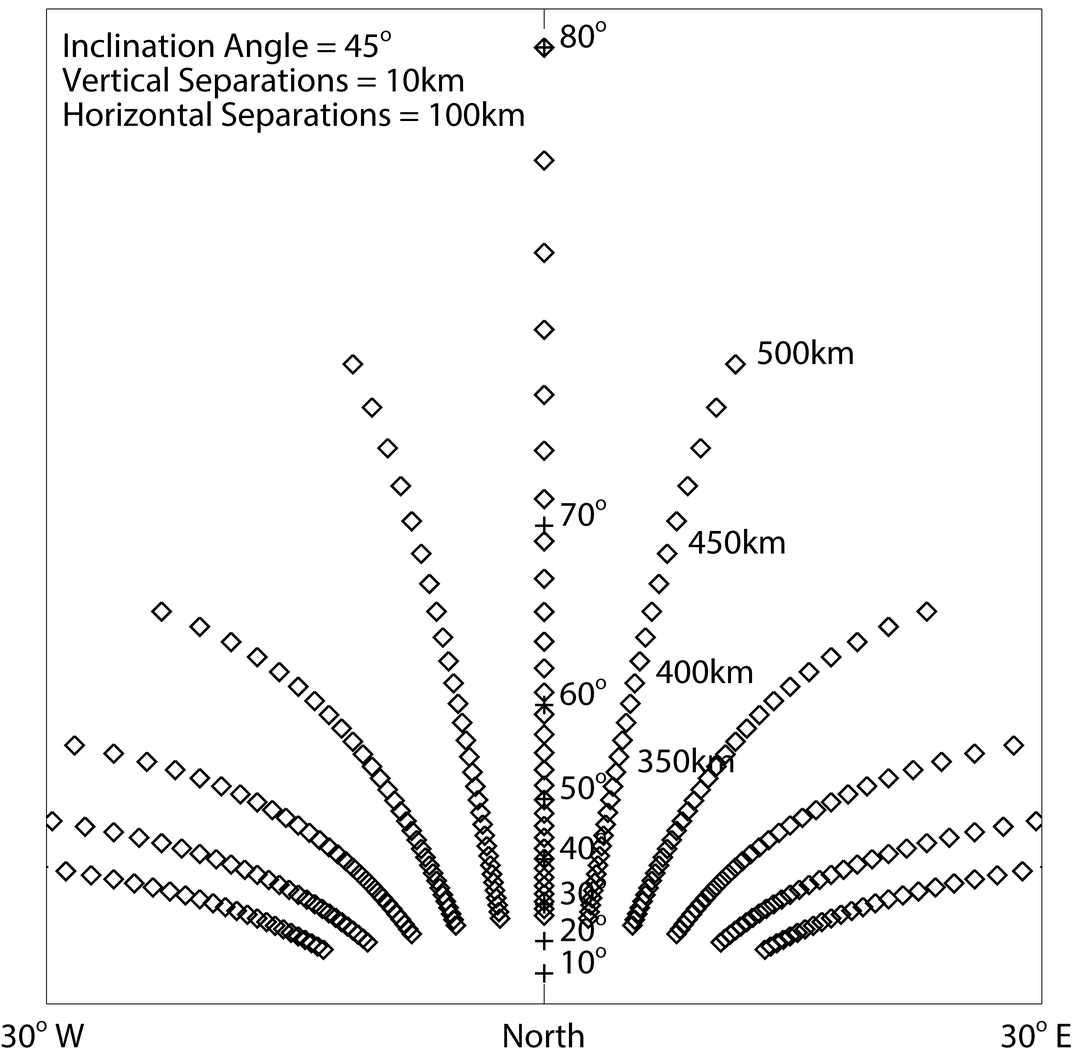 A reconstructed model of the geometry of the aurora Kataoka R and Iwahashi K, Space Weather, 2017
What Ancient Records Reveal About the Sun’s Cycles
The team’s method not only identified solar storms but also helped reconstruct the solar cycles of the medieval period. Using carbon-14 analysis of preserved trees, they discovered that the solar cycle back then was much shorter, only seven to eight years, compared to today’s eleven-year cycle.
“The high-precision data not only allowed us to accurately date sub-extreme solar proton events, but it also lets us clearly reconstruct the solar cycles of the period,” said Miyahara.
This shorter cycle hints at a period of much greater solar activity, which could have influenced the frequency of solar storms and auroras. The data also revealed that the solar storm identified in the study occurred at the peak of this cycle, a time of heightened solar activity.
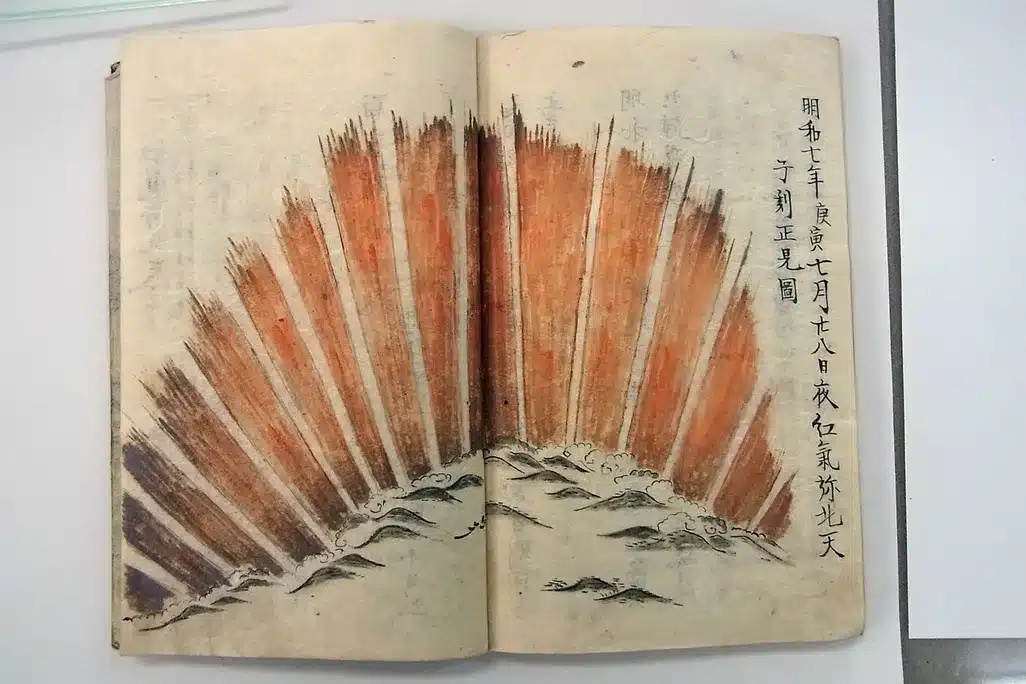 A painting of an aurora seen in Japan on September 17, 1770, in the book “Seikai” Matsusaka City, Mie Prefecture
A New Approach to Space Weather
This study emphasizes the importance of combining historical records with advanced scientific techniques to better understand the Sun’s behavior across millennia. Miyahara concluded,
“Historical literature provides a candidate time window, and dendroclimatology enables direct intercomparison between detected SPE and reports of sunspots and auroras recorded in literature. Integrated approaches like these are necessary to accurately reconstruct past solar activity, helping us better understand the characteristics of extreme space weather.”
Looking ahead, the research team is keen to further explore the conditions that led to unexpected solar events, such as prolonged low-latitude auroras that appear to correlate with solar cycle minima. “This is unexpected,” Miyahara says, “and we’re excited to look further into what solar conditions could cause this.”