
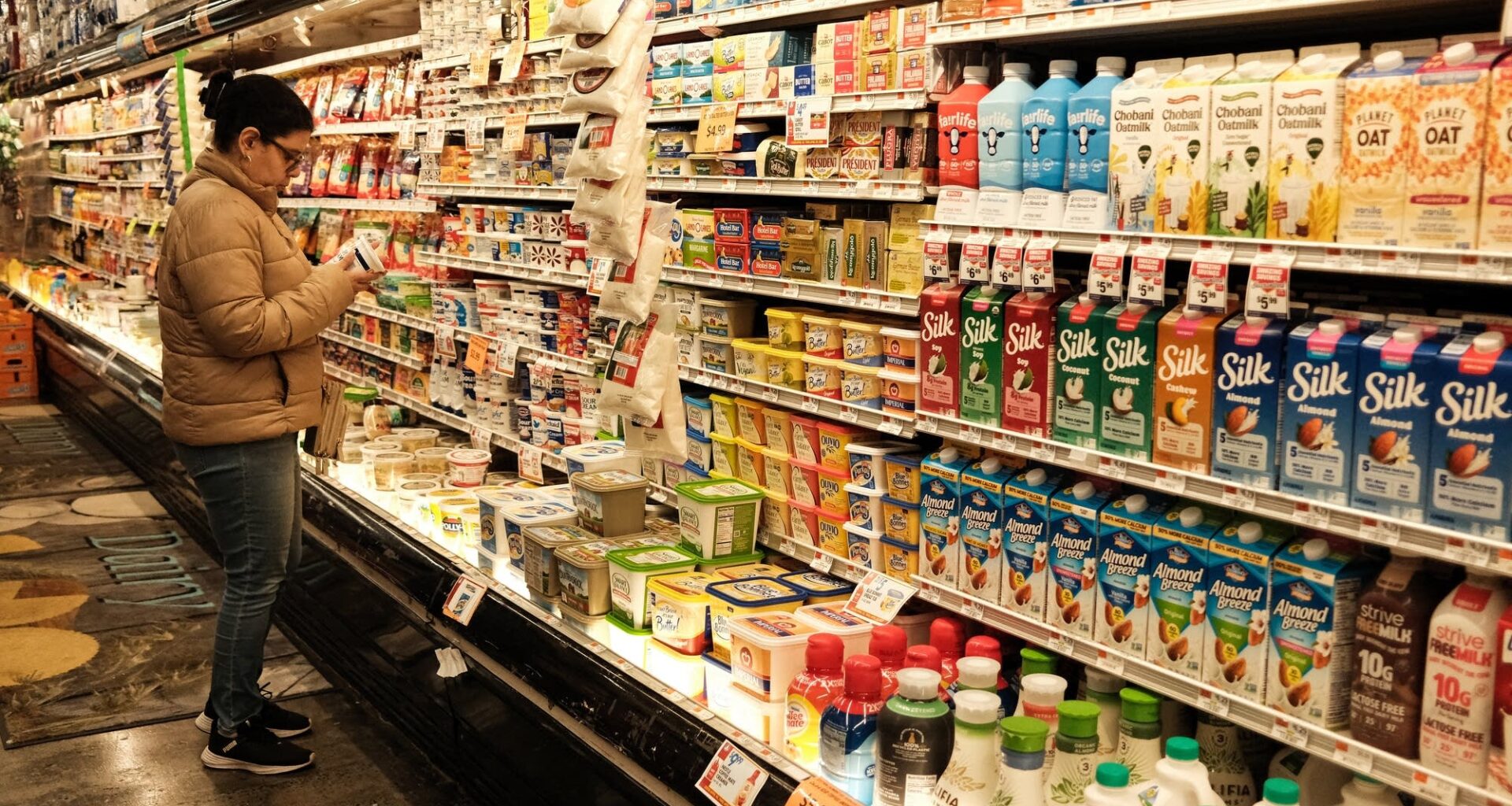
Inflation jumped in March — 0.9% from the month before and 3.3% year-over-year, according to the latest consumer price index. Energy prices were largely to blame for overall price growth.
One category that bucked the trend and saw a little inflation slowdown is an important one: food at home. Grocery inflation came in at 1.9% year-over-year.
There’s been a lot of turmoil among specific food commodities in recent years. Matt Hamory, managing director at AlixPartners, said there’s been heat-damaged coffee crops, shrinking cattle herds, and disease. “If you think back to what was happening a year ago, really remember then we had the wake of avian flu,” he said.
The good news is egg farms fared better this winter, which has egg prices down nearly 45% year-over-year, according to the March CPI. Other categories that saw some relief include butter and cheese.
Despite those drops, groceries were still up 1.9%.
“All of this conversation about inflation still involves prices going up just slower than they might otherwise be or had been,” said Hamory.
It means there are categories rising enough to more than make up for the lower price of eggs. Take tomatoes, which cost 22% more than they did a year ago.
“There’s little question that tomatoes is sort of a case study in the ongoing impact of the current administration’s tariffs,” said Ricky Volpe, an agriculture economist at California Polytechnic State University, San Luis Obispo.
There’s a 17% tax on tomatoes imported from Mexico. It’s one tariff that was not struck down by the Supreme Court and remains in place.
Plus, Volpe called the vegetable-slash-fruit a sort of inflationary perfect storm.
“Tomatoes are labor intensive, they’re very energy intensive, they require transportation, they’re heavy, they’re spacious. And all three of those, labor, energy and transportation, are current sort of long term structural pain points in the food supply chains,” he said.
Transportation and energy will become increasingly key as diesel prices climb because of the war in the Middle East.
“The canary in the coal mine here are really the perishable food products,” said David Ortega is a professor of food economics at Michigan State University.
They are the least processed, require the most travel, and are time sensitive. Ortega said any food that lives on the perimeter of the grocery store will see price hikes first.
“That’s going to trickle down the supply chain here in the coming months,” he said.
As of March, the U.S. Department of Agriculture forecasted that in 2026 the cost of food at home will increase by more than 3%.
Related Topics