
Welcome to How They Pulled It Off, where we take a close look at one particularly challenging aspect of a home design and get the nitty-gritty details about how it became a reality.
There are full-scale mockups, and then there are full-scale mockups.
On the beaches of Sanibel Island, Florida, architects Grace La and James Dallman of La Dallman got to test their hurricane-proof design of a house in a very real way. During construction, the 3,700-square-foot plan was hit by three separate hurricanes over the course of two years—including Hurricane Ian, a deadly category five storm that devastated the Florida gulf coast in 2022. “Our contractor’s shipping container full of equipment floated away during Ian,” La said. “But the house remained unscathed.”
The clients, a family from the upper Midwest, spent spring break on Sanibel for many years. Wanting a retreat there, they brought on La Dallman to create a two-story residence that combined aesthetic references from Switzerland, where they had lived for work, with strategies to future-proof it from sometimes harsh conditions on a vulnerable shoreline, including a fortified foundation, “breakaway” walls, and piers to raise the first floor.
Architecture firm La Dallman designed a vacation home on Sanibel Island, Florida, to withstand hurricanes and flooding. The foundation includes piles driven nearly 40 feet into the ground.
These strategies were key to designing for the difficult site, but due to extreme flooding risks of the hurricane-prone region, codes and regulations under several jurisdictions dictated the design, too: the island mandates a 35-foot height restriction; FEMA requires that the lowest floor be 15 feet above sea level; and the HOA mandates a pitched roof. “The zoning and flood plain constraints make it a very tight volume to work within,” Dallman says. “The house has to be raised to manage the inevitable flooding that is going to happen, but we had to keep the height down.”
Because of this web of rules, most homes on the street follow a simple formula: a raised, single-level house with a sloped roof. However, La Dallman was determined to deliver a two-story residence within the limitations that could withstand any storm that comes its way. Here’s how they did it.
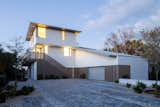
The living spaces are elevated 16 feet above ground level, one of FEMA’s requirements for homes in the area.
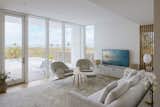
The living space takes in views of the water through special glass, designed to temper light at night so as not to lure baby turtles in the wrong direction—an issue with beachfront properties in Florida.
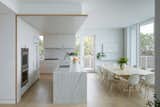
The interiors play with compression and release, as with the kitchen and dining area.
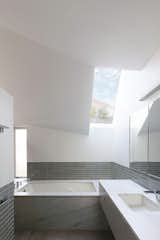
To maintain privacy from neighbors on either side of the home while still bringing in light, La Dallman inserted skylights, as in the primary bath.
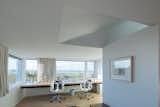
Some homes in the neighborhood are one story, since that makes it easier to stay under the island’s 35-foot height limit. By creating a low-profile roof, La Dallman was able to include a second level.
How they pulled it off: A hurricane-proof home in coastal FloridaStrong structure, breakaway walls: To fortify the home’s structure against increasingly frequent storm surges, La Dallman drove nearly 40-foot-deep piles into the limestone bedrock. These piers, designed after the legs of local sandpiper birds, also lift the house’s living spaces 16 feet above the flood line. “The house takes its nickname, the Wave Chasing House, from these birds,” La Dallman project manager Belle Delatour says. “Like the house, they survive heavy waves with their slender legs.” The reinforced piers and shear walls, made of concrete masonry units, or CMU, are arranged to allow water through, and a “soft skirt” of nonstructural walls are designed to breakaway under force, creating a first line of defense for the foundation. These skirts are made from metal and recycled plastic, in addition to CMU. A unique shape for a unique site: La Dallman designed the house like a nautilus, spiraling outward. Its low-pitched roof has a slender profile that reduces wind loads, which can reach 150 miles per hour. Seeking a precise, contemporary aesthetic that respected HOA limits on “white box” modernism while still achieving performance under duress, the designers found a solution at the roofline. “By embedding structural roof extensions into the overhangs, we eliminated lintels and gutters, allowing windows to meet the eaves directly,” La says. “These details create a seamless look engineered for tropical storms.” Landscape stewardship: The landscaping is planted with native, resilient species that restore the coastal ecology of the island. In areas like Sanibel, manicured lawns are difficult to replant after seawater flooding. The Nautilus House’s xeriscaped plantings—such as gumbo-limbos and sea grapes—reduce erosion, and require less water since they are native. Another regional problem is disoriented migratory baby turtles that get drawn off course by light glinting off of homes’ glass. To combat this, exterior lighting is minimized and sea-facing windows include a special “turtle glass” that reduces light transmission. 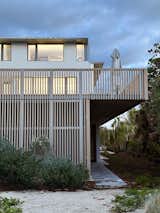
La Dallman created “breakaway” walls made of metal and recycled plastic that are designed to give under the force of a storm, providing protection to the foundation.
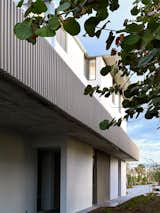
Structural roof extensions carry the roofline out over the home, eliminating the need for gutters or lintels.
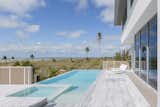
The deck and pool off the living area are extremely exposed to the setting.
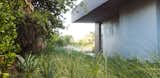
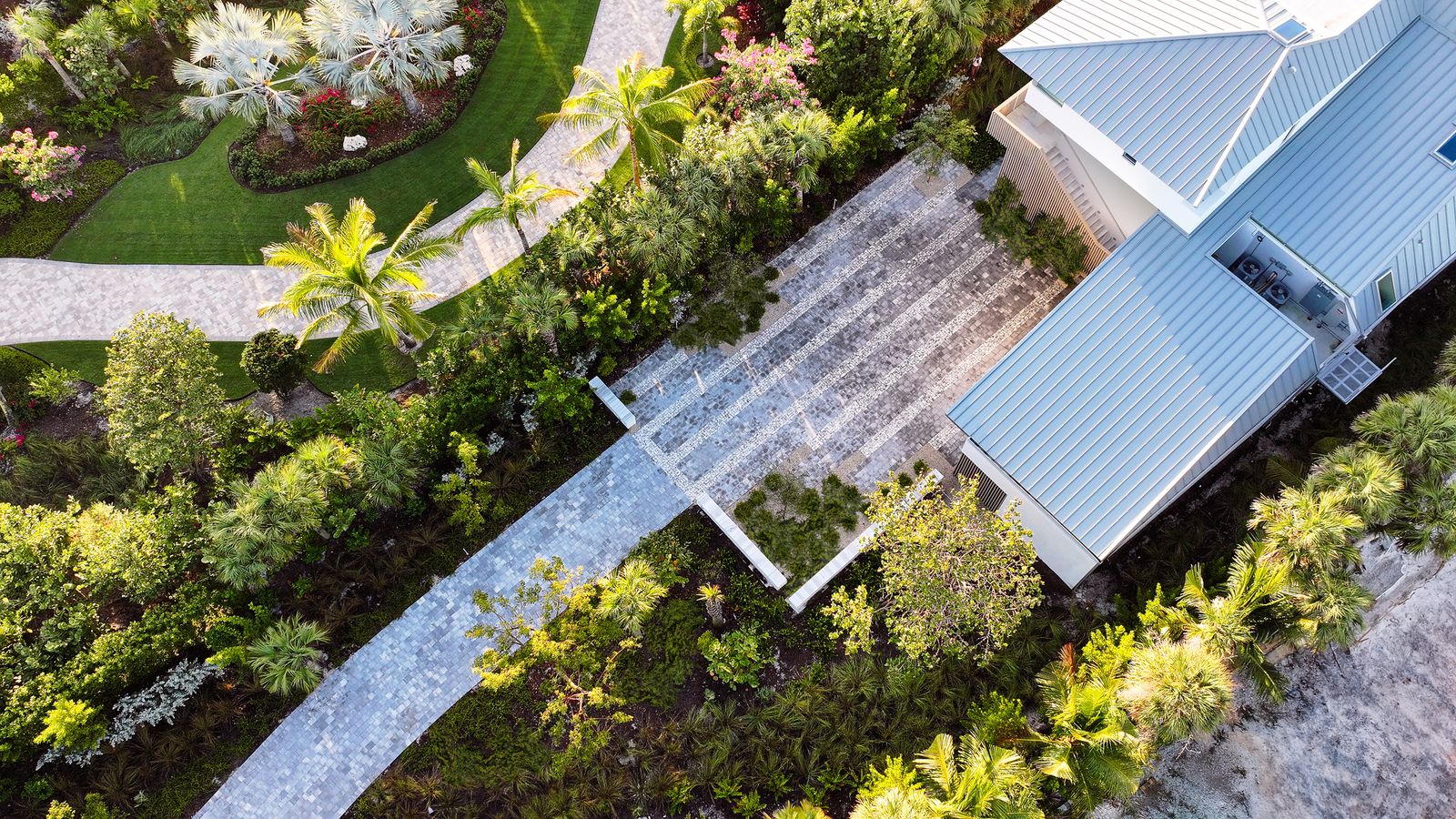
Native species planted around the house are easier to maintain than grass, restore the local ecology, and don’t require excessive watering.
The Nautilus House is at least one example of how we might think about continuing to build along sensitive shorelines in an increasingly climate-disaster prone future. “We hope it can be a case study in how details, natural light, and ecological considerations can contribute to the discussion around coastal resilience, even at a modest scale,” Dallman says.
Top photo courtesy of Coastal Vista
—
Coastal Engineering: Humiston and Moore