
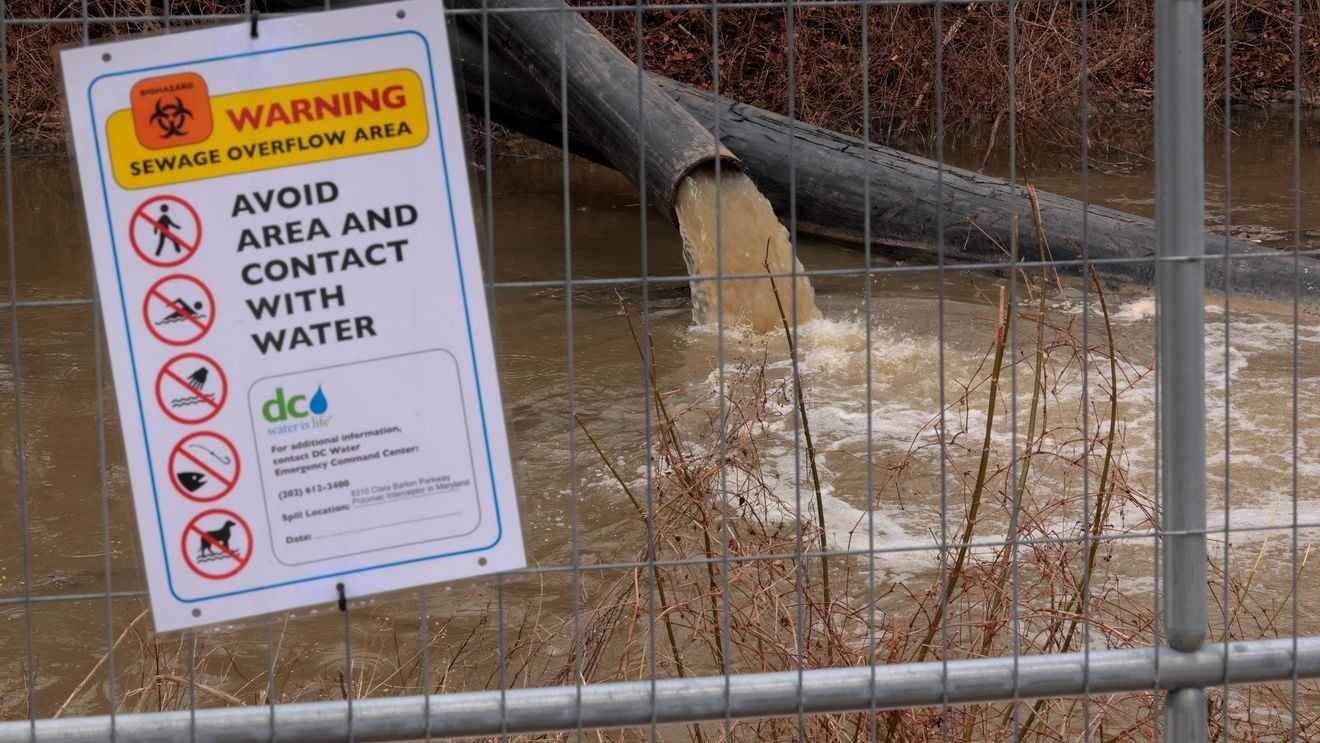
WASHINGTON (7News) — The Potomac River has been named the most endangered river in the United States, according to a new report from American Rivers, citing a massive sewage spill and growing concerns over data center development.
The designation follows a historic incident earlier this year in which more than 250 million gallons of raw sewage spilled into the river, raising alarms about water quality and public health.
Pat Calvert, Virginia director of conservation for American Rivers, said the spill represents a major setback after decades of environmental progress.
“Generations of improvements to the health of the Potomac have been made, but an event like this can pose an acute challenge,” Calvert said.
Infrastructure Under Pressure
The report highlights aging water and sewage infrastructure as a key vulnerability — not just in the D.C. region, but nationwide.
Advocates are urging Congress to reauthorize federal programs that help local governments maintain and upgrade stormwater and wastewater systems. Without continued funding, officials warn similar incidents could happen again.
RELATED | DC mayor calls for federal help in Potomac River sewage spill emergency
Growing Impact of Data Centers
Beyond the sewage spill, conservationists say the rapid expansion of data centers across Northern Virginia is placing additional strain on the region’s water resources.
Facilities require large volumes of water for cooling and energy production, which can stress already limited supplies amid population growth, extreme weather, and existing contamination concerns.
Calvert also raised concerns about chemicals used in cooling processes, including biocides and so-called “forever chemicals,” which could enter waterways if not properly managed.
“There needs to be transparency and a cumulative assessment of how these facilities impact water supplies,” he said.
Why the Potomac Matters
The Potomac River serves as a vital resource for more than six million people across Washington, D.C., Maryland, Virginia, and West Virginia. It provides drinking water for the nation’s capital and supports major ecosystems and industries.
The river is home to important fisheries, including oysters, blue crabs, and striped bass, and has long supported Indigenous communities and regional economies.
Signs of Progress
Despite the concerns, advocates point to some recent progress.
Virginia officials have approved new legislation requiring data centers to report water usage to regulators — a move aimed at increasing transparency and improving oversight.
Environmental groups say more comprehensive, region-wide analysis is still needed to understand the cumulative impact of development.
ALSO SEE | High-levels of E.coli and Staph bacteria found in Potomac near sewage leak site
Call for Action
Conservationists are calling on federal and state leaders to act quickly to protect the river.
Key priorities include upgrading infrastructure, improving oversight of data centers, and ensuring long-term water quality protections.
“We need to make sure we don’t slide backward on the progress that’s been made,” Calvert added.