
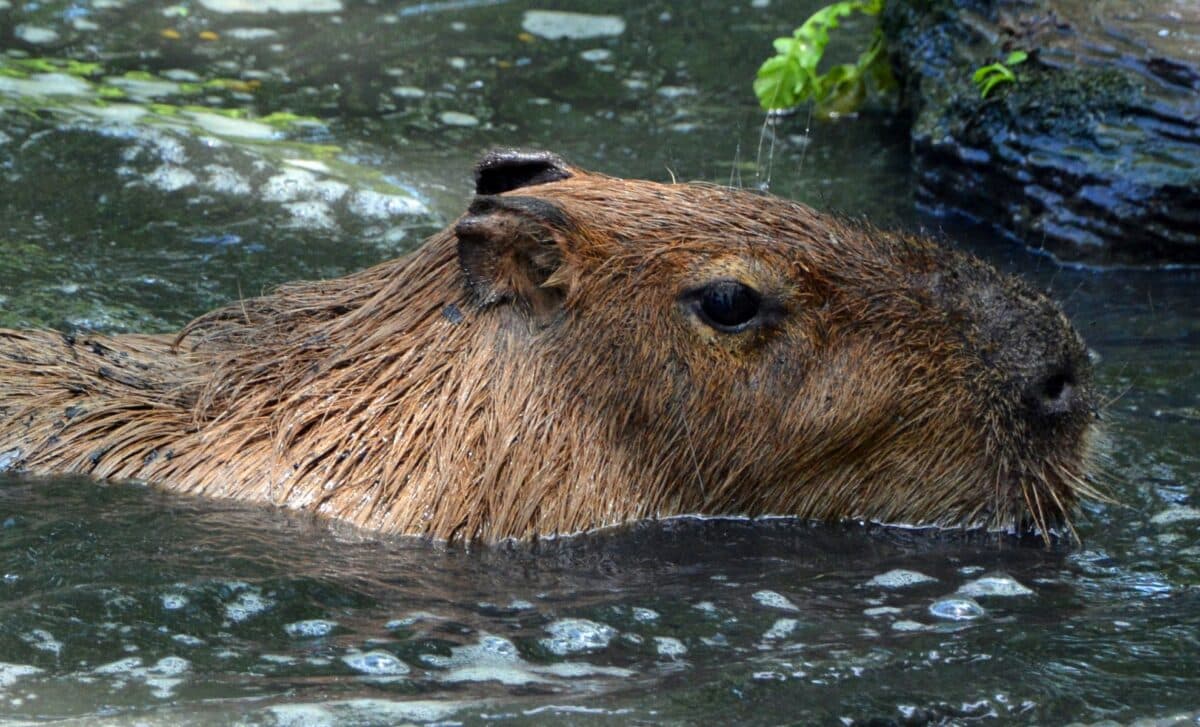
Millions of years ago in South America, a rodent may have weighed nearly half a ton and possessed an unexpectedly strong bite. Known as Josephoartigasia monesi, it stands as the largest rodent ever identified and continues to intrigue researchers.
The species was first described in 2008, based on a near-complete skull discovered in Uruguay in 1987. The fossil had been stored at the National History and Anthropology Museum for years before being examined in detail. That rediscovery opened the door to a clearer understanding of one of the most unusual mammals of its time.
Living between 4 and 2 million years ago, J. monesi existed in a landscape populated by large animals. Its importance comes from both its size and its anatomy, which provide insight into how rodents adapted to roles typically associated with much larger herbivores.
The Size Doesn’t Match What We Knew
Early interpretations of Josephoartigasia monesi suggested extreme proportions. As reported in a paper publishedin the Journal of Anatomy that described the species in 2008, its weight could have ranged from 468 kilograms to as much as 2,586 kilograms. Such figures would place it among the heaviest land mammals of its environment.
These estimates were later revised. The 2022 study featured in Royal Society Open Science explained that the rodent’s mass is more accurately placed at around 480 kilograms. The difference comes from a previously unrecognized factor affecting how skull measurements were converted into full body size. Even with this correction, the animal remains far larger than any living rodent, including the capybara.
“We can give an educated guess that the rodent would have been 3 metres lon, assuming that it was similar to a Capybara (the largest rodent alive today) and taking into account that large mammals generally have relatively smaller heads,” said Ernesto Blanco, as quoted by CBC. “Its tail probably was closer to the one of capybara or guinea pig (very short) and not like a rat.”
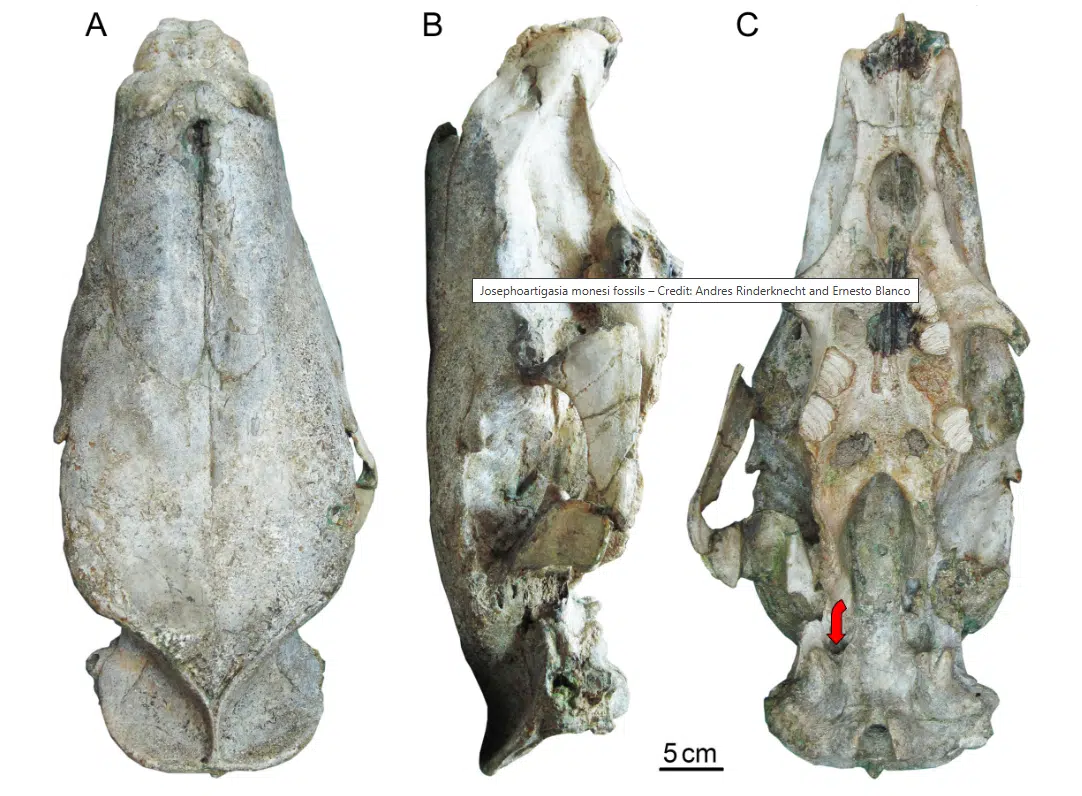 Fossil skull of Josephoartigasia monesi shown in dorsal (A), lateral (B), and ventral (C) views. Credit: University of York
A Bite Force That Stands Out Among Rodents
The power of its jaws adds another layer to its profile. As mentioned in the study based on biomechanical simulations, J. monesi could generate about 1,389 Newtons at its incisors and up to 4,165 Newtons at its molars.
This level of force gets close to an important biological threshold. At around 4,000 Newtons, it’s enough to break a human femur. It’s nowhere near the strongest bites in the animal world, but for a rodent, it’s still impressive, and it hints at a very specialized way of feeding.
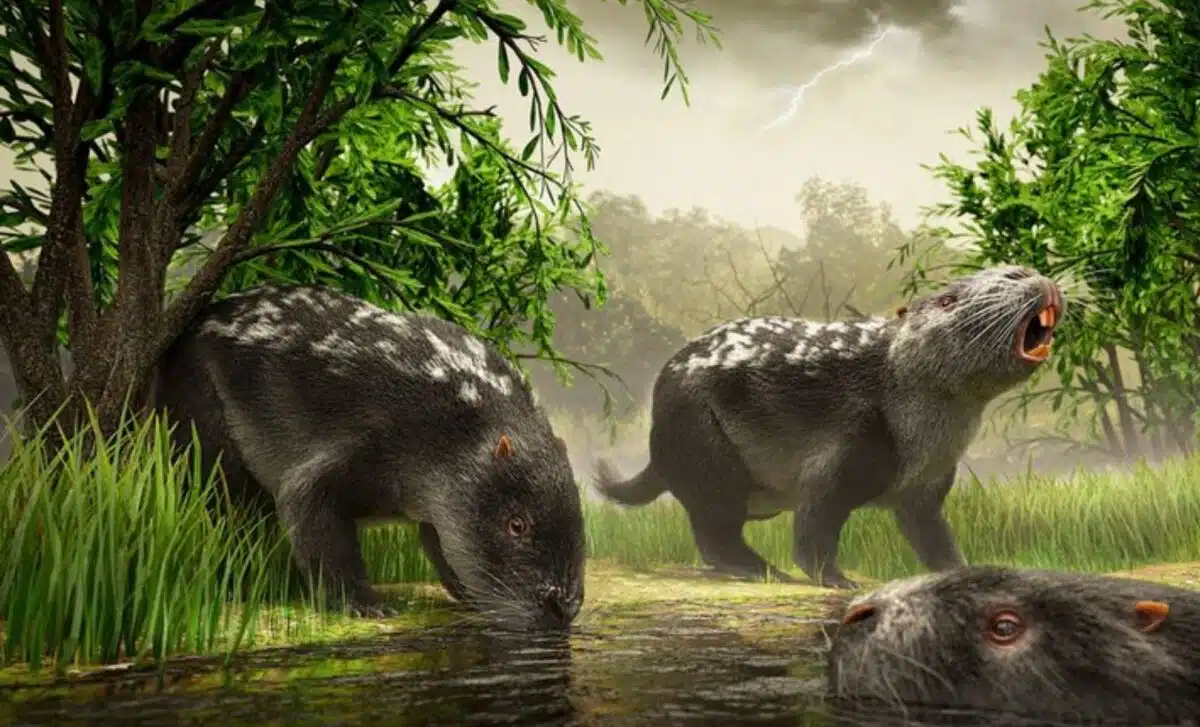 Visual reconstruction of Josephoartigasia monesi. Credit: Márcio L. Castro
A Plant Eater With Defensive Tools
Despite its strength, this rodent was not a predator. From analysis of its skull and teeth, it likely fed on tough vegetation and used its incisors to dig for roots.
“The rodent must have used its incisors for activities other than biting, such as digging in the ground for food, or defending itself from predators.”
Its teeth may also have served a defensive purpose in certain situations. Researchers believe it may have resembled the modern pacarana in general appearance. This comparison points to a slow-moving herbivore adapted to its surroundings rather than an aggressive animal.
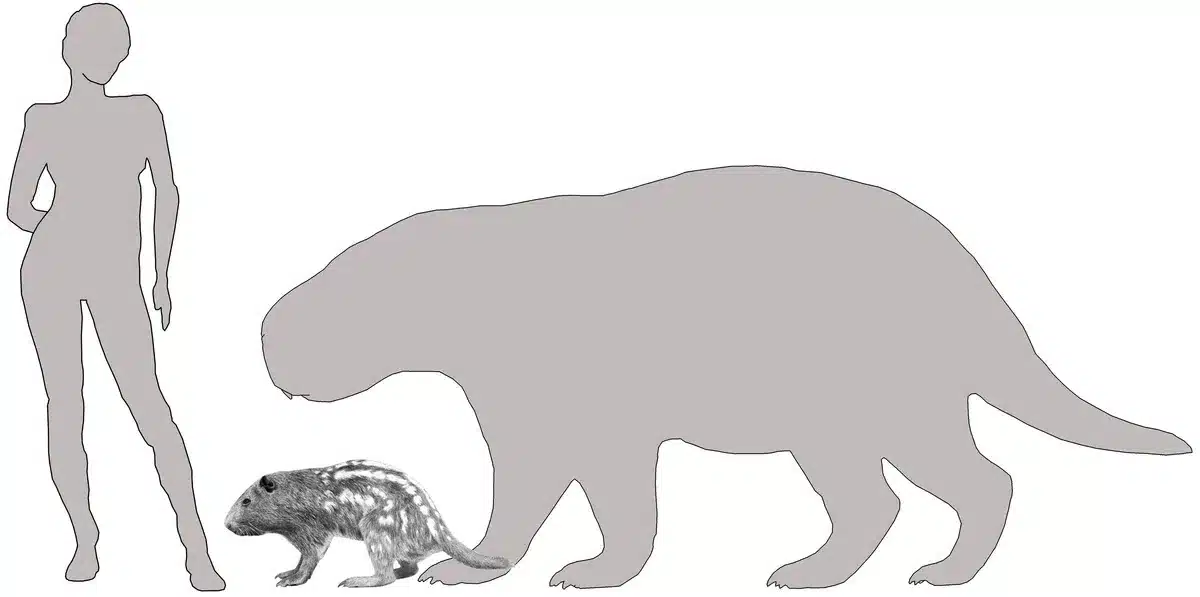 Size comparison between a human silhouette, a modern rodent, and the extinct giant Josephoartigasia monesi. Credit: Andrés Rinderknecht and Ernesto Blanco/ University of York