
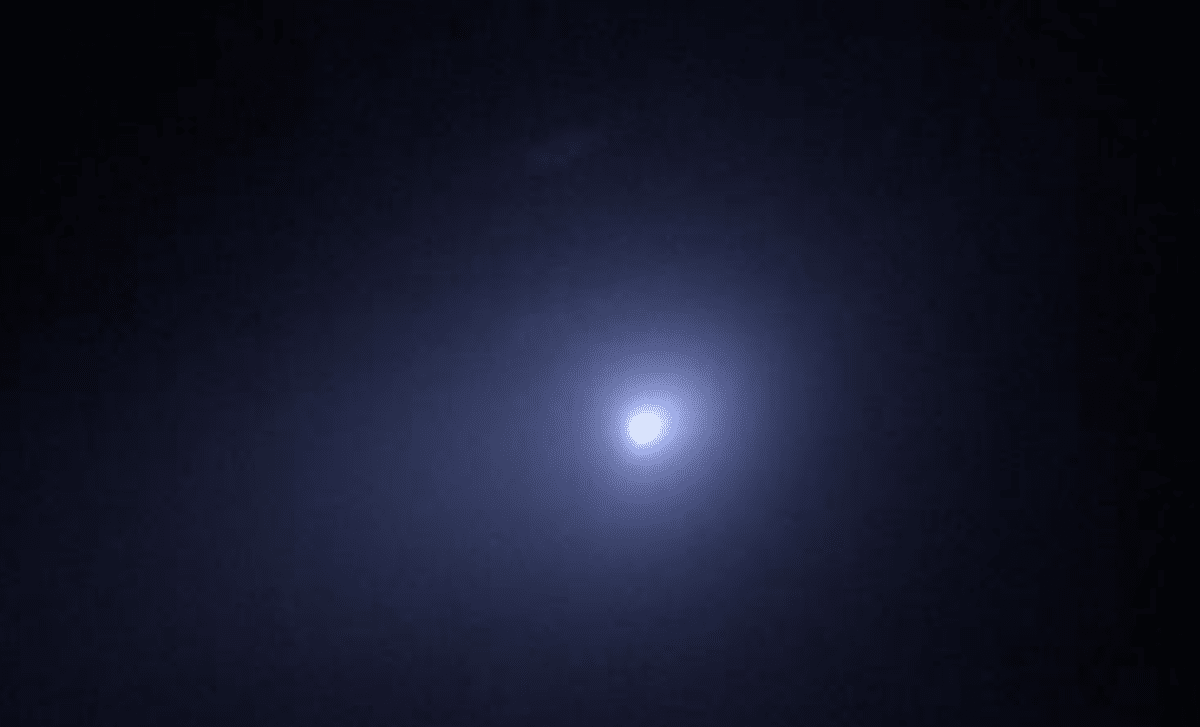
Astronomers have uncovered new insights into the formation of planets and planetesimals through the observation of Interstellar Comet 3I/ATLAS (C/2025 N1). The comet, captured by the Subaru Telescope in December 2025, offers a rare glimpse into the early stages of planetary formation in distant stellar systems. Published in The Astronomical Journal, the study reveals groundbreaking findings that may reshape our understanding of how planetary bodies form, both within our solar system and beyond.
A Celestial Intruder: What Makes Comet 3I/ATLAS Special
Comet 3I/ATLAS stands out not only because of its origin but also for the crucial data it offers about the nature of interstellar objects. Unlike comets that hail from our solar system, 3I/ATLAS is an interstellar comet, meaning it comes from beyond our Sun’s influence. This comet’s arrival in 2025 provided an invaluable opportunity to study an object traveling through the vastness of space from another star system.
Captured on December 13, 2025, by the Subaru Telescope, located in Hawaii, the image created by combining three different wavelengths of light, V-band (550 nanometers, blue), R-band (660 nanometers, green), and I-band (805 nanometers, red), gave researchers a clear view of its composition. This unique combination of data allowed scientists to study the comet in unprecedented detail, illuminating its potential as a window into other planetary systems.
What the Study Reveals About Planetary Formation
Published in The Astronomical Journal, the study sheds light on the comet’s unique chemical and physical properties. Researchers hope that by studying such interstellar visitors, they will uncover clues about the early days of planetary formation, not just within our solar system but across diverse stellar systems. According to astronomer Yoshiharu Shinnaka of Kyoto Sangyo University, “Through studies of such objects, we hope to gain a deeper understanding of how planetesimals and planets formed in a wide variety of stellar systems, including our own solar system.”
What makes this study especially important is the fact that comets like 3I/ATLAS are remnants from the early universe, untouched by the evolution of solar systems. They carry within them traces of the dust and gas that existed before the birth of stars and planets. This study provides a snapshot of conditions in distant parts of the galaxy, offering new avenues for research into how planets might form around other stars.
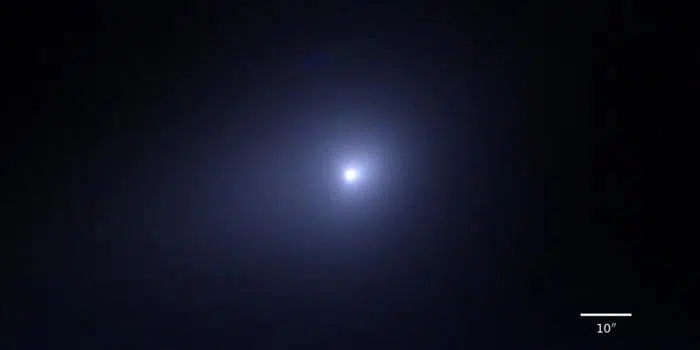 Interstellar comet 3I/ATLAS (C/2025 N1) captured by the Subaru Telescope on December 13, 2025 (Hawaii-Aleutian Standard Time). This image was created by combining three different wavelengths: V-band (550 nanometers, depicted in blue), R-band (660 nanometers, depicted in green), and I-band (805 nanometers, depicted in red).
Credit: NAOJ
The Role of the Subaru Telescope in the Discovery
The Subaru Telescope, which played a critical role in this discovery, is one of the most advanced astronomical instruments in the world. Located at the summit of Mauna Kea in Hawaii, its strategic position above the clouds gives it a clear view of deep space. The telescope’s cutting-edge technology enabled the team of astronomers to capture detailed images of the comet’s light spectrum, which were then used to analyze its chemical composition and structure.
The combination of its high-resolution imaging capabilities and advanced spectroscopy allowed scientists to measure the comet’s brightness and determine its relative motion through space. These capabilities make the Subaru Telescope a vital tool for exploring distant objects that could provide answers to some of the universe’s most profound questions.
On Dec 13, 2025, 5:35–5:43 AM (HST) or 3:35-3:43 PM (UT), the #SubaruTelescope on Maunakea, Hawai‘i, captured Comet 3I/ATLAS, the third known object from outside the Solar System. This interstellar comet made its closest approach to Earth on Dec 19, around 6 AM (UT). pic.twitter.com/FcP4r6cnp5
— Subaru Telescope Eng (@SubaruTel_Eng) December 23, 2025
How This Discovery Could Change Our Understanding of the Universe
The implications of this discovery extend beyond just the study of comets. By understanding the composition of interstellar objects like 3I/ATLAS, scientists hope to build a clearer picture of the processes that lead to the formation of planets in a variety of star systems. This discovery is a testament to the growing body of knowledge about exoplanets, planets that orbit stars outside our solar system, and how they might form in ways similar to Earth.
The study’s findings could also have implications for the search for life elsewhere in the universe. If the building blocks for life are common in interstellar objects, it would suggest that the potential for life might be more widespread than previously thought. As the study continues to evolve, we may one day unlock the secrets of life beyond Earth.