Since the consolidation of the Department of the Interior’s wildfire resources was announced, I have read numerous articles saying there isn’t a plan for the transition.
As you will see below, that’s not true. There is, however, a lot going on. This was going to be a long podcast in which I went through the entire 17-page transition document, but I’ve opted instead to publish it in its entirety.
It covers everything:
First, they provide their General Operating Principles, with the first being the most important: “It is imperative that the transition in no way impedes the Department’s wildland fire mission.” All fire related responsibilites will be placed in the USWFS.
General Operating Principles
• It is imperative that the transition in no way impedes the Department’s wildland fire mission.
• The Secretary has placed full responsibility for wildland fire-related responsibilities and authorities, formerly of the bureaus and offices, in the USWFS.
• Strong coordination between the USWFS, the Bureau partners, and the Solicitor’s Office is essential to the success of USWFS programs and to the Bureaus’ land stewardship missions.
• Projects will remain locally led, with sound decision-making at the field and geographic levels to meet program objectives and leadership intent.
• USWFS approval is needed for any program area that uses USWFS funds, even if the Bureaus retain field implementation responsibility for the work.
• During this transition period, documents already signed by Bureau leadership before the issuance of this Guidance remain valid, even if this Guidance now assigns signature authority to the USWFS. For example, a Statewide Master Cooperative Wildland Fire Management and Stafford Act Response Agreement signed by Bureau leadership prior to this Guidance continues to be valid; however, the USWFS will now serve as the responsible DOI agency for carrying out its terms and to determine any necessary updates.
• Generally, the USWFS’s approval and signature level for an item that is now within the USWFS purview will mirror the previous approval or signature level at the Bureaus, e.g. an action approved by local Bureau line, will be approved by local USWFS personnel.
• This Guidance is organized by category for ease of locating answers to common questions early in this transitional period. This also allows USWFS and Bureau partners to find the specific differentiation of roles between the USWFS and the Bureaus for a category together.
• Fire management activities are often conducted on an interagency basis with the involvement of cooperators
and partners. This Guidance ensures the DOI will continue utilizing accepted interagency wildland fire standards and processes, including empowering interagency personnel to support efforts on DOI lands.
• Responder and public safety remain the most important priority on incidents regardless of any changes to USWFS or Bureau processes.
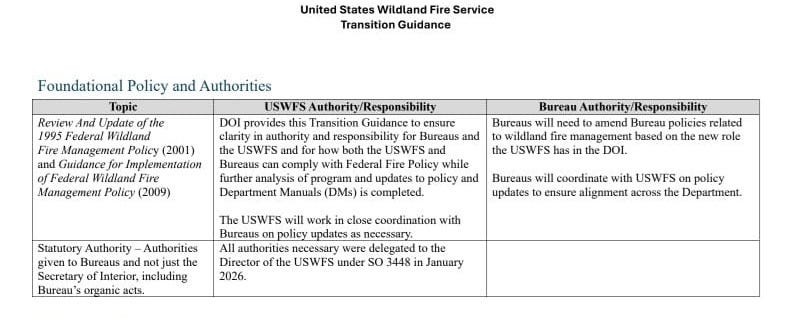
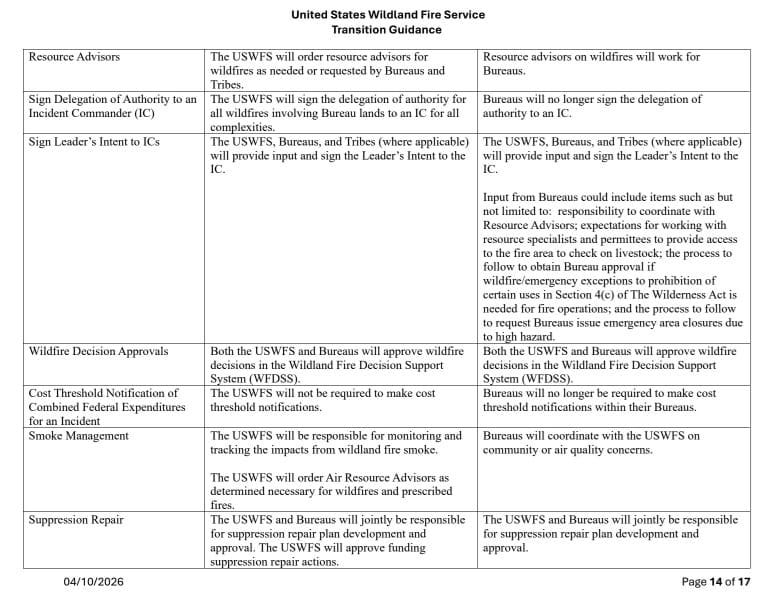
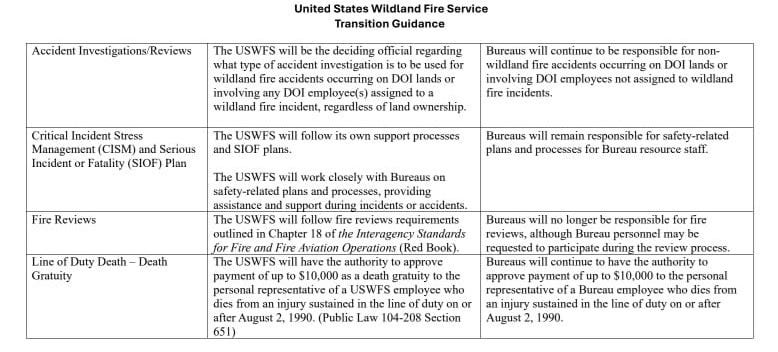
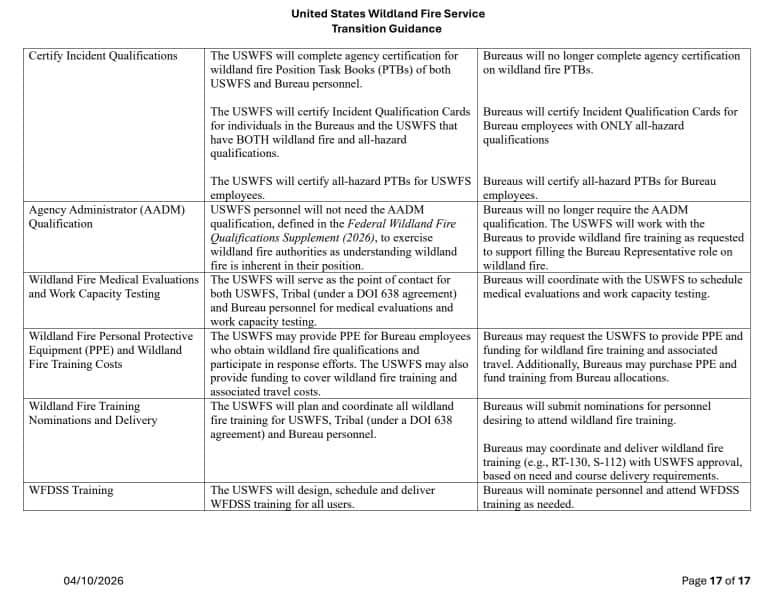
Now, here is the full breakdown of all authorities moving forward.
Foundational Policy and Authorities:
Administrative

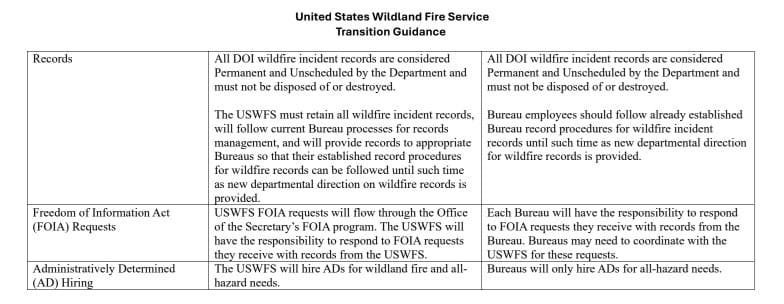
Agreements:
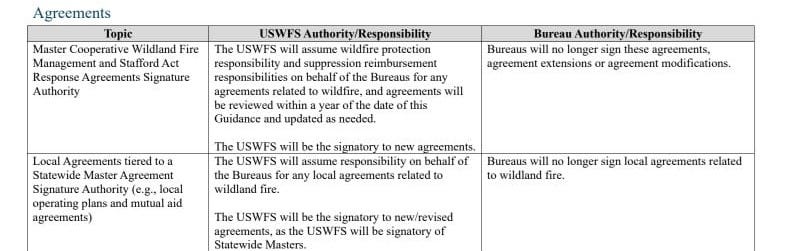
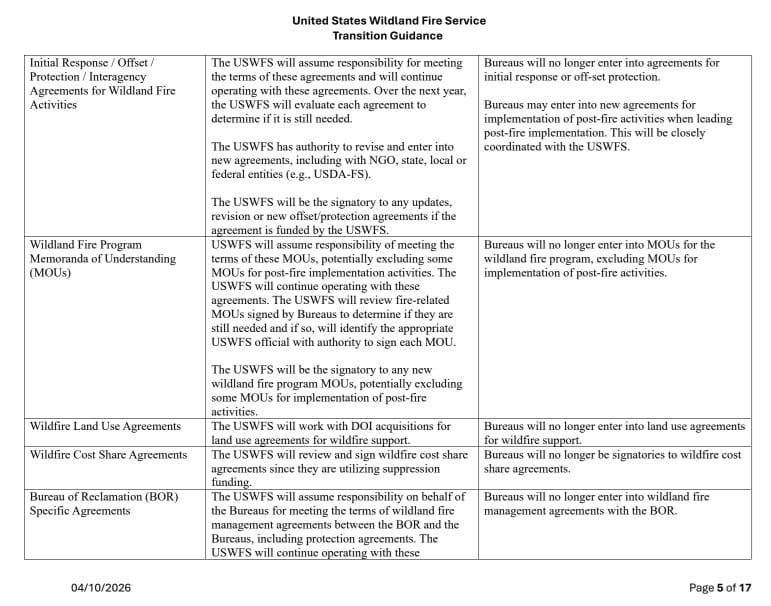
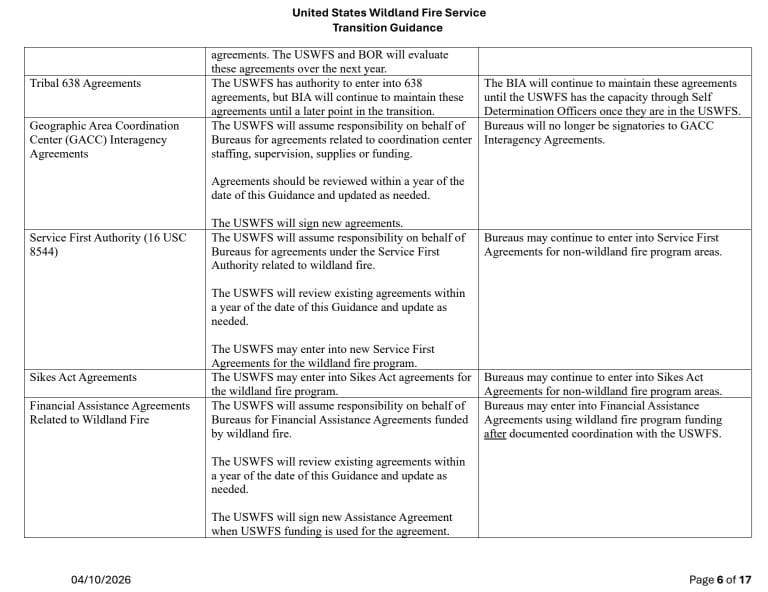
Aviation:
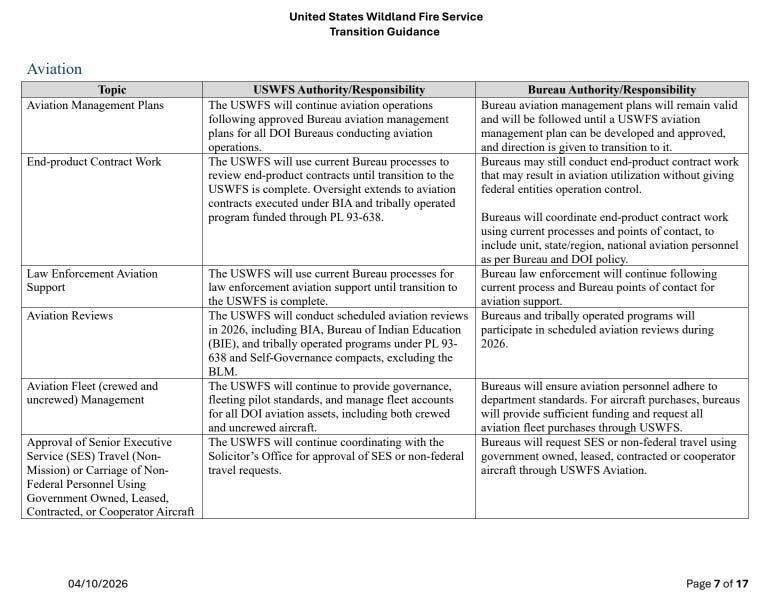
Dispatch:
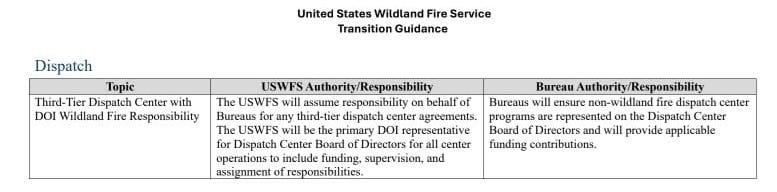
Fuels and Post-Fire: This covers all your prescribed fire questions and fuels management questions.
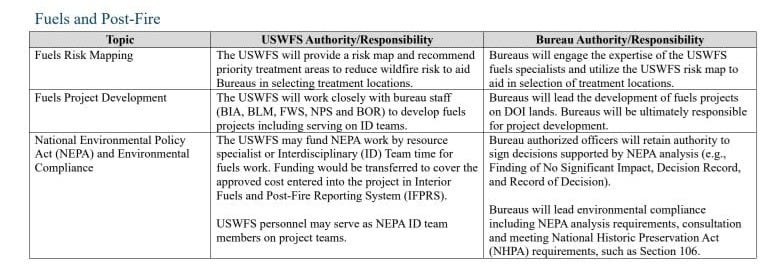
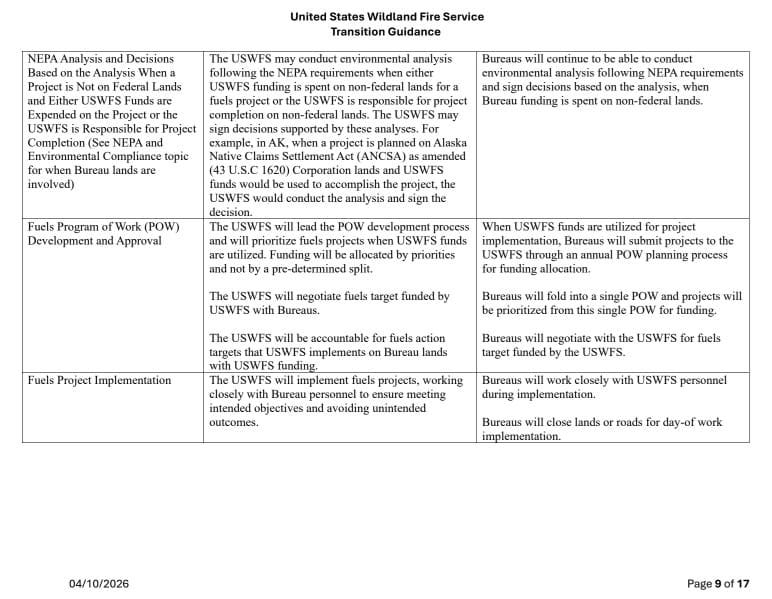
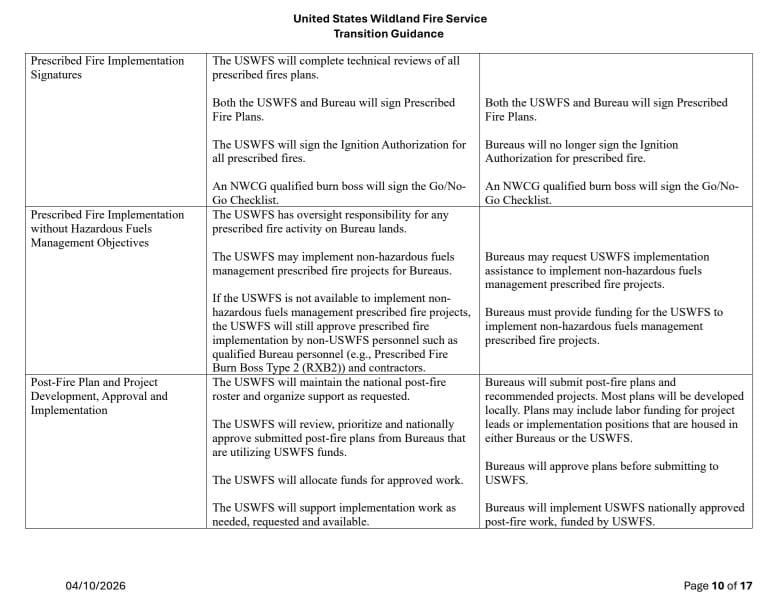
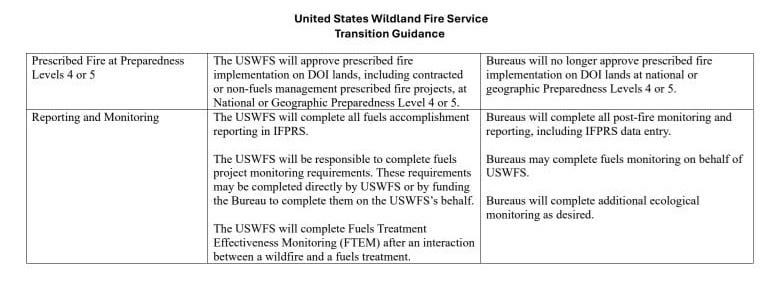
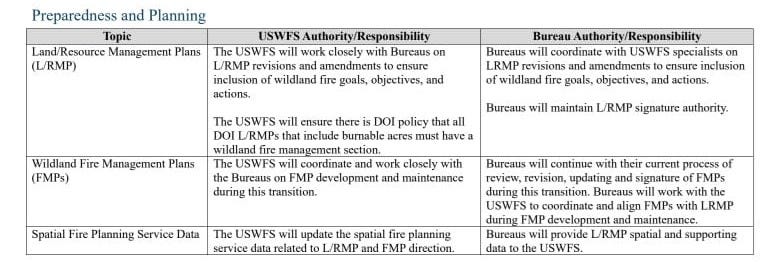
Preparedness and Planning:
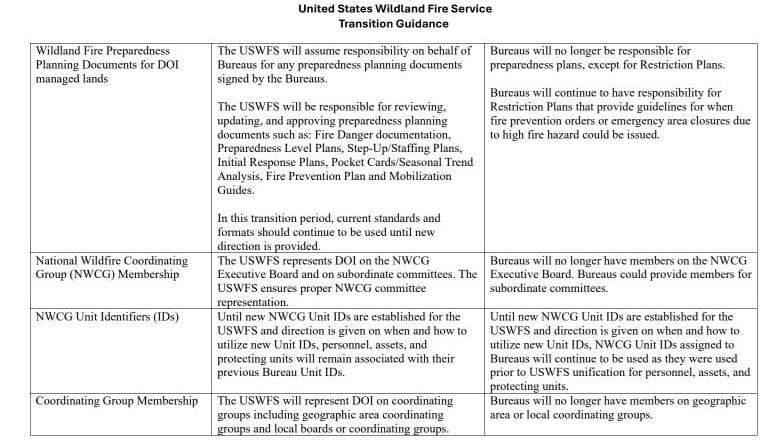
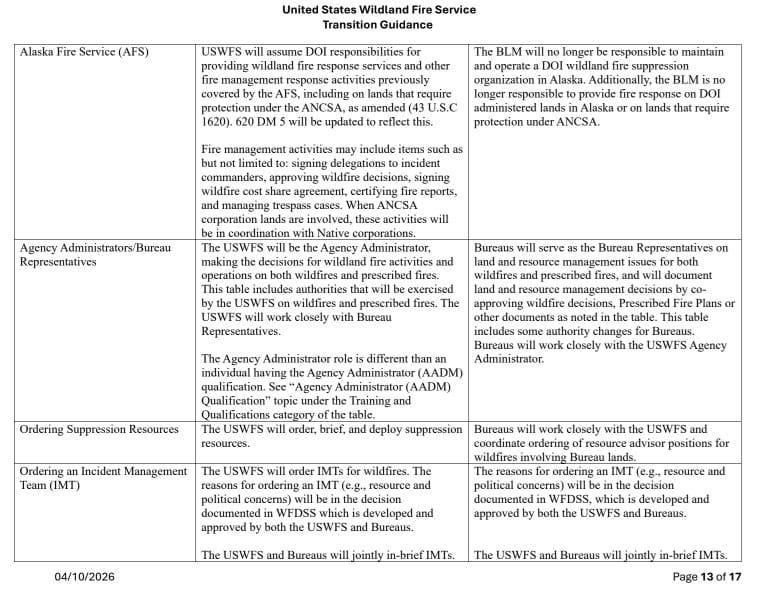
Response and Suppression: “The USWFS has wildfire protection responsibility for all BIA, BLM, NPS, and FWS lands.”

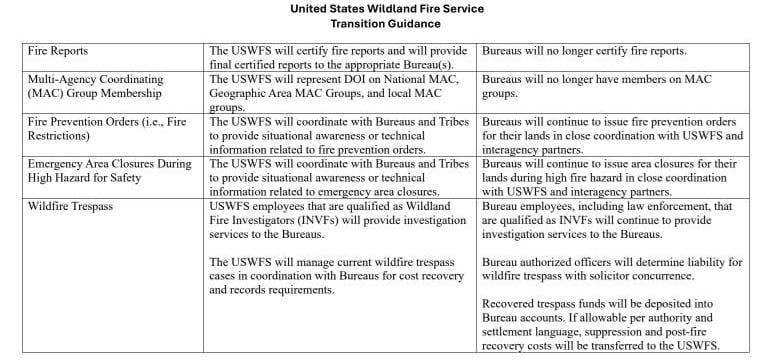
Safety:

Training and Qualifications:

That’s the transition plan in its entirety. There’s a lot there… Curious if anything stands out to any of you, or if there is something that you feel was missed.
THE HOTSHOT WAKE UP — Thank you to all of our paid subscribers. Your support allows us to donate generously to firefighter charities and supports all of our content. You also receive all of our article archives, more podcast episodes, Monday morning workouts, and also entered into our giveaways, plus more.