
There’s no question the NBA has a tanking problem. So how does ESPN think the Golden State Warriors should approach the play-in tournament? Well, by tanking, of course.
Anthony Slater has covered Golden State for a decade and is in his first season working for ESPN, adding some television responsibilities to his written reporting. With the Warriors staying in Los Angeles this week for Wednesday’s play-in game against the Clippers, Slater himself stayed in Southern California and joined “NBA Today” at its Los Angeles studio on Tuesday.
On the show, Slater was asked how the Warriors were approaching the play-in games. Golden State needs to win on Wednesday in Los Angeles, and then on Friday in Phoenix, just to make it into the first round of the actual playoffs. While Slater acknowledged that the players on the court, especially Draymond Green and Steph Curry, will do their best to win, he offered a different take for the sake of the organization.
“I think it is fair to wonder, organizationally, whether it’s better for them to lose,” Slater said.
He used the example of the Dallas Mavericks last season who, like Golden State, were the No. 10 seed in the play-in tournament. They won their first play-in game but lost the second one to Memphis. But while the Grizzlies only played for another week or so before getting swept by the Thunder, Dallas went to the draft lottery and ended up winning the No. 1 overall pick, giving them a chance to pick up a young superstar in Cooper Flagg.
“If the Warriors lose, they keep their lottery odds, 9.4% chance to jump up into the top-four this draft,” Slater said. “If they win their way into the play-in, they lose those lottery odds and then they get the Oklahoma City Thunder in the first round.”
As Slater said this, ESPN flashed a graphic saying its analytics department gave the banged-up Warriors a 2% chance of beating the Thunder in the first round. With that argument laid out, both former players on the panel in Danny Green and Kendrick Perkins agreed with Slater’s perspective, with Perkins even hinting that the Warriors might actively be trying to hurt their own chances to win.
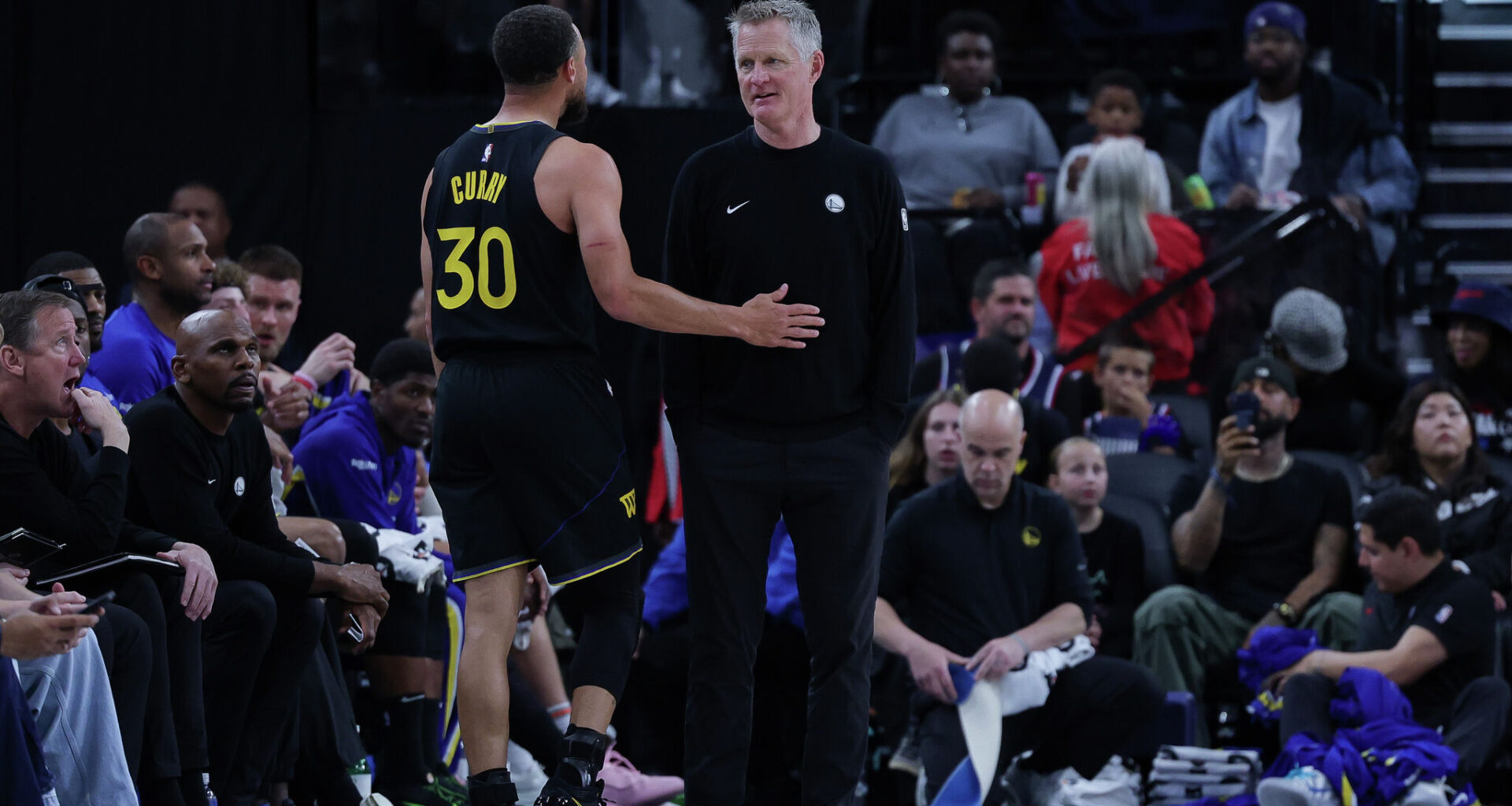
“They understand the assignment — like, collectively, the doctors, Steve Kerr … there’s a reason he put out that minute restriction,” Perkins said of Curry’s heavily monitored playing time after returning from a lingering knee injury. “Like, Draymond is not no dummy, Steph is not dumb, Steve Kerr is no dummy when it comes to knowing what an NBA championship roster look like, and they don’t have one. They know this. So what are you competing for?”
The conversation has been percolating among Warriors fans for weeks, especially before Curry returned from his two-month absence. But the superstar himself has said time and time again he wants to play “meaningful basketball” games, something he repeated this week ahead of the play-in.
Slater is likely right about what is best for the Warriors in the long term. But as the NBA deals with an overwhelming tanking problem, the public narrative about why losing would actually help the Warriors seems to only further the toxic conversation across the league — especially when that conversation happens on the channel of the NBA’s top media partner.