
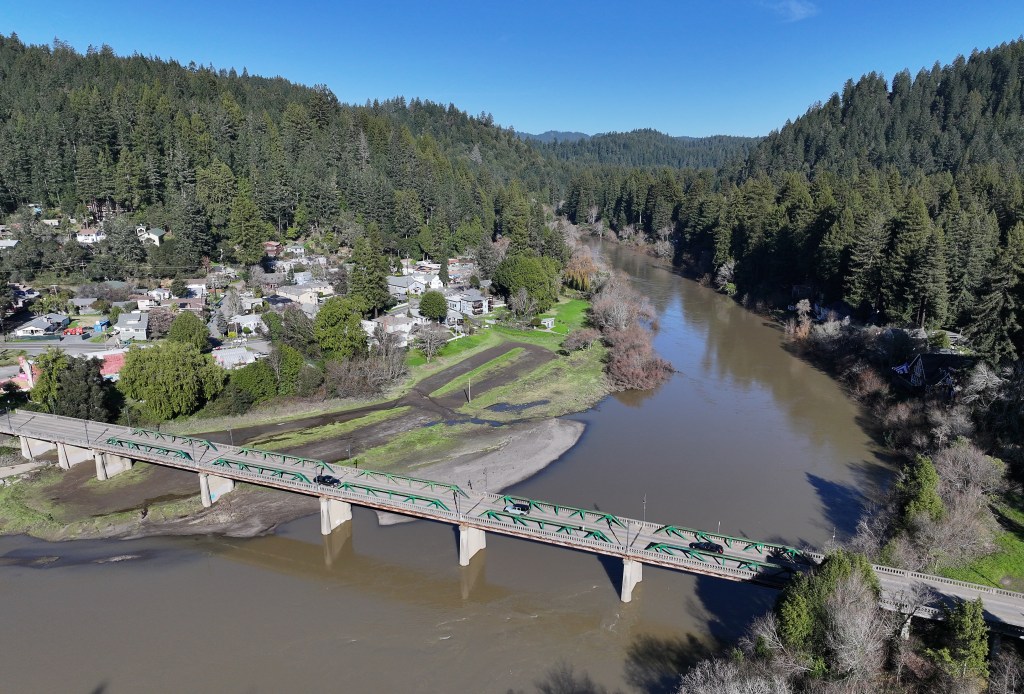
A Sebastopol environmental watchdog group has threatened to sue Sonoma Water and the small sewer district it operates in Guerneville over alleged water quality violations tied to a massive, multi-day spill of wastewater during a heavy storm this past January.
A March 18 letter from local attorney Jack Silver, representing the nonprofit California River Watch, accuses the county water agency and Russian River Sanitation District of violations of the federal Clean Water Act.
The notice of intent to sue comes three months after an estimated 5.5 million gallons of wastewater, including untreated sewage, overflowed from the district’s Guerneville treatment plant into the lower Russian River over three days, making for the largest such spill in the river in more than four decades.
The treatment plant itself did not flood during the storms, but the plant’s two storage areas — a main basin and the emergency storage pond — overflowed. The effluent drained about a quarter-mile south through a wooded area to the Russian River, bypassing homes.
The episode followed previous spills into the river associated with the same system, a pattern that California River Watch argues has impaired water quality for recreation and wildlife and violated a key federal permit governing the agencies’ operations along the river.
Water from the Russian River, drawn upstream and pumped underground for filtration, supplies about 600,000 customers from central Sonoma County to northern Marin County. The river is also a key refuge for struggling runs of salmon and steelhead trout.
Sonoma Water and the Guerneville district, however, exposed the river to harmful pollution after failing to carry out timely repairs and properly operate the local sewer system, Silver alleges, “despite awareness that the infrastructure is leaking, past its useful life, or otherwise required replacement or repairs.”
California River Watch also alleges the water agency understated “the significance of the impact” of wastewater spills by failing to post visible health warning signs, including during the January spill. Less than a day after the spill began, signs were posted at Russian River beaches advising visitors to avoid contact with the water.
Stuart Tiffen, a Sonoma Water spokesperson, declined to comment on the litigation notice.
A small but aggressive watchdog, California River Watch has a history of filing environmental lawsuits against municipalities and sanitation districts across California for alleged Clean Water Act violations. In 2004, it successfully sued the city of Healdsburg after it discharged treated sewage into a 58-acre pond connected to the Russian River without proper permits, violating federal law.
The notice marks the latest instance the nonprofit has squared off with the Russian River Sanitation District and Sonoma Water. In 2015, California River Watch alleged the water agency violated federal law after the sanitation district experienced multiple failures that resulted in wastewater spilling into the Russian River between 2010 and 2015. In the same year, the nonprofit also sued the water agency over a wastewater spill in Sonoma Valley. Both cases were dismissed.
To avert a lawsuit, the nonprofit has recommended eight “remedial measures” for the water agency, including a full review and timeline of repairs for the Guerneville sewer system, which serves 3,200 customers from Rio Nido to Vacation Beach. It also seeks new measures to offset any efforts from future wastewater spills and efforts to ensure greater public and employee safety, minimizing exposure to potentially “infectious vectors.”
The letter gives Sonoma Water 60 days to respond.
“River Watch looks forward to meeting with Sonoma (Water’s) designated staff to tailor remedial measure to the specific operation of the facility and associated wastewater collection system,” Silver wrote.
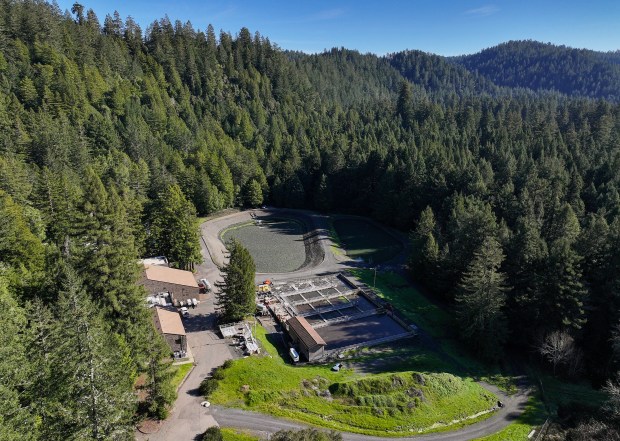 The Russian River Treatment Facility operated by Sonoma Water at the end of Neeley Road near Guerneville on Friday, Jan. 9, 2026. The treatment plant’s holding ponds overflowed on Tuesday, Jan. 6, causing 5.5 million gallons of wastewater, including untreated sewage, to seep into the Russian River. (Christopher Chung/The Press Democrat)
Problems with the sewer system based at the 43–year-old plant off Neely Road have been documented for years.
Sonoma Water documents for the Russian River County Sanitation District show small upgrades over past years, including the installation of an ultraviolet disinfection system, which helps treat effluent. But larger upgrades have been delayed amid the search for outside funding to minimize additional costs for residents and businesses in the district, who already have among the highest sewer rates countywide.
They include an additional holding pond at the sewer plant, with an estimated cost in the tens of millions of dollars, according to Sonoma Water.
The agency is angling for a $47 million grant that would help the agency replace force mains, rehabilitate 11 lift stations and upgrade portions of the Guerneville treatment facility where the spill originated.
The funding constraints, however, are not new, said California River Watch staff attorney David Weinsoff. The balancing act with public budgets — “where to prioritize hard-earned tax dollars” — should not minimize important environmental resources, he suggested.
“Will you tear up the streets and improve the pipes that go to sewage facilities and spend untold amounts of money to ensure the facilities always operate properly when there are competing legitimate obligations?”
He reiterated that the latest Russian River sewage spill was not a “one-off.”
Such spills are “a big problem statewide,” he said. “California River Watch has been looking at this for a lot of years.”
Amie Windsor is the Community Journalism Team Lead with The Press Democrat. She can be reached at amie.windsor@pressdemocrat.com or 707-521-5218.