
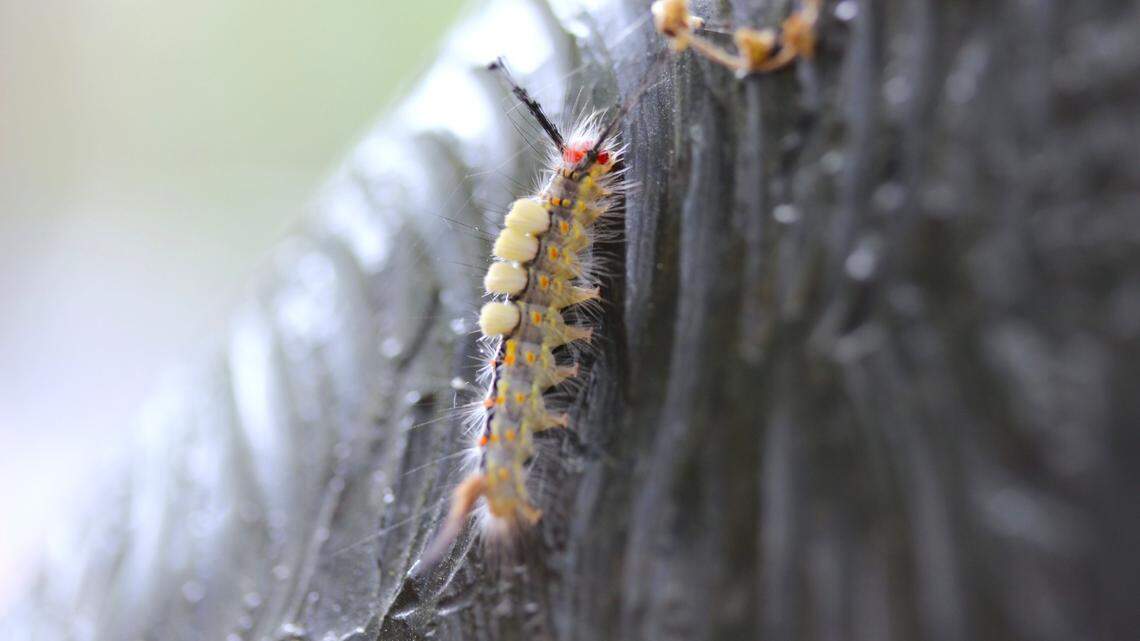
If you’re not from Hilton Head Island, there’s a chance you never seen one before. But every April, the island is swarmed by millions of tiny, fuzzy yellow creepy crawlies with cherry-red heads.
Don’t be fooled by their cute and fuzzy exteriors. That bright red color should be a warning label: AVOID AT ALL COSTS.
They’re called tussock moth caterpillars, and they’re the bane of SC residents’ existence every year.
Coming into contact with the hairs on their back can cause painful rashes and swelling.
Some RBC Heritage attendees have already fallen victim to their painful sting. Tina Tauscher, a nurse with Novant Health stationed at the Emergency Response Trailer, said she’s seen about four people come in so far with what appears to be rashes from these caterpillars.
Here’s everything you need to know about the obnoxious critters and how to treat the rashes they cause.
What are tussock moth caterpillars?
Several types of tussock moth caterpillars are native to North America. In South Carolina, however, the ones found here in the Lowcountry are called white-marked tussock moths (Orgyia leucostigma).
Tussock moth caterpillars are small, brushy caterpillars with dramatic looks: four toothbrush-like tufts on their backs, black spiky antennae and bright red heads.
They’re easy to spot – and best admired from afar.
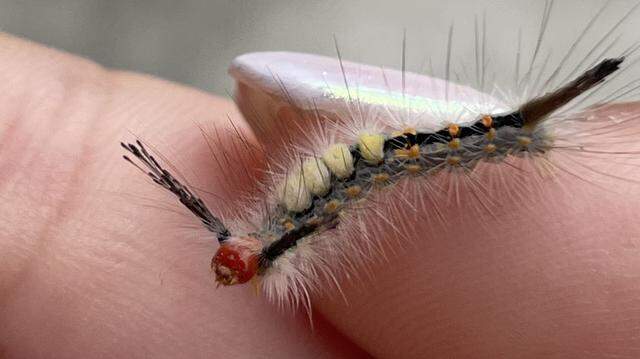 These little caterpillars may look cute, but avoid handling them. Those spiky hairs can trigger severe allergic reactions, especially in children. Li Khan The Island Packet
The tussock moth caterpillars hatch from early spring through early summer. As they continue to develop for the next 30 to 40 days, they grow to about an inch to an inch and a half long and are often spotted in abundance.
Before these caterpillars begin their transformations into moths, they will create and become small, white cocoons that can be seen dotted almost everywhere around the Lowcountry.
Why are they everywhere?
These caterpillars feed on over 140 types of trees and shrubs, including live oak, birch, cherry, hackberry and even fir.
In the Lowcountry, they’re especially fond of live oaks, which makes coastal neighborhoods a prime buffet.
They don’t stay put, either. Tussock caterpillars are explorers, crawling onto walls, porches, car windows and anything else in their path. And because they move in swarms, you’ll rarely see just one.
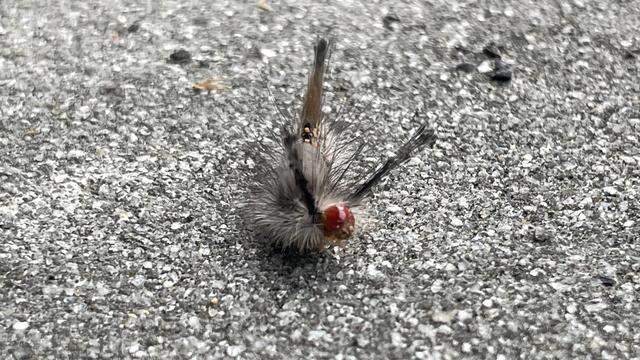 A live oak tussock moth caterpillar explores a Hilton Head parking lot. Li Khan The Island Packet What happens if you touch them?
These little caterpillars may look cute and friendly, but health officials discourage people from picking them up.
The barbed hairs on these caterpillars can stick to your skin and can trigger an allergic skin reaction ranging from mild itching to painful welts, especially in children, according to the University of Maine.
In some cases, the rash can be mild and clear up within a few hours, but in other cases, the rash can be much more severe and last days.
What to do if you come into contact with one
If you or your child comes into contact with a tussock moth caterpillar, here’s what you should do.
First, if it’s still crawling on your skin, flick it off as hard as you can, Tauscher said.
“They kind of adhere to the skin a little tight,” the nurse said.
After removing the critter, check the skin for any remaining hairs. MedlinePlus recommends that you remove any caterpillar hairs from your skin by placing duct tape on your skin, pulling it off and washing with soap and water.
To alleviate the itching, Tauscher applies hydrocortisone cream and gives patients Benadryl, which alleviates the rash by blocking histamines.
Nurses keep both of these remedies in stock at the Novant Health Emergency Response Trailer, located just outside the entrance to RBC Heritage.
The trailer offers many kinds of first-aid supplies and even has an AED on hand in the event of a heart attack. If you experience a medical emergency while at the tournament, Tauscher said to call 911.
Anna Claire Miller contributed to this report.

The Island Packet
Li Khan covers Hilton Head Island for the Island Packet. Previously, she was the Editor in Chief of The Peralta Citizen, a watchdog student-led news publication at Laney College in Oakland, California.