
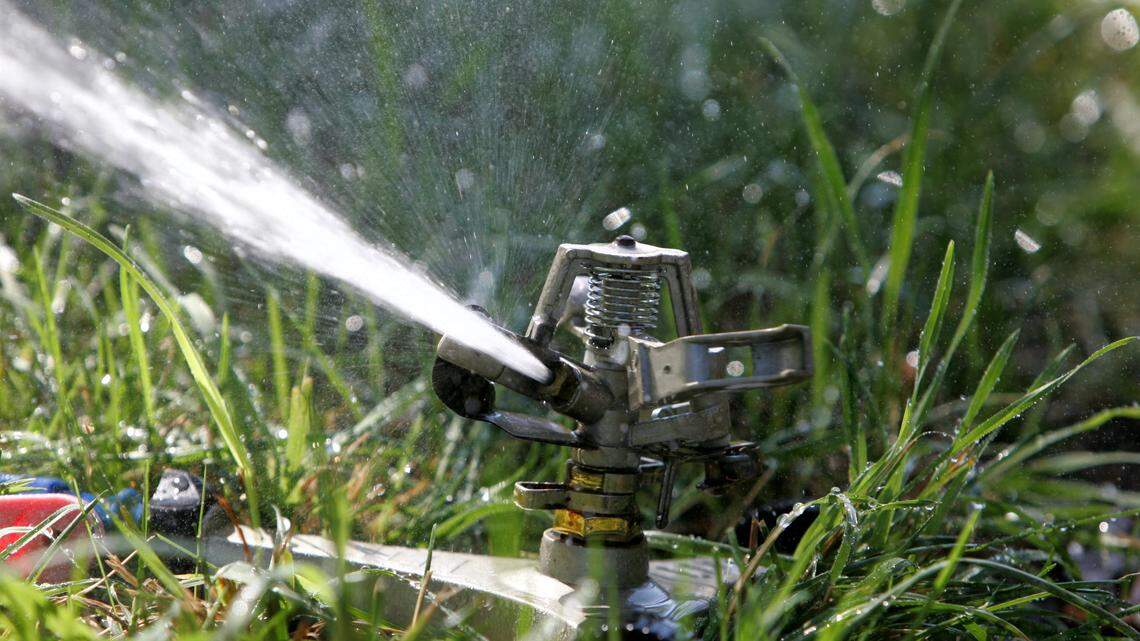
Raleigh residents and businesses face water-usage restrictions starting Monday as central North Carolina enters a severe drought.
The city announced the new restrictions Wednesday in a news release.
What does this mean for residents?People with odd-numbered addresses may only water their lawns on Tuesdays.People with even-numbered addresses may only water their lawns on Wednesdays.Watering with a sprinkler or other device on the end of a hose is allowed from 6 to 10 a.m. or 6 to 10 p.m. on Tuesdays or Wednesdays.Handheld hose watering and drip irrigation are allowed at any time.Irrigation with spray systems, like those on farms, is only permitted between midnight and 10 a.m.Watering impervious surfaces, like streets, driveways or other paved surfaces is prohibited.Leaks in water services or plumbing must be repaired within 48 hours after being notified.What does it mean for businesses?Restaurants may only serve water upon requestHotels and other short-term rentals must ask guests staying more than one night to reuse towels and sheets.How long will restrictions last?
“No idea,” Raleigh Water Assistant Director Ed Buchan said.
“Unless we get some miracle rain in the next couple of weeks, we’re going to stay in stage one [restrictions],” he said.
Raleigh’s main water source is Falls Lake, north of the city.
When the city’s water reserves at the lake reach 85% of full capacity, the city enacts the first of three conservations levels. Currently, water reserves are at 84%
The restrictions are different based on the time of year. Between April and June, the city takes more precautions than at any other point.
The city’s reserves at Falls Lake are typically always full in April, Buchan said.
“That’s one of the reasons why we want to take this seriously and try to be proactive,” he said.
To lift water restrictions in May, reserves would have to get back to 95% of capacity. Buchan said that’s possible, “but it would mean there would be a lot of rain in May.”
He said long-term forecasts predict above-average rainfall in May and June. However, long-term forecasts aren’t guaranteed.
What other water conservation efforts are possible?
Stage 2 further restricts irrigation and lawn watering and could occur if the city’s reserves at Falls Lake drop to 60% of capacity.
Stage 3 restrictions could occur if reserves reach 35% of capacity and would effectively prevent irrigation, filling pools, washing cars or other non-essential water usage.
The city has secondary water supplies at Lake Benson and Lake Wheeler, both to the south, and are both almost full.
The News & Observer’s Anna Roman contributed reporting.
This story was originally published April 15, 2026 at 6:51 PM.
Related Stories from Raleigh News & Observer