
Chicago takes its public art seriously. The murals and installations we have on view represent us, our communities, our values—from the Haymarket Memorial in the West Loop to Alexander Calder’s iconic Flamingo to Kerry James Marshall’s gorgeous mural on the side of the Chicago Cultural Center. After Casa Aztlan was whitewashed by developer City Pads in 2017, the community backlash was so quick and so strong that Ray Patlán and other artists were promptly hired to paint a new mural. When a mural by artist Gabriel Villa was commissioned on private property in Bridgeport—and then quickly graffiti blasted by the city at the request of then-alderman James Balcer—the local and national art communities widely condemned the censorship, leading to coverage from WBEZ and the Huffington Post, among other outlets.
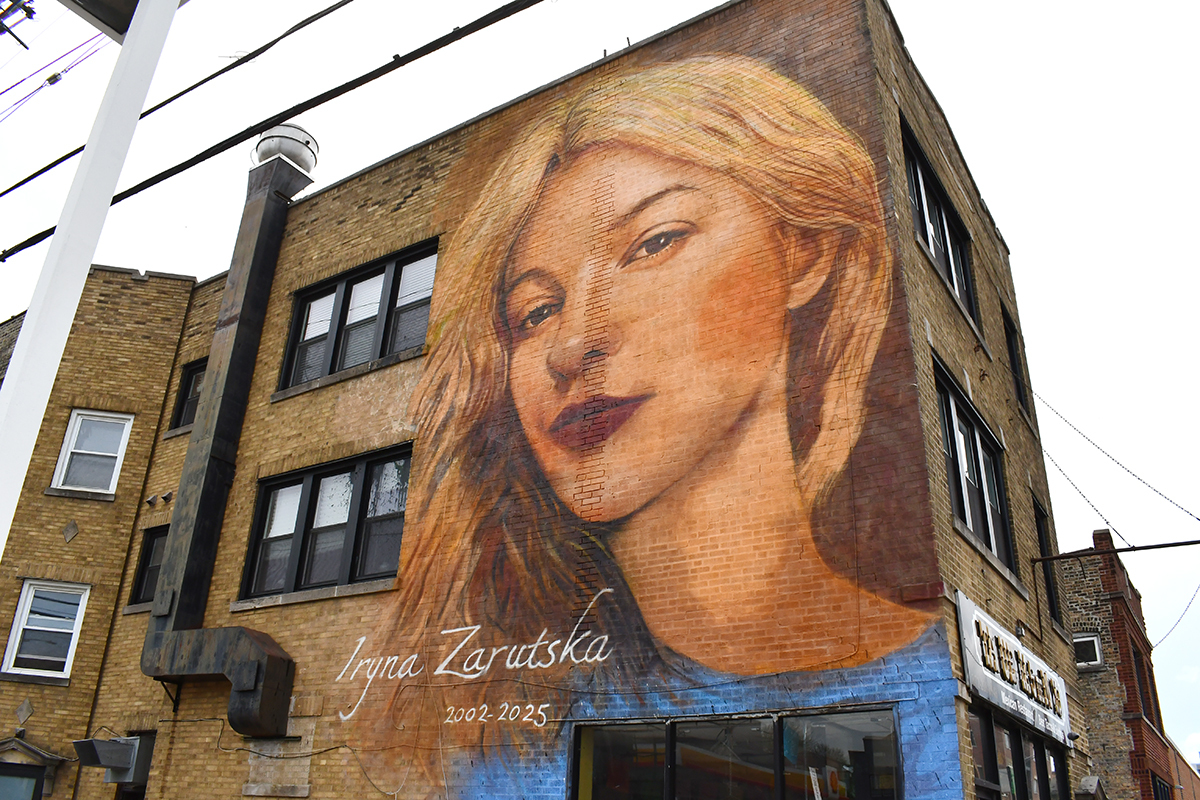
So it should come as no surprise that a recent mural of the late Ukrainian refugee Iryna Zarutska, painted at the behest of Ireland-born, Bay Area–based tech entrepreneur Eoghan McCabe, has received a fair amount of scrutiny. Completed in January, the mural is located at 2415 W. Montrose, in North Center. It’s part of a nationwide effort spearheaded by McCabe called Remember Iryna, which is funding similar murals across the country.
The 23-year-old Zarutska, who had emigrated to the U.S. in 2022, was killed in August 2025 during a random attack on a light-rail in North Carolina. She had no ties to Chicago. McCabe, 42, is one of the founders of an AI-powered help-desk platform called Intercom. Like other young tech founders, he has a tendency to shitpost on social media. (Sample tweets include: “It is the duty of men to protect society, to kill the monsters and create a world where all good people can be well,” and “It feels like almost every day now a violent crime on the tiny island of Ireland occurs where ‘the suspect’s nationality is not allowed to be made public.’ Everyone knows what that means.”)
He posted frequently about Zarutska’s tragic death after surveillance video of her attack was released, and it became a rallying point for the far-right to condemn the criminal justice system. (Her attacker, DeCarlos Brown Jr., had a history of prior arrests.) McCabe put out a call on X, asking for donations to fund a series of murals of Zarutska, which led to a $1 million pledge from Elon Musk. The murals started appearing late last year, in cities like New York and Miami, and then in Chicago.
Community response was quick and veered negative. In March, the North Center mural was vandalized—and it wasn’t the first time. It’s not unheard of for murals in our city to memorialize the dead—but those tributes are usually requested by locals, and painted by them, too. (Zarutska’s mural was painted by SAV45, an artist based in Spain.)
What distinguishes the murals that Chicago holds most dear is the process that made them—one rooted in community engagement. Remember Iryna is totally devoid of community involvement and thus worth examining further. Should we even consider such a project public art?
Chicago’s abundance of murals can be traced back to the Wall of Respect, the now-iconic 1967 mural that honored heroes of the Black community—people whose importance, according to historian Rebecca Zorach, “was undervalued by mainstream white culture.”
Located on the side of a corner store at 43rd Street and Langley Avenue in Bronzeville, the Wall of Respect was the work of a group of Black American artists from the Organization for Black American Culture (OBAC, pronounced o-ba-see). It featured more than 50 notable Black figures, from Malcolm X to Muhammad Ali to Gwendolyn Brooks. “A mural about the black American experience was not exactly a novelty,” former Reader writer Jeff Huebner wrote, in one of several articles on the artists and the mural movement they spawned. But the “Wall of Respect was the first outdoor mural done for the community—for everyone.”
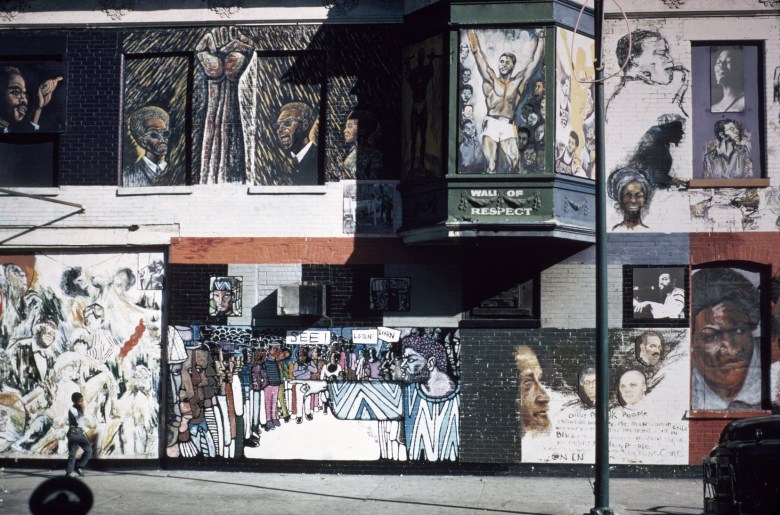 The Wall of Respect helped spur the community mural movement.
Courtesy Georg Stahl Mural Collection/University of Chicago Library
Its community engagement was done on the fly. William Walker, one of the mural artists, secured permission from the business owner and spoke with local community members to gain approval. And while surely not every person living near the corner at the time supported the Wall of Respect, it’s clear that plenty of people took pride in it. Local kids offered tours of it; neighborhood street gangs kept a watchful eye on it. In Zorach’s book, Art for People’s Sake: Artists and Community in Black Chicago, 1965–1975, she recounts a recollection from artist Jeff Donaldson, “People feel better when they walk by there, and we made it so.”
“The Wall of Respect was a sort of early kind of experiment in that respect, where the methods and practices [of community engagement] hadn’t been fully developed,” said Zorach, who coauthored a book on the mural with Abdul Alkalimat and Romi Crawford. Zorach notes that the nature of mural painting easily lends itself to a collaborative process between artists and passersby. “Very often, just because of the way that it has to be done—with artists working outside on the street and people walking by—there’s going to be conversation, and there’s going to be questions, and there’s a sort of communication and collaboration that develops out of that.”
The Wall of Respect’s impact was fast and powerful. In 1968, Huebner writes, a similar mural was commissioned in Detroit, and Black pride murals followed in Boston, Saint Louis, and Philadelphia. The community mural movement, as it became known, laid the groundwork for much public art that exists today: art that tells community history, depicts important cultural figures, or portrays an uplifting narrative about a people or neighborhood. Community buy-in was a crucial component of that, whether that meant a local group commissioned a work, its subject matter was publicly discussed or voted on, or community members otherwise had some opportunity to share their desires for a work.
Janice Bond, the executive director of the Chicago Public Art Group, explained that many of her organization’s projects seek to engage the community, which could mean people who live around the proposed site or a demographic that the artwork intends to represent. “We are creating art with community, not for community,” Bond said. “Community engagement varies from project to project in different degrees. The important part for us is that it happens, and that there is at least some sort of opportunity for the community to be heard, especially if it is content of a sensitive nature.”
“A lot of times I’ve walked away from projects if there isn’t a community buy-in.”
Sam Kirk
Sam Kirk is a Little Village–based artist whose artwork can be found throughout the city. They painted La Villita Skate Park; spearheaded Las Puertas de Paseo Boricua in Humboldt Park; helped create The Love That I Vibrate, on the side of Howard Brown Health Center in Northalsted; and the I Am Logan Square mural at Kedzie and Milwaukee, among many other projects.
For Kirk, community engagement is crucial. “A lot of times I’ve walked away from projects if there isn’t a community buy-in,” they said. The level of community engagement depends on the project—whether it’s a public or private commission, and on the subject matter. But most of Kirk’s work focuses on social justice issues, “so community buy-in is extremely important.”
“Usually when the conversation happens, we’re not really talking about the design of the mural. We’re having a conversation about: What are the challenges in the neighborhood, what are the things that you’re facing?” Kirk said. “That helps me to understand what the mural could help to spark other conversations or convey about the people that we’re trying to depict, or the histories and stories we’re trying to share in the piece.”
Kirk points to their 2021 mural, Stronger Together, led by the Little Village organization New Life Centers, which sought to ease racial tension in the neighborhood following the murder of George Floyd and the subsequent uprisings, as a perfect example of a community-led project. “The mural was a part of a larger community project that’s still actually running, to unite north and south Lawndale,” Kirk said. “There were workshops and healing circles, and different community engagement programs, like just basketball, to bring youth from Little Village and North Lawndale together, to do fun things, to build upon joy together.”
Local nonprofits brought neighborhood youth together to meet with Kirk and discuss what a united north and south Lawndale would look like. The massive, colorful mural depicts young people dancing to a mariachi band and playing basketball; people carry groceries or wear their work uniforms; a man sells paletas below an image of a child holding a “Black and Brown United” sign. “The mural is really a reminder of working together as one community, one Lawndale,” Kirk said.
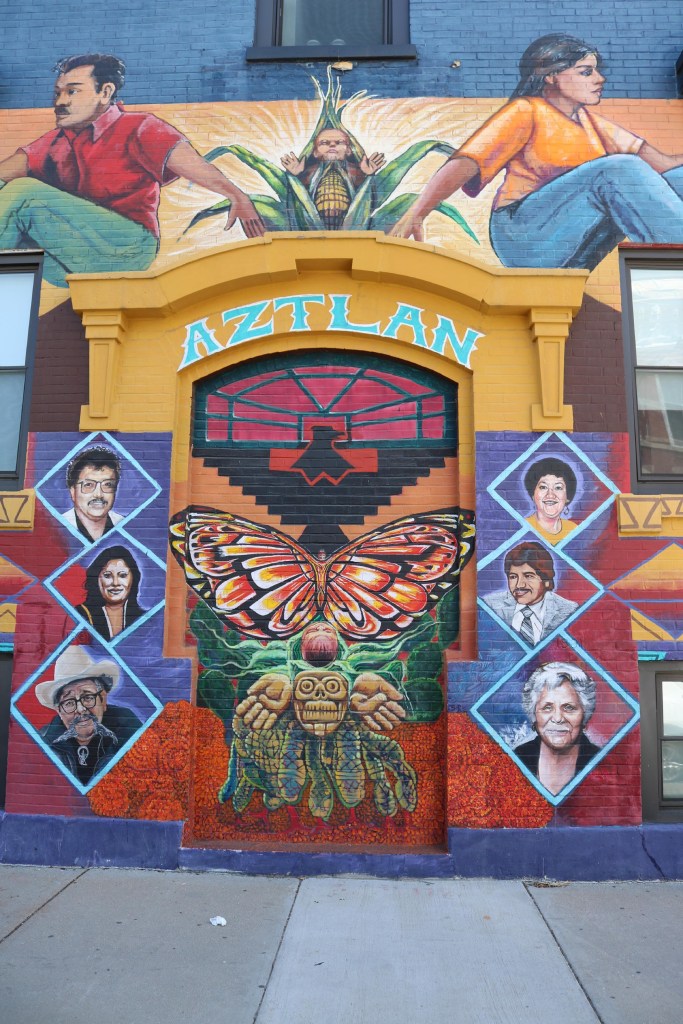 The second iteration of the Casa Aztlan mural
Courtesy Latinx Murals of Pilsen
Longtime Chicago graffiti artist Flash ABC concurs that the permission walls he has managed through the years have all been community-driven. “There’s always a planning meeting,” he said. The permission walls are primarily places for up-and-coming graffiti writers to practice. Flash manages a Google calendar to organize how long pieces stay up and who is on deck to do the work. In his past project, Project Logan, pieces typically stayed up for two weeks; in the more recent Project Logan 2.0, paintings stay up for around three months. Flash does all this work out of love for the community; he has never been paid for it, and he continues to do so despite losing his day job a few months ago.
“What I feel I do with Project Logan, and what this has done is that it gives these people a place to practice, and that’s really where I stand, where I don’t censor anybody,” he said. “The only time I really have censored anybody is because I don’t like political things. They were going to put up something about Trump, and it wasn’t me; it was a community of people that were there that day and said, ‘No, you’re not going to paint that,’ because it was just like a political message. So the artist did change his perspective, because he saw that his own community doesn’t want that.”
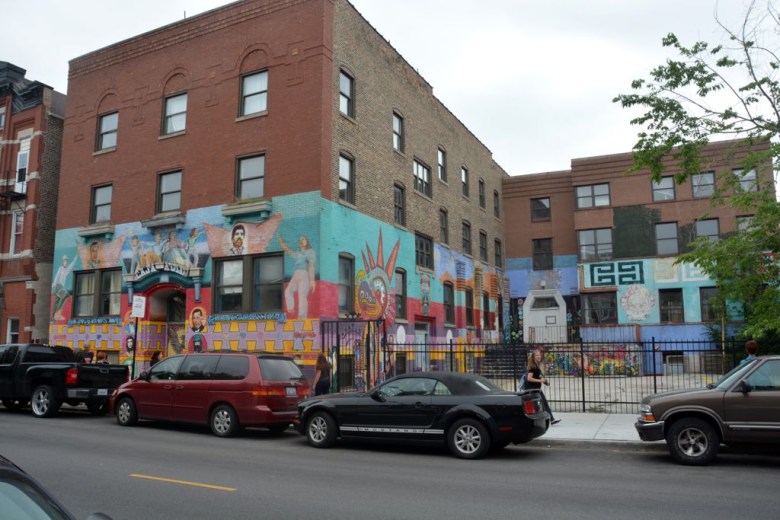 The original Casa Aztlan mural
Courtesy UIC
Flash ABC has overseen a fair number of memorials honoring people important to the hip-hop world. In 2016, Project Logan paid homage to Malik Taylor, aka Phife Dawg, from A Tribe Called Quest. A 2014 tribute to the late house DJ Frankie Knuckles had a long run on a Logan Square wall. Flash also oversaw a 2017 memorial to local hip-hop artist Mike “Mic One” Malinowski. Not every tribute that goes up is for a Chicagoan, but all are homegrown, significant to locals in some way. “We’ve done more memorials than we have done political messages, and that’s kind of where I like where the artist goes is where they pay tribute to somebody who’s even alive or not alive. Focus on the positive, because everybody else is doing the political,” Flash said.
So what does the Remember Iryna project purport to accomplish? Is it an earnest public art project that makes sense in Chicago? A dog whistle meant to manipulate the political discourse around the criminal justice system, doubling down on racist narratives about victims and perpetrators of crime? A right-wing PR stunt intended to force liberals into advocating for the censorship of free speech? Remember Iryna is not a grassroots memorial; more so, it is a political campaign funded by men who have been explicit about their ideological goals.
Footage of Zarutska’s tragic murder was released on September 5, 2025, a few weeks after her attack. The surveillance video quickly went viral, helping to fuel the ongoing Republican narrative about the supposed “surge” in violent crime. As the New York Times reported, “The outrage over the Charlotte killing is a part of a pattern in which President Trump and his allies highlight horrific crimes to bolster their case that the country is plagued by ‘American carnage,’ . . . despite statistics that show crime is dropping.”
Remember Iryna is not a grassroots memorial; more so, it is a political campaign funded by men who have been explicit about their ideological goals.
Elon Musk was part of this outrage, tweeting several times about the murder and the supposed lack of coverage in the mainstream media. On February 24, President Trump included several misconceptions about Zarutska’s death in his State of the Union speech, helping to perpetuate racist lies. “Above all, unleashing America’s promise requires keeping our community safe. We have made incredible strides, yet dangerous repeat offenders continue to be released by pro-crime Democrat politicians again and again,” he said, before pointing out Zarutska’s mother in the audience. “Last summer, 23-year-old Iryna was riding home on the train when a deranged monster who had been arrested over a dozen times and was released through no-cash bail stood up and viciously slashed a knife through her neck and body. . . . She had escaped a brutal war only to be slain by a hardened criminal set free to kill in America—came in through open borders.”
In fact, DeCarlos Brown Jr., the man charged with her killing, was a Charlotte native. And though he had a long history of arrests, he was not freed due to any Democratic attempt at lenient sentencing. He was incarcerated while former North Carolina governor Roy Cooper—a Democrat—was negotiating a deal to release a number of nonviolent offenders during the pandemic, but the Assembly reports that Brown had already been released before the agreement went into effect.
The larger issue was that Brown had a diagnosis of schizophrenia, which was often untreated as his family struggled to secure him long-term care. This problem is hardly unique to Brown. According to a 2022 survey from the National Council for Mental Wellbeing, 42 percent of U.S. adults who said they needed mental health treatment in the previous 12 months didn’t receive it due to costs or other barriers. As Pew has reported, less than half of people with serious mental illness, like schizophrenia, are receiving care: “Many receive treatment only in jails or prisons, which have become the de facto institutions for people with [severe mental illness] because we no longer have sufficient public hospital beds for them.”
Trump and his proxies have painted Brown as less than human. McCabe, for his part, shared several horrific screenshots of the attack on his X account, calling Brown a “monster.”
McCabe launched his mural campaign in September, just days after the video of Zarutska’s murder was released. Murals started popping up last year—in Washington, D.C., New York, LA, and then Chicago. Some of the artists and businesses who have participated in the mural project thus far have either denied any knowledge of the founder’s political leanings or tried to argue that the work wasn’t political. Ben Keller, an artist who painted murals of Zarutska in Washington, D.C., and New York City, told the Tribune that he “tries to stay away from the political noise because it can taint the murals’ message.” In Providence, the owners of a bar where a mural was slated to appear wrote in a statement that it was “never intended to be political.” The artist involved, Ian Gaudreau, said his artwork was “meant to combat the idea of it being used for a political agenda.”
Yet it takes just a cursory glance at McCabe’s X account to ascertain his political motivations. Among tweets praising Musk and Trump are racist and xenophobic remarks like, “One of the great sorrows of my life has been watching my beautiful home country of Ireland be destroyed by its own unfettered immigration policy. As of the end of last year there were 1.2M immigrants out of a total population of 5.38M.” The Chicago Reader’s requests for comment from McCabe and Musk went unanswered.
The local Ukrainian population has also been divided on the mural. Halyna Parasiuk, an archivist at the Ukrainian National Museum of Chicago, told the Sun-Times that “it’s good to keep this memory of this innocent girl.” Ukrainian artist Aliona Solomadina, who fled Ukraine in 2022, wrote in an email to the Reader that the tragedy “has been politicized within the American context,” noting that Zarutska was not attacked for being Ukrainian or a refugee, but “simply because she was sitting near the attacker.”
“From my perspective as an artist and designer, the mural as a medium isn’t appropriate for this story, especially given this politicization,” she wrote. “There are many other ways to support Ukrainian refugees, such as providing jobs or donating to volunteer organizations.”
Mariya Dmytriv-Kapeniak, president of the Ukrainian Congress Committee of America Illinois chapter, told the Sun-Times that she is in communication with Zarutska’s community in North Carolina, and that the family had not granted permission to use Zarutska’s likeness.
Knowing the hate-filled rhetoric behind the project, it’s hard to argue that Remember Iryna is a sincere attempt at memorializing her life. Nor does it merit an earnest conversation about free speech or the value of public art. It doesn’t hold a candle to the murals in our city that were forged in a participatory manner, that seek to tell people’s histories. McCabe is a founder of a billion-dollar company, as is Musk. They have the funds to make their opinions heard in a myriad of ways; the hundreds of thousands, or even a million, they spent on this campaign have yielded dividends in terms of influence. Perhaps the best course of action for their project is to ignore it.
Reader Recommends: ARTS & CULTURE
What’s now and what’s next in visual arts, architecture, literature, and more.
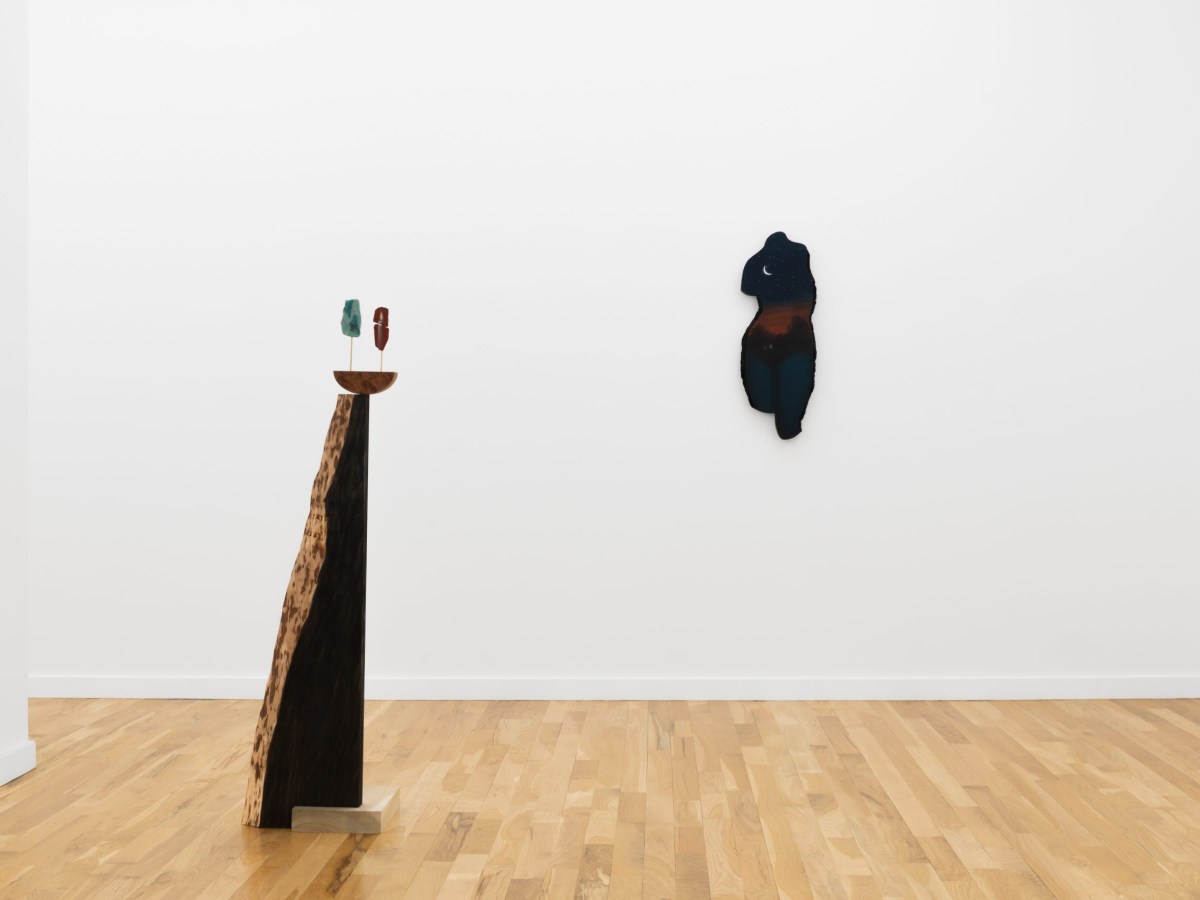
Dabin Ahn’s paintings and sculpture cast a quiet, tender spell over nighttime scenes.
April 8, 2026April 8, 2026
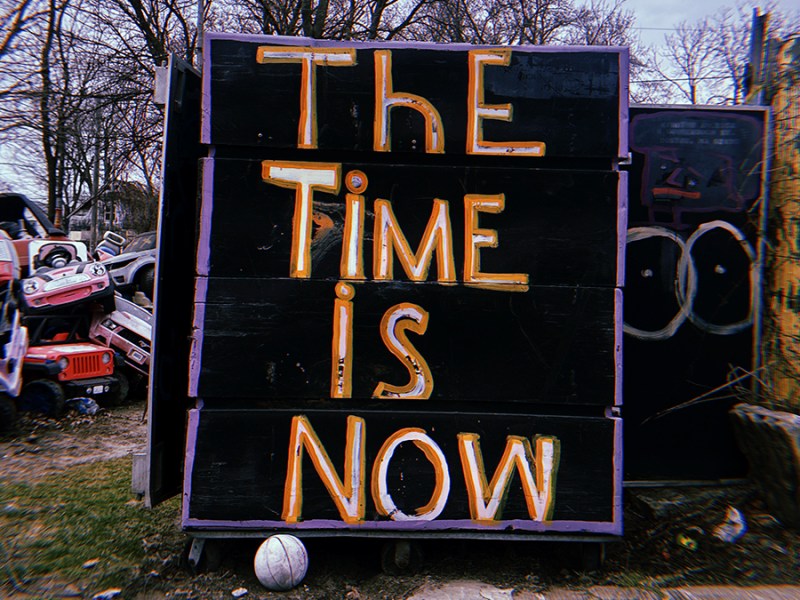
A weekend in Detroit’s art scene reveals a city building boldly, collectively, and without apology, and offers Chicago a powerful lesson in what becomes possible when confidence replaces scarcity.
April 6, 2026April 6, 2026
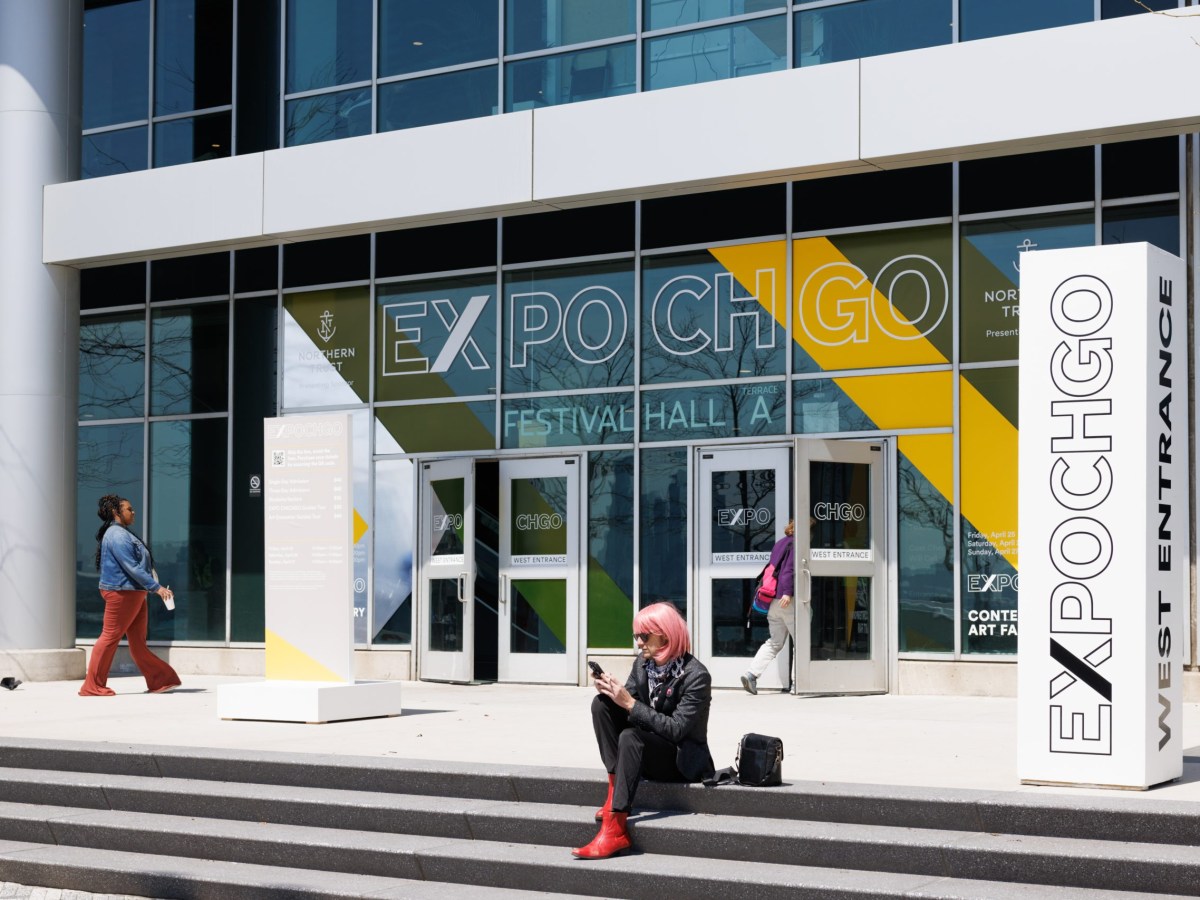
During EXPO Chicago 2026, the city’s art institutions put forth their most engaging programming.
April 3, 2026
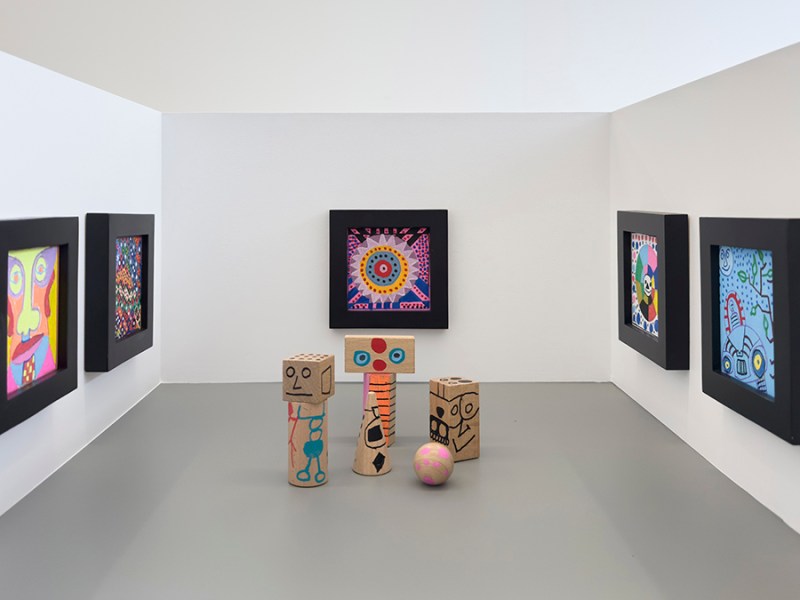
The fine-tuned Barely Fair hits its (shortened) stride once again.
April 2, 2026April 2, 2026

“Context 2026” investigates the hidden narrative behind still images.
March 23, 2026March 30, 2026
A Matisse exhibition displays the artist’s complete Jazz works at the Art Institute for the first time.
March 19, 2026March 30, 2026