
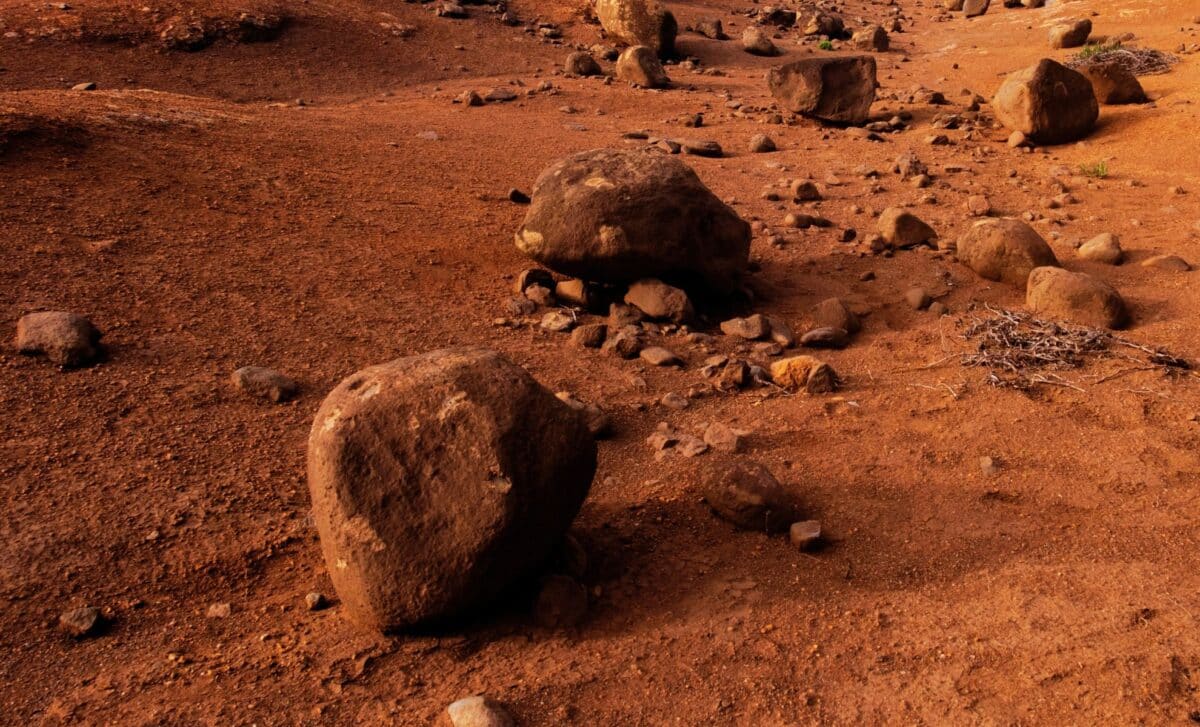
NASA’s Perseverance rover has spotted unusually high levels of nickel in ancient Mars rocks, pointing to a surprisingly rich chemical environment billions of years ago.
The finding comes from Neretva Vallis and echoes mineral patterns that, on Earth, are sometimes linked to microbial activity. This does not prove that life existed on Mars, but it adds a new piece to a scientific investigation that has been ongoing for years.
Since landing in February 2021, Perseverance has been exploring Jezero crater, a 45-kilometer-wide basin believed to have once held a lake. As reported by Dr. Henry Manelski and his team at Purdue University, the crater shows clear signs of ancient water activity, including river channels and sediment deposits.
The rover eventually reached Neretva Vallis, an old river inlet where sediments dating back about 3 billion years have been preserved.
Record Nickel Levels Found In Martian Bedrock
To analyze the rocks, Perseverance used a mix of laser tools, infrared sensors, and X-ray instruments. Findings published in Nature Communications indicate that nickel showed up in 32 out of 126 rocks analyzed, with concentrations reaching up to 1.1% by weight.
“Generally, nickel is a trace element on the surfaces of Earth and Mars because the vast majority of it migrates into the planets’ cores during their formation. The substantial amount we have detected on the surface places unique constraints on how these rocks formed and were subsequently altered,” explained Henry Manelski.
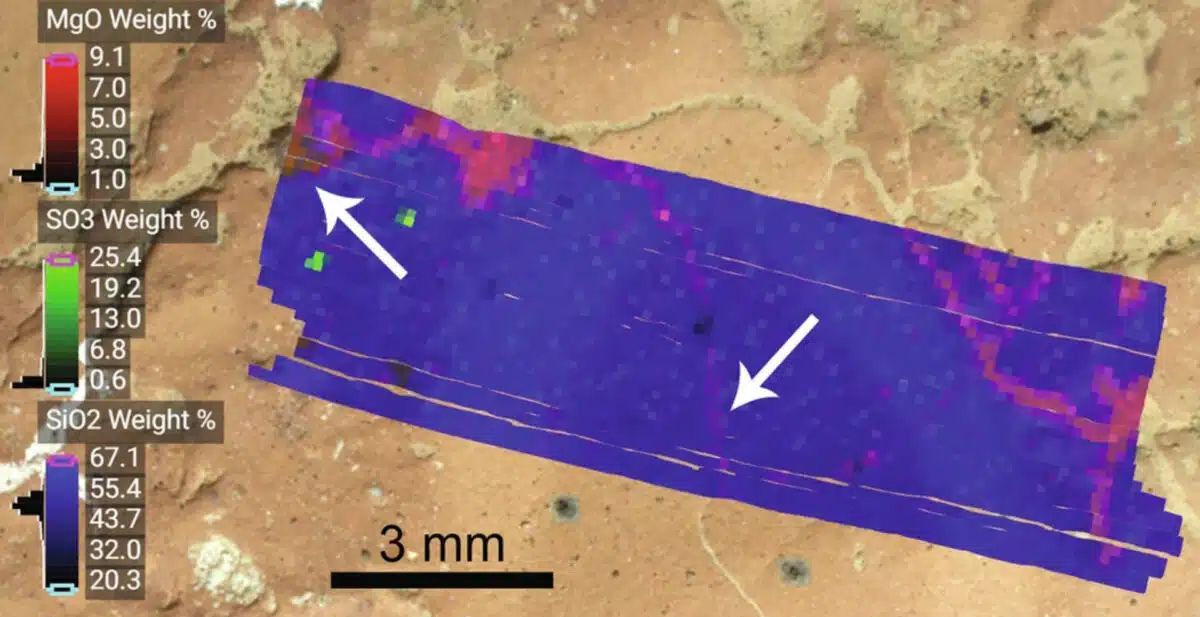 Nickel found in magnesium-sulfate veins in Jezero crater suggests an authigenic origin. Credit: Manelski & al.
This is the highest nickel level ever measured in Martian bedrock. The element appears alongside iron sulfide minerals and sulfates such as jarosite and akaganeite, which form as these rocks break down over time. He also noted:
“Nickel-rich iron-sulfide is observed on Earth in ancient sedimentary rocks. Iron sulfide weathers easily in oxygen-rich environments, so its presence in ancient terrestrial rocks is one line of evidence used to demonstrate that Earth’s early atmosphere was once very oxygen-poor,”
Looks Like Earth’s Mineral Formations
Scientists were particularly struck by how these Martian minerals resemble pyrite, a common iron sulfide on Earth. Similar formations on our planet are often associated with microbial processes, especially in low-oxygen environments involving sulfate and iron.
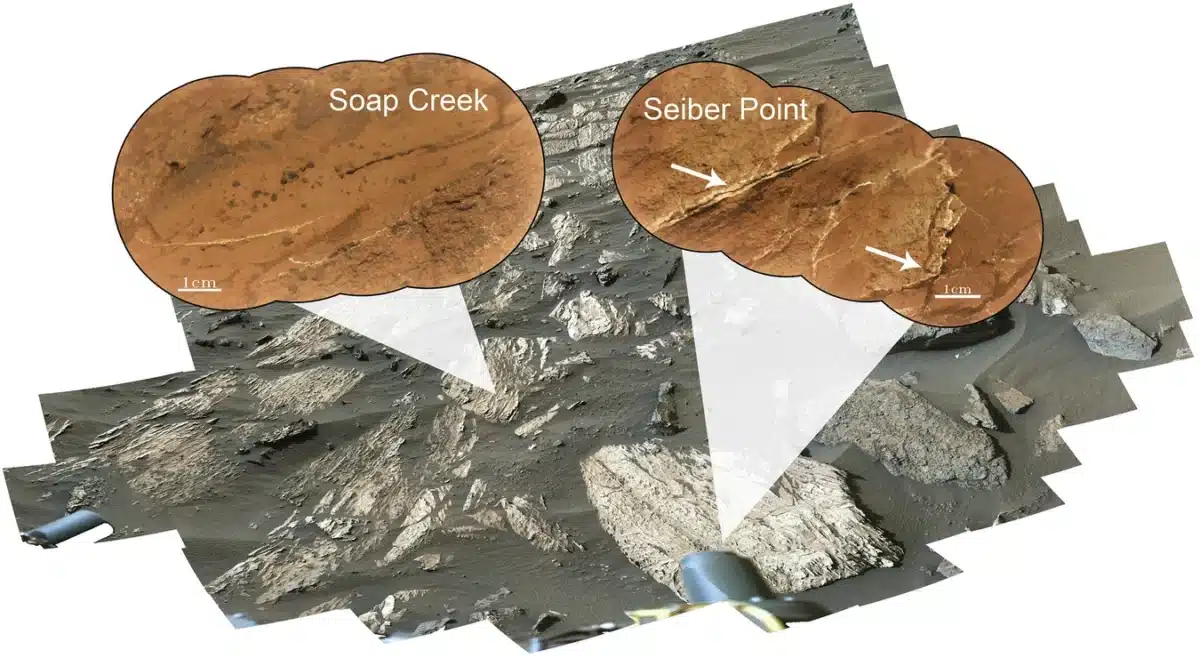 Mineral veins in Jezero crater captured by Perseverance, with close-ups of Soap Creek and Seiber Point. Credit: Nature Communications
The same region has also revealed iron sulfides alongside organic carbon compounds. This combination can be linked to biological activity, though it may also result from purely chemical reactions.
“The presence of nickel-rich rocks indicates that, if living organisms had been present on early Mars, nickel may have been available in a form that they could have used.”
An Unresolved Origin
The source of the nickel remains uncertain. Researchers suggest it may come from the breakdown of volcanic rocks or from a nickel-rich meteorite.
“Further research is needed to determine the source of nickel in Neretva Vallis and to investigate possible connections between it and organic matter in this location,” the authors concluded.
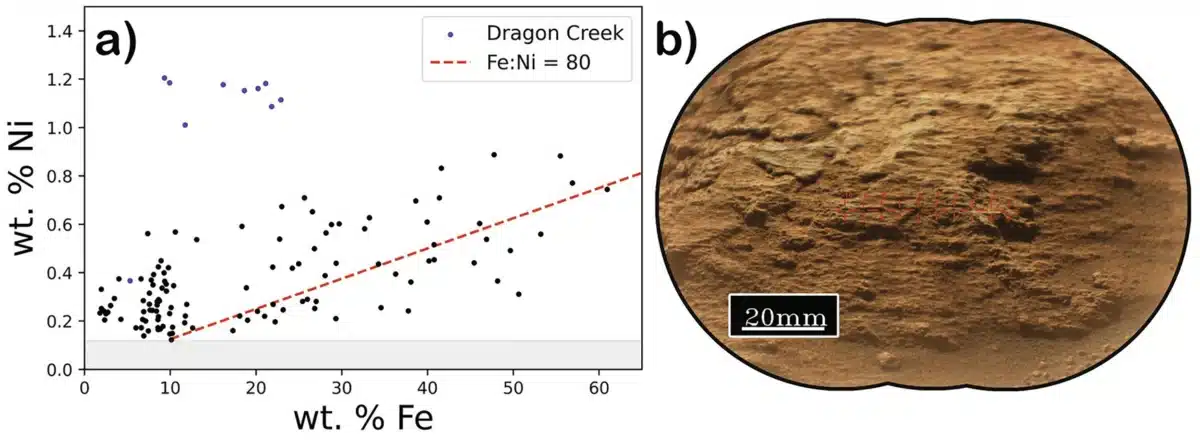 Nickel vs. iron levels in rocks at Dragon Creek (a) with a close-up of the analyzed surface (b). Credit: Nature Communications