
Bottom lines up front
After more than a month of war and amid an uneasy cease-fire, Iran announced Friday that it would reopen the Strait of Hormuz for ships traveling a pre-approved route, while President Donald Trump vowed to continue a US blockade on Iranian ships. Both sides are still negotiating a deal to bring the conflict to a close.
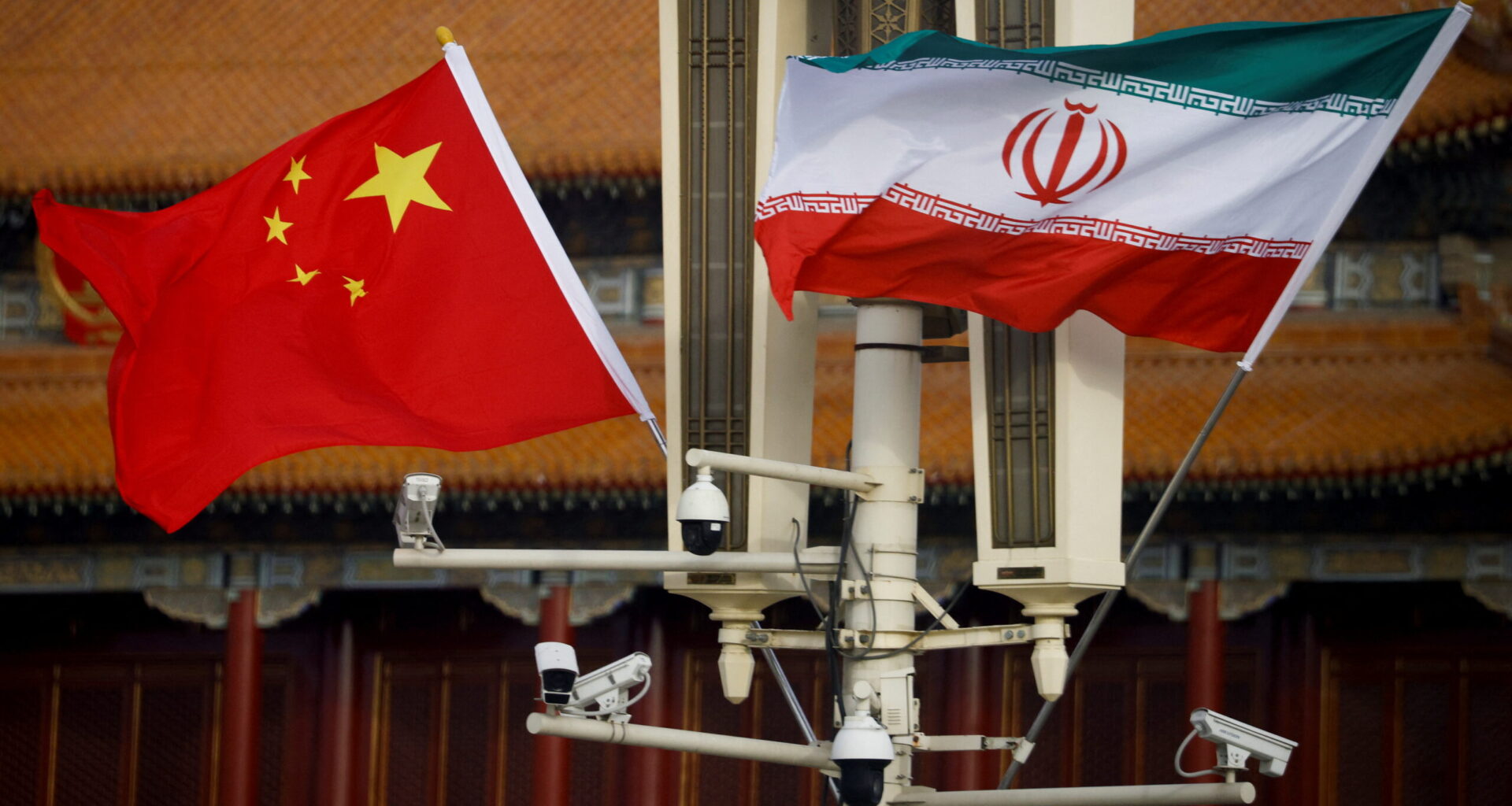
Much of the discussion around the conflict has rightly focused on how it will reshape the Middle East, but there is another important dimension that should not be overlooked: how the war will impact US competition with China.
To explore these geopolitical impacts—and in particular what the conflict might mean for the US-China competition that lurks behind the conflict—we propose a set of scenarios grounded in the intersection of two factors: the extent of the US military commitment in the Gulf going forward (limited and focused on degrading Iranian capabilities, or sustained and decisive), and how China chooses to posture itself in the days and weeks ahead (passive and economically opportunistic, or active and strategically engaged in Iran’s recovery). These two variables are not fully independent—US choices will shape Beijing’s calculus, and vice versa—but treating them analytically as distinct axes allows us to map the range of plausible outcomes.
Running through all four permutations is a third variable that may matter most: whether disruption to the Strait of Hormuz shipping lane remains contained and short-lived, or whether it extends in ways that structurally reshape global energy markets and the global economy.
Scenario 1: Managed erosion of US primacy
US limited, China passive
In the most likely near-term scenario, the cease-fire holds just long enough to produce a negotiated or tacit understanding that falls well short of a comprehensive settlement. The United States has conducted limited but effective strikes degrading Iran’s drone, missile, naval, and nuclear infrastructure, but regime change has not occurred and Iran retains the capability to make trouble for its neighbors. China watches from the sidelines, deepening its economic ties with a sanctions-weakened Tehran at discounted rates but refraining from the kind of material or diplomatic support that would constitute a substantial alliance.
If the Hormuz disruption remains contained—absorbed through coordinated strategic reserve releases and alternative Gulf energy routing—the system holds. US-Gulf security partnerships deepen. The energy shock is painful but finite. The outcome is marginal: a modest erosion of US alliances, especially in Europe, offset by a demonstrable, if incomplete, use of force. China gains incrementally, at least in the sense that its strategic partner survived the US-Israeli onslaught.
If, however, the Hormuz disruption extends—whether through Iranian harassment, mines, or a continuation of the “tolling” dynamic in which Iran exploits its residual leverage to extract substantial passage fees from shipping rather than outright closing the strait—the picture darkens considerably. Japan and South Korea, already absorbing acute energy stress, face difficult political choices about continuing the costs of US alignment. European liquefied natural gas markets would face considerable strain. Without a more definitive resolution, alliance cohesion fractures steadily, and China benefits in a more substantial way.
Scenario 2: Strategic windfall for Beijing
US limited, China active
In a more dangerous variant, Beijing concludes that Washington’s limited approach signals either an unwillingness or an inability to sustain decisive force and chooses to actively shape the outcome. Similar to the first scenario, the cease-fire fails to produce a comprehensive settlement. Chinese support for Iran shifts from passive economic opportunism to something more substantial: material assistance, intelligence sharing, logistical support, and diplomatic cover in multilateral forums that shields Tehran from further isolation, enables it to inflict greater pain using its remaining coercive instruments, and helps to tie down the US military in the Middle East. The Sino-Russian-Persian alliance deepens, and Tehran bounces back more quickly than expected from the costs imposed by US-Israeli strikes.
Should Iran continue to constrain traffic through Hormuz while making exceptions for Beijing, the consequences become systemic. Sanctions regimes fracture as the United States’ European and Asian allies prioritize domestic energy security over geopolitical solidarity. The exposure of limits in US coercive power—not just in the region but in the eyes of every actor watching from Taipei to Vilnius—is the most consequential outcome, more damaging than any battlefield result. US alliances suffer, as allies engage in major hedging.
Scenario 3: Reassertion of US primacy
US sustained, China passive
The current cease-fire may prove to be not an endpoint but a pause before escalation. If negotiations falter, Washington faces a choice: accept an inconclusive outcome or recommit to a decisive campaign. In this scenario, the United States chooses recommitment: the systematic destruction of Iran’s distributed drone and missile networks, the aggressive pursuit and seizure of nuclear materials, a full-court military offensive to clear the coastline abutting the strait, and pressure sufficient to produce regime collapse or capitulation.
If this campaign is successful, with China remaining passive and the strait reopened through effective military action, this scenario produces a more favorable US outcome: restoration of demonstrable US primacy and a significant strategic setback for Beijing as it loses a strategic partner. Regional actors align with Washington. The implications for US deterrence remain more mixed; while the United States will have demonstrated its resolve, replacing key expended weapons systems necessary for other contingencies, such as Taiwan, will take years.
Moreover, a decisive campaign would likely take time to neutralize distributed threats. An extended Hormuz disruption—even during a winning US campaign—imposes visible costs on the United States. Allies absorb them if a credible, definitive, and sustained end-state is in sight. China, sidelined from direct involvement, accelerates long-term military modernization in response. The victory for the United States is real but at greater cost to US readiness to deal with potential conflict in other theaters.
Scenario 4: Great power inflection point
US sustained, China active
The fourth scenario is arguably the most dangerous. The United States pursues a decisive military outcome; China responds not with passivity but with substantial, indirect intervention: advanced intelligence, surveillance, and reconnaissance support; countermeasures; logistics assistance for Iranian forces; and coordinated, heightened pressure in parallel theaters, most consequentially in the Taiwan Strait and South China Sea. Washington faces a two-front challenge it has not had to manage since the Cold War.
If the United States moves rapidly and restrictions on the strait are removed, then it outpaces Chinese intervention. But strategic competition hardens and heightens into overt confrontation. The post-cease-fire relationship between Washington and Beijing is different and sharper: It transitions from managed rivalry to something closer to a Cold War dynamic with hot edges.
With China supporting Iran and the Hormuz blockage extended, the consequences are structural and generational. A third front is established alongside Ukraine and Taiwan in a global contest over the new era’s order. Prolonged energy shocks drive a global recession and generate even greater US-China friction in the continuing race for advanced artificial intelligence. The Sino-Russian alignment is strengthened into something approaching a formal alliance. Formalized cooperation among Moscow, Tehran, Beijing, and Pyongyang coheres into a revisionist coalition with genuine systemic weight. Even a US military victory in this scenario is deeply Pyrrhic: won at the cost of critical munitions depletion, alliance fracture, and a dramatically more hostile international environment.
The transformational variables
The duration of disruption to the Strait of Hormuz is the single most consequential factor in determining whether the conflict’s effects remain regional or become systemic. This single geographic chokepoint plays a vital role in global energy markets and the world economy writ large. Short disruptions are absorbed; extended disruptions restructure alliances and markets in ways that outlast any military outcome.
In addition, the role of China is the pivotal variable for long-term great-power competition. A passive China limits Iranian escalation pathways and leaves Washington with room to shape outcomes. An active China transforms a regional war into a global inflection point. Beijing’s current posture suggests it is watching carefully, content for now with the economic opportunities a weakened Iran presents, but fully capable of recalibrating if it concludes that US forces are overextended.
Finally, alliance cohesion is the center of gravity that US adversaries are most likely to target. Energy stress is the primary mechanism for fracture: when costs rise significantly and the United States’ desired end state appears unclear, political divergence follows. The cease-fire window offers Washington a narrow opportunity to present a credible path toward a resolution. If talks collapse or produce only ambiguity, the pressure on alliance partners to hedge accelerates.
What comes next
The most probable near-term trajectory is an uneasy, inconclusive peace that fits closest to the first scenario: limited US action, passive but opportunistic Chinese positioning, and a Hormuz that is open in form but remains contested in practice. Neither side has achieved its maximalist objectives. The underlying conflict—over Iran’s nuclear program, its regional posture, and the legitimacy of the new Iranian leadership—remains unresolved.
That ambiguity is its own risk. History suggests that inconclusive endings to conflicts of this magnitude rarely stay inconclusive. The conditions for escalation to scenarios two or four are present if talks fail and Washington faces internal pressure to demonstrate that the forty days of strikes produced something durable. The conditions for the more favorable scenario three outcome depend on whether the Trump administration can convert military gains into a coherent political strategy—a task that has proven considerably harder than the strikes themselves.