
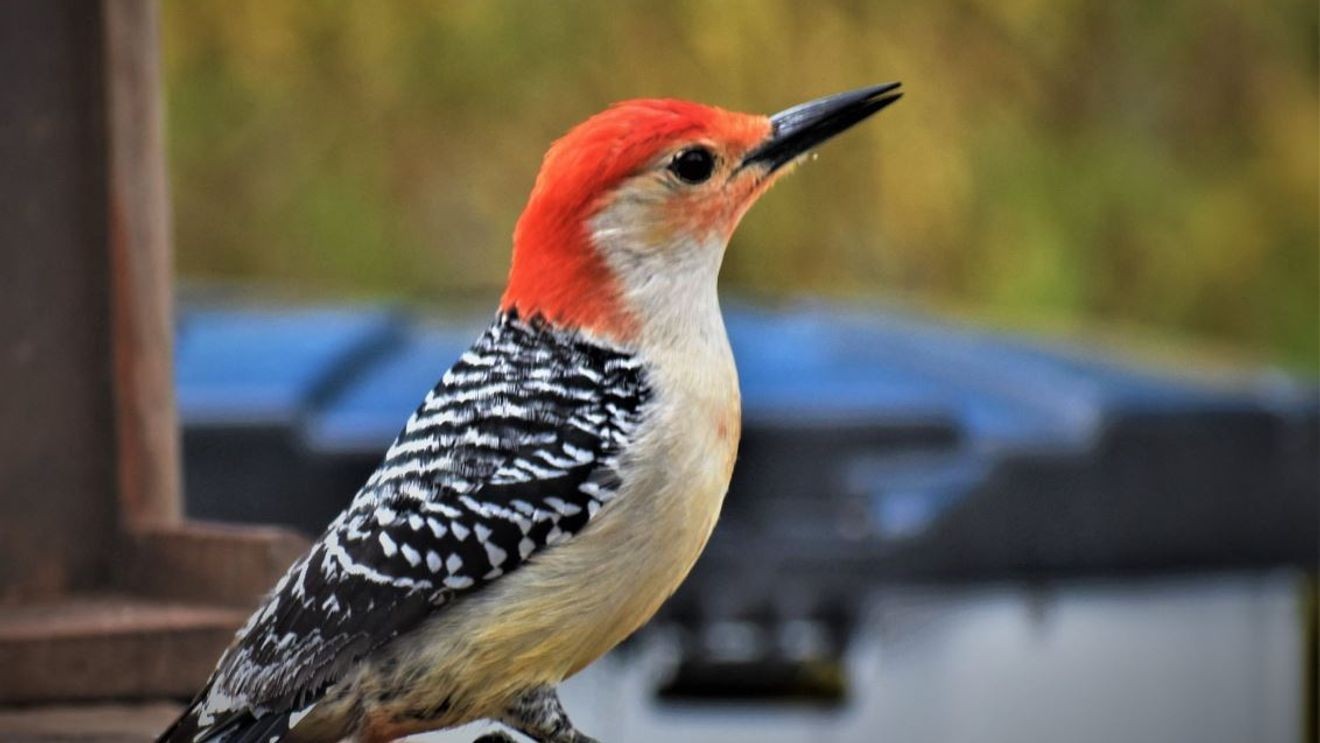
PORTLAND (WGME) — Mid-April through mid-May marks one of nature’s busiest travel seasons, as hundreds of North America’s breeding bird species make their journey north.
Increasingly, that journey is being shaped by a warming climate.
Migratory birds are highly attuned to environmental cues like day length, plant growth, temperature, and rainfall.
They rely on these signals to time their spring arrival with peak food availability, blooming plants, and optimal conditions on their breeding grounds.
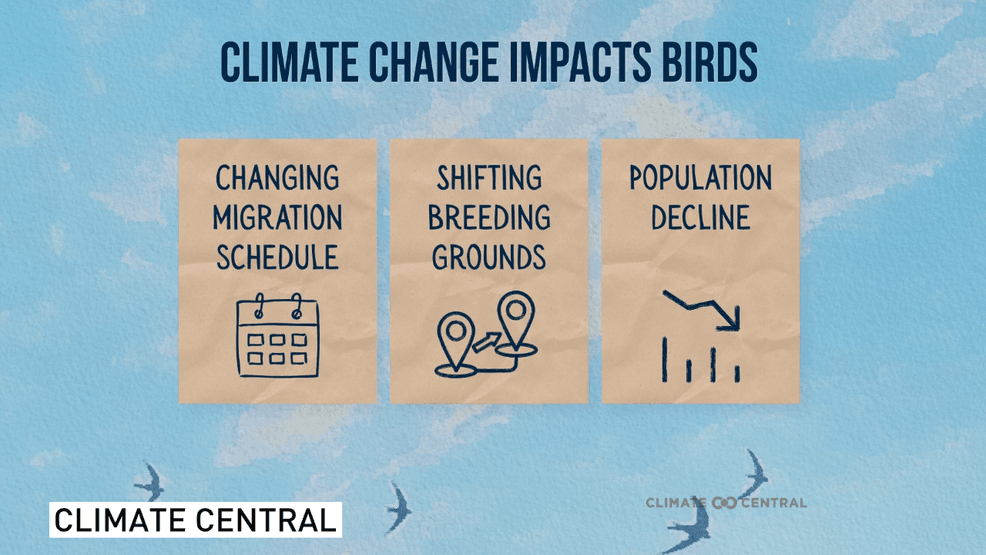 How climate change impacts birds (WGME).
A warming climate is making it harder for bird species to rely on their usual environmental cues.
Migration timing is shifting earlier, often by several days compared to the past. At the same time, insects are emerging sooner, raising the risk that birds arrive exhausted after peak food availability has already passed.
Warming temperatures are also pushing breeding ranges farther north, as birds seek out cooler, more suitable conditions.
In the future, species that cannot adapt to these rapid changes may face population declines.
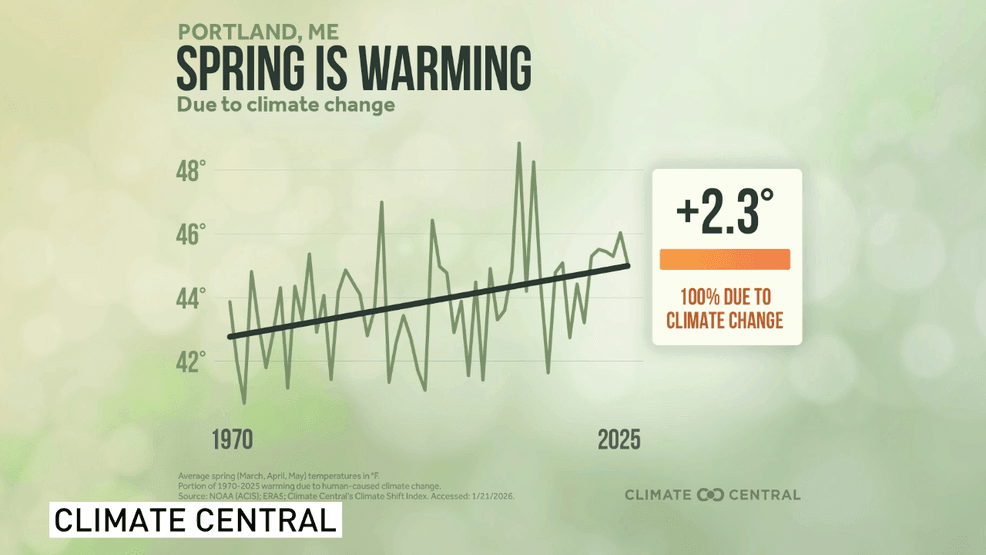 Average spring temperatures warming in Portland (WGME).
Spring is warming across the United States.
In Portland, average spring temperatures have risen by about 2.3 degrees since 1970, reflecting a broader warming climate.
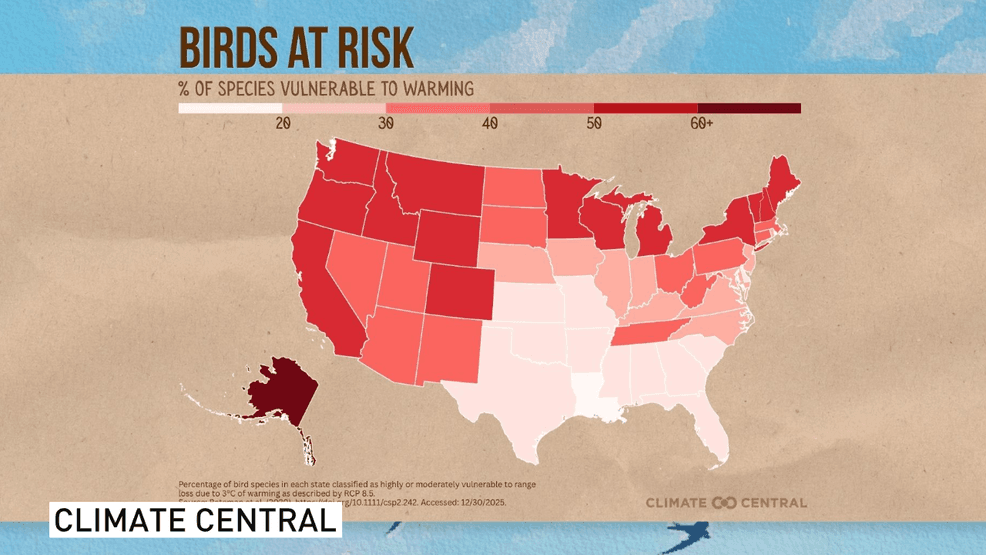
Birds at risk to warming (WGME).
Across much of the United States, a significant share of species are already classified as vulnerable to rising temperatures.
The highest percentages appear in northern states and the West, where more than half of bird species in some areas face potential range loss as conditions shift.
As temperatures rise, habitats are changing faster than many species can adapt, forcing birds to shift where they live, breed, and migrate.
Maine falls into the top six states where the most vulnerable species are.
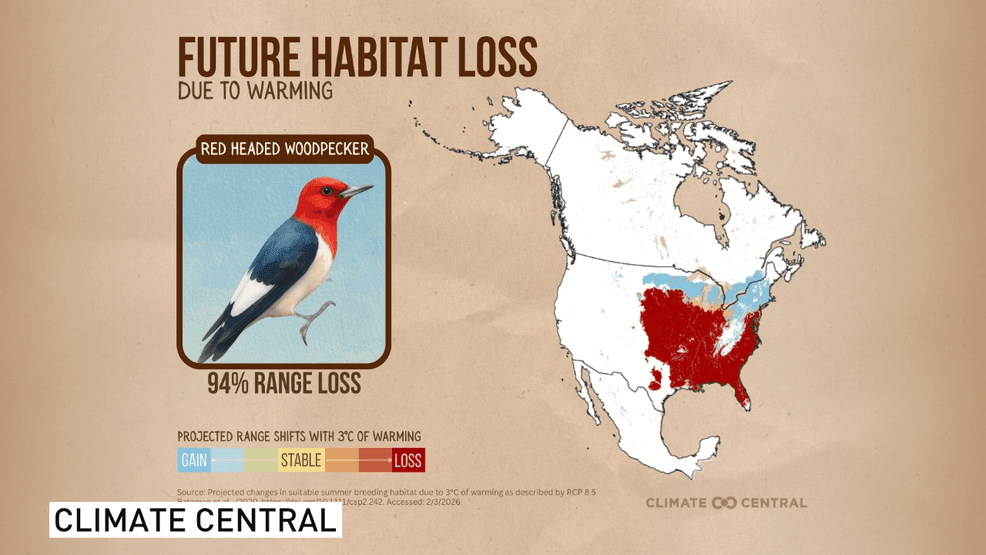
Future Red Headed Woodpecker habitiat loss due to warming (WGME).
Range loss refers to the areas where birds typically migrate, breed, and live.
With 5 degrees of global warming, Red-headed Woodpeckers would experience a 94% range loss, pushing them further north into habitats more sustainable for them.
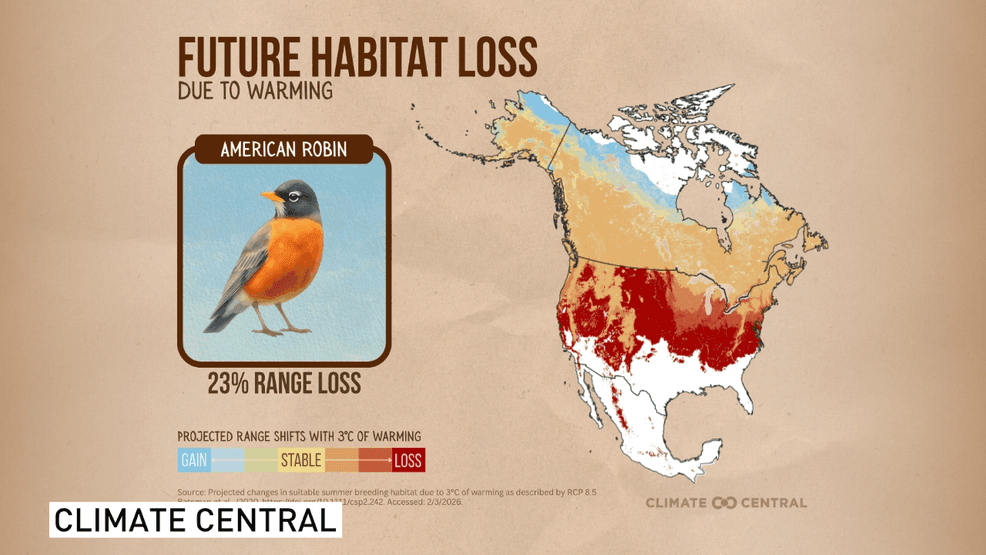
Future American Robin habitat loss due to warming (WGME).
Compare this to the American Robin, a very popular bird here in the United States, would experience a 23% range loss due to a warming climate.
The next time you notice birds returning this spring, you may be witnessing more than a seasonal change. You’re seeing a migration in transition, one increasingly shaped by a warming climate.