

SEATTLE — As artificial intelligence makes it easier to create convincing websites and marketing, online shoppers are finding it increasingly difficult to tell legitimate businesses from scams, according to the Better Business Bureau.
Complaints about online shopping issues are widespread, cutting across age groups, income levels, and locations, according to the BBB.
While some reports involve poor store policies, many point to outright scams — and those scams are becoming more sophisticated.
Cameron Nakashima of the BBB says scammers are now using AI to generate realistic websites, product images, customer testimonials and social media posts that can deceive consumers.
“Even legitimate businesses are using AI,” Nakashima said. “That makes it harder to distinguish between real and fake at first glance.”
In the past year, the BBB serving Washington state received about 740 complaints and 1,600 scam reports tied to online shopping.
Consumers reported losses totaling more than $700,000.
One recent example highlights how convincing these scams can be.
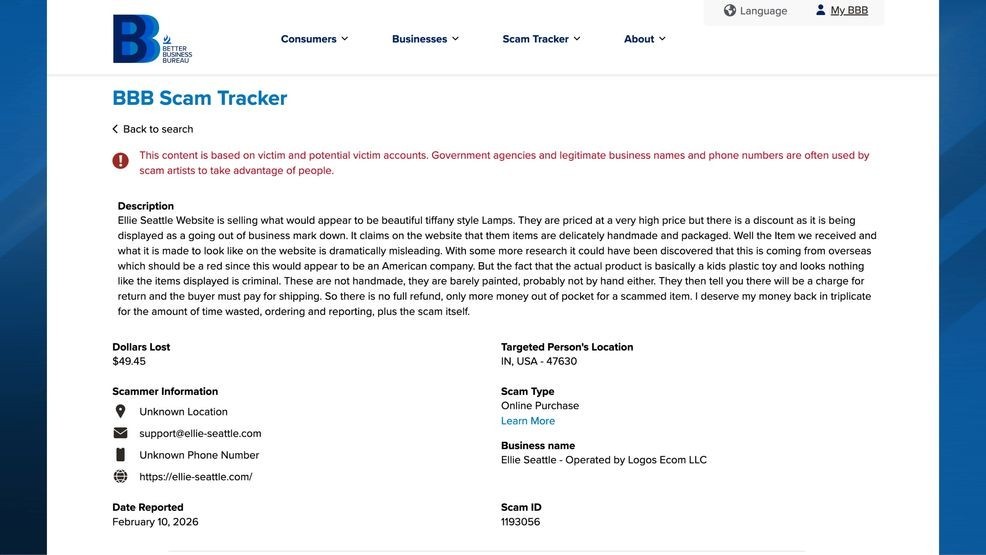 A screenshot of the complaint filed with the BBB. (courtesy BBB){ }
A website operating under the name “Ellie Seattle” advertised handcrafted stained-glass lamps and presented itself as a small U.S.-based business. Customers who placed orders reported receiving cheap plastic items — or nothing at all — and were unable to get refunds.
The BBB identified several red flags on the site:
Uniform deep discounts: All items were listed at the same price and marked down by about 80%, paired with “going out of business” messaging and limited-supply warnings designed to create urgency.Misleading return policies: While the site advertised “easy returns,” customers were required to pay high international shipping costs, making refunds impractical.Unverified reviews: The company claimed to have tens of thousands of satisfied customers, but did not link to independent review platforms such as BBB.org, Google, or Trustpilot.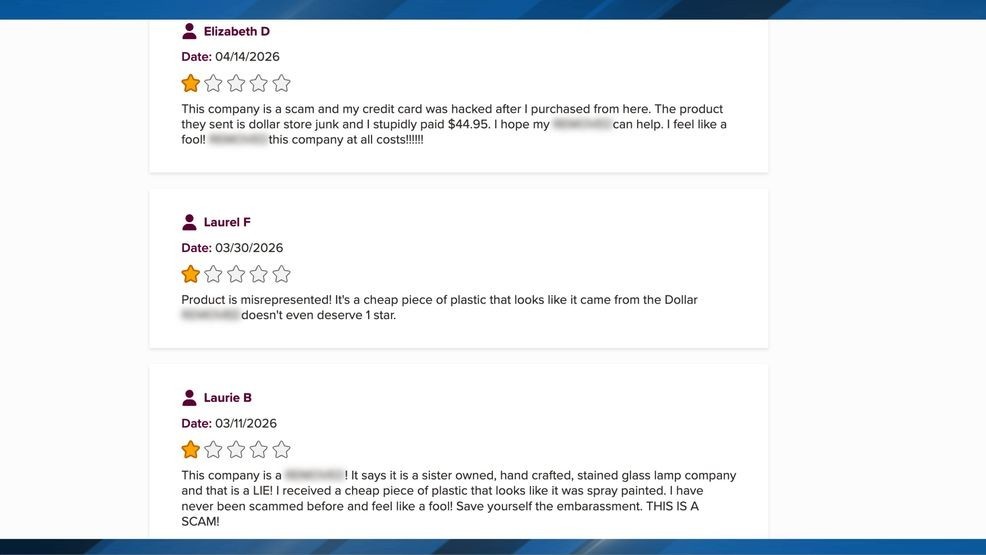 A screenshot of the complaint filed with the BBB. (courtesy BBB){ }
“These tactics are designed to build trust quickly but don’t hold up under closer inspection,” Nakashima said.
The BBB urges shoppers to take a few precautions before making online purchases:
Scrutinize deals: Deep discounts, flash sales, or unusually priced items should prompt additional research.Review return policies carefully: A “hassle-free” return claim may hide costly or complicated requirements.Verify the seller independently: Check third-party review sites such as BBB.org rather than relying on testimonials posted on a company’s own website.
Consumer advocates say taking a few extra minutes to research a business can help prevent financial losses and protect personal information.