
You can’t miss it. Written in the window of the Ordovas gallery in London is the single word RED. Some exhibition titles try to entice you in. Not this one. This one feels like an instruction. Come in and see this show, it shouts. Or else.
Inside, a tasty selection of modern artists can be seen putting the colour through all sorts of paces — and it made me think about how many artists favour red, and the colour’s role in art.
Among its many qualities, red is surprisingly adaptable. When Bridget Riley uses it in one of her stripy rainbow abstractions, it nestles quietly between blue and green, a happy colour, you feel, given a unifying role.
But then the naughty surrealist Joan Miró gets his hands on it and gives us two cheeky biomorphs indulging in X-rated hanky-panky. The blob on the left is clearly the feminine one because Miró has topped one of her upper mounds with a splodge of nipple pink. But the other blob has grown something bent upwards like a banana from its lower regions. Hanging from it is a red sac coloured so brightly a baboon would be proud to sport it on its derrière. What can it be?
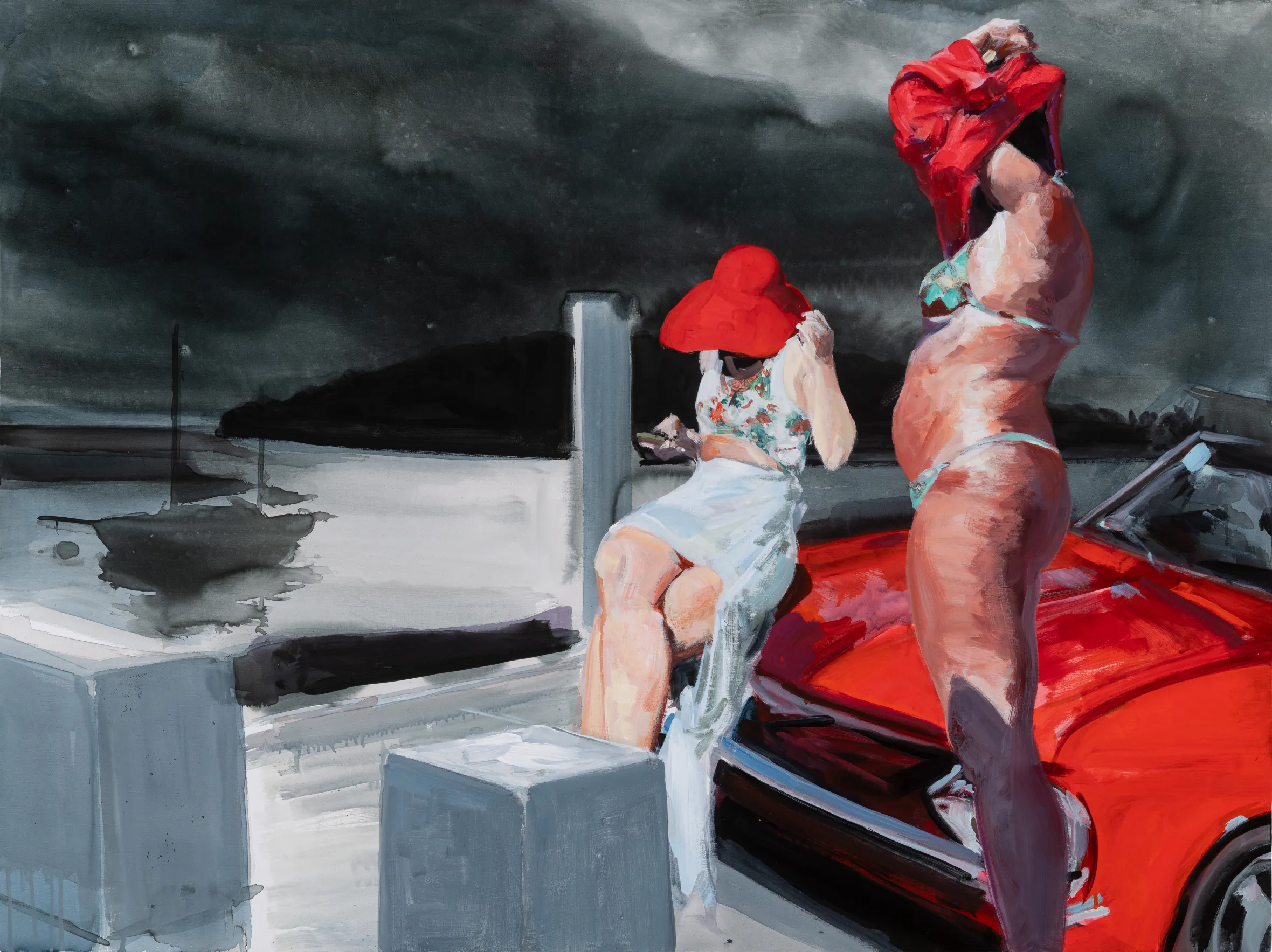 Red Hat, Red Shirt, Red Car: Storm’s Coming by Eric Fischl, 2025© Eric Fischl. Photography by Gary Mamay
The sexiness of red is also what Eric Fischl seems to be enjoying in a Californian beach scene in which two women who have driven up in a red sports car — a little red Corvette? — slip out of their red dresses and into bikinis. But this same sexy lipstick tone becomes something militaristic and historically aggressive when Umar Rashid uses it in a faux oval “official portrait” from 1798 sported by a certain “Hippolyte of Gonaives, pretender to the throne of Hispaniola”.
Who is this guy? Is he a goody or a baddy? Judging by his eye-catching red uniform he must be a figure from the colonial era. And something about that militaristic red coat tells me immediately he’s up for the fight.
All this is enjoyable. The dozen examples gathered here of the different uses of red in contemporary art prompt you to notice colouristic issues that might otherwise pass you by. But there’s a problem. So effective is the show at encouraging colouristic thoughts that after five minutes my imagination forgot the exhibition and began ranging across the whole of art history searching for telling reds.
The first image that loomed up, unstoppably, was Titian’s huge Assumption of the Virgin in the Basilica di Santa Maria Gloriosa dei Frari in Venice. Designed to be seen from way back in this looming church, high above the altar, almost 25ft tall, Titian’s biggest painting is a spectacular tribute to the eye-catching power of red.
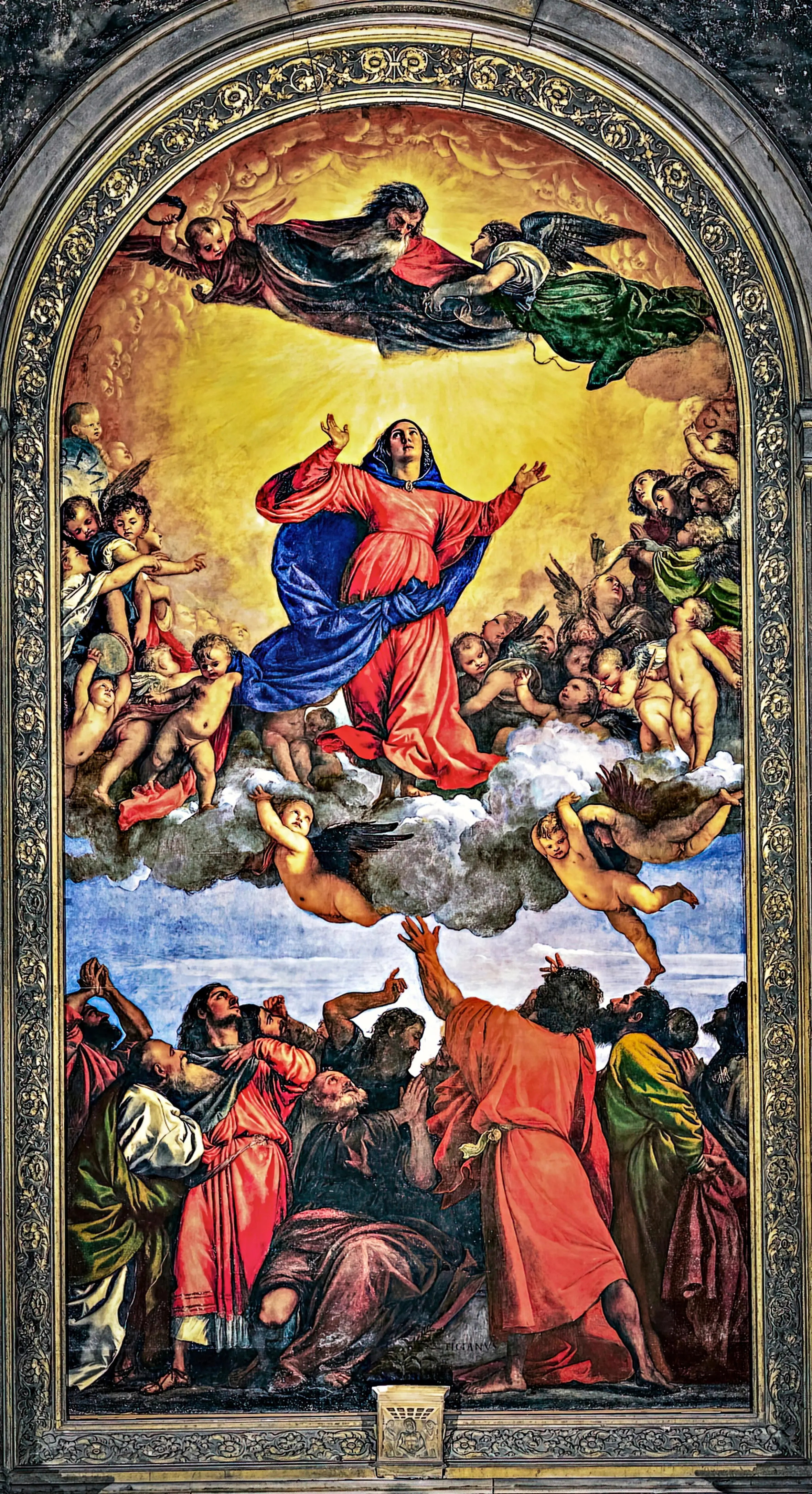 Titian’s The Assumption of the Virgin puts both the Virgin Mary and God in redAlamy
The Virgin Mary is on her way to heaven. Usually in art she wears celestial blue, but in this instance Titian has given her something scarlet to ascend in, a dress of striking red made more thrilling still by the golden sunlight streaming in through the window behind.
Above her, the waiting God the Father is also in red. Below her, the most prominent of the apostles waving her goodbye are in matching crimson. In his Frari masterpiece, in a spectacular ascent through several red layers, Titian puts the sexiness of red at the thunderous service of the church.
That, though, is not what Van Gogh does in his edgy nocturnal interior of the night café in Arles, a painting whose French title, Le café de nuit, suits it perfectly. The last thing Vincent has on his mind in this depiction of a sleazy red drinking den is the wonders of God.
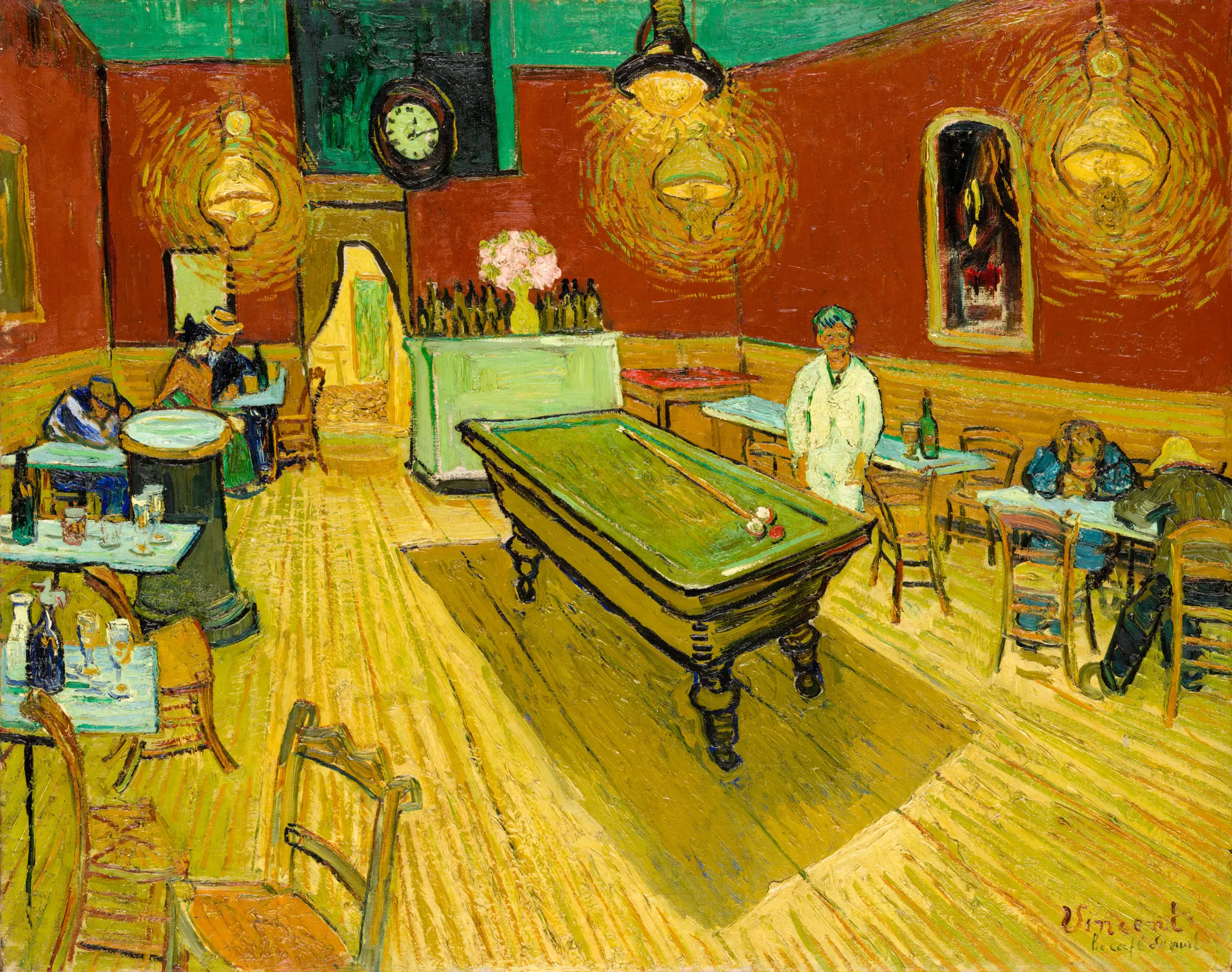 Van Gogh’s Le cafe de nuit depicts a sleazy red drinking denAlamy
Painted in 1888, the picture shows a dingy bar with a billiard table in the middle and a ring of comatose customers. The night café was a favourite haunt of drunks, prowlers, prostitutes. Vincent, too, was a nightly visitor. And what he has tried to do here is suggest the squalor and anxiety of the place with a toxic colour combination of lurid red walls, a green roof and gas lighting so oppressively yellow and bright, it feels like the search beams of a watchtower.
As Van Gogh wrote to his brother, “I have tried to express the terrible passions of humanity by means of red and green.” This is red as the colour of despair, anxiety, disquiet. Now that you mention it, back at the Ordovas show Fischl may have been trying for darker moods than I initially realised in his stormy beach scene. The clouds above the sea are black and threatening. The women haven’t just arrived. They’re putting on their red dresses to leave.
Thinking again about the Miró, what’s interesting is how little red paint it takes to have an impact. His nipple tip is tiny. But you can’t miss it. Prompted again to let my imagination roam, I found myself thinking first of one of the most beloved of all impressionist paintings, Monet’s charming depiction of The Poppy Field Near Argenteuil.
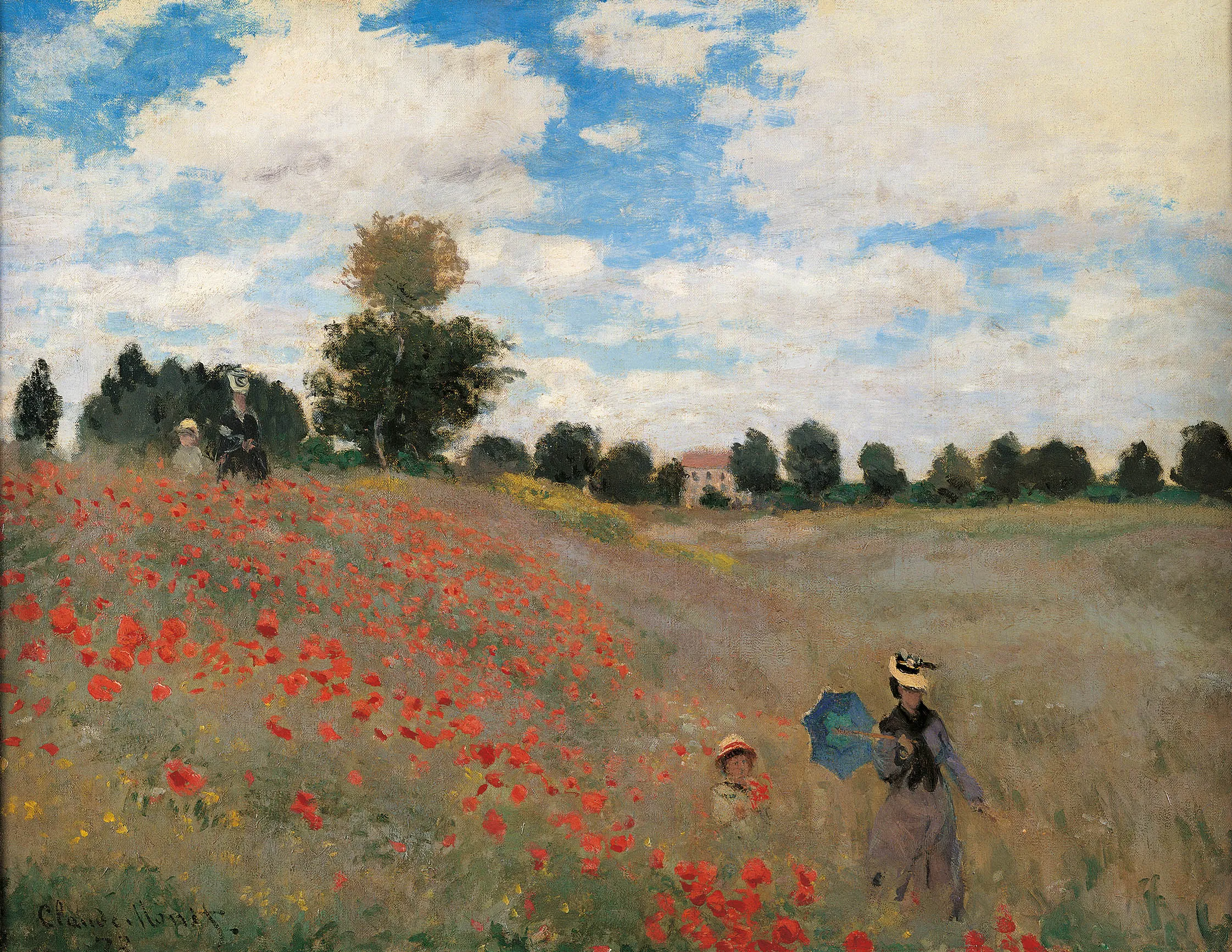 Monet’s The Poppy Field Near Argenteuil uses red to create a sea of delirious colourGetty Images
You know the one. Blue sky. Green hillside. Woman with a parasol walking through the grass with her child, surrounded by gorgeous freckles of red poppies. Each poppy is tiny. Just a speck of crimson. But every tiny flower is punching above its weight, creating an impression of a sea of delirious colour.
At the recent Turner & Constable show at Tate Britain, much was made of the incident in the rivalry when Constable showed his grand view of Salisbury Cathedral at the Royal Academy, only to be upstaged by Turner, who turned up at the last minute and added to his sea scene a conspicuous red buoy bobbing about in the water. One drop of red and it stole the show. “He has been here and fired a gun,” Constable complained.
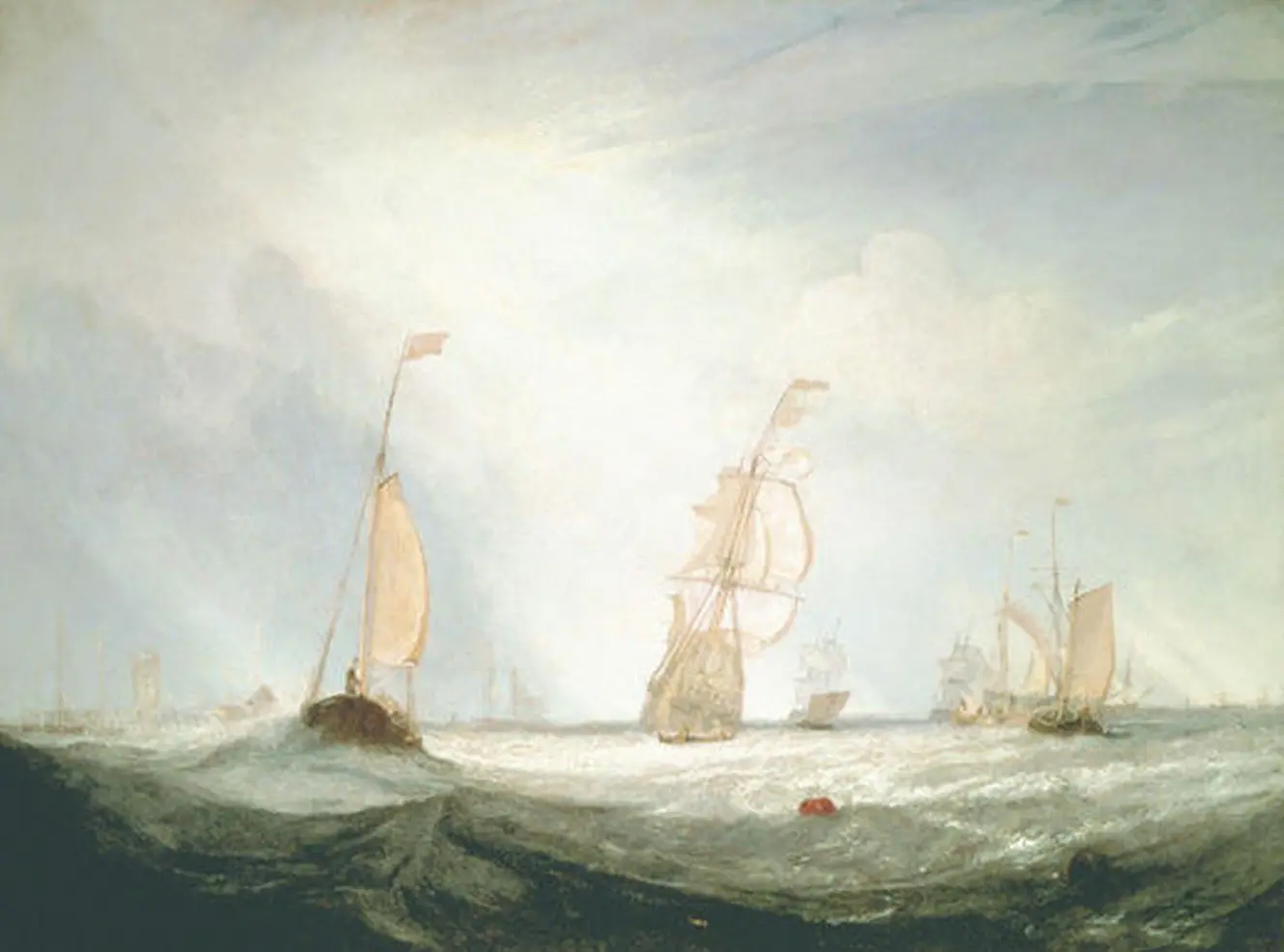 Helvoetsluys by JMW TurnerAlamy
So, yes, there’s a lot of shooting going on at the Ordovas show that inspired this reflection. And all of it is instructive.
Red, Ordovas, London W1, until April 24
What exhibitions have you enjoyed recently? Let us know in the comments below