
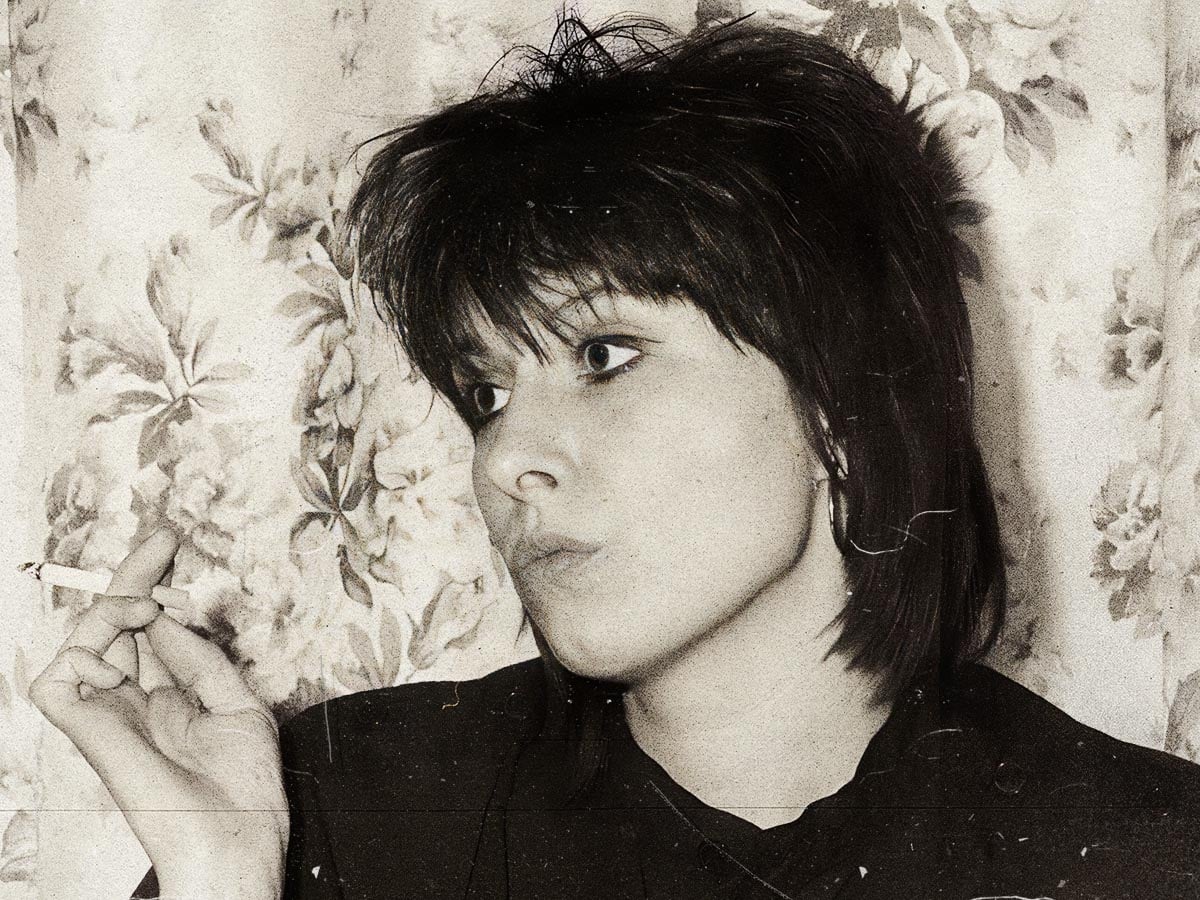
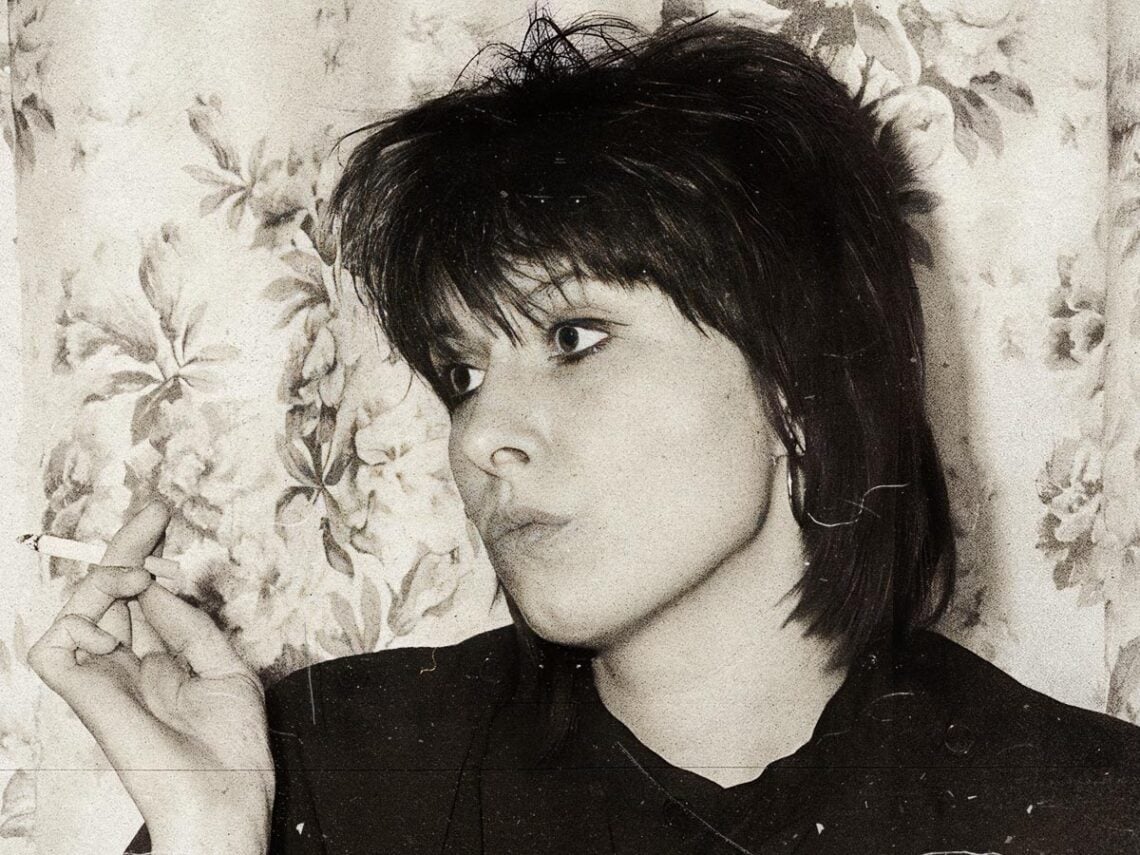
(Credits: Far Out / Alamy)
Mon 20 April 2026 12:00, UK
Traditionally, one of the great appeals of rock stardom is the chance to make connections that just aren’t possible when you’re still an unknown youngster working a retail job to pay the bills. In the case of Chrissie Hynde, obscurity was never much of an impediment, for if you know you’re gonna be famous eventually, you might as well live like it from the get-go.
Hynde didn’t grow up in the sort of place where fame seemed like a feasible pursuit, but without realising it at the time, she was already surrounded by an unlikely collection of future stars in and around the mid-sized town of Akron, Ohio, including the Eagles’ Joe Walsh, arthouse filmmaker Jim Jarmusch, and the members of the band that would soon become Devo. Weirdos tend to find each other in small towns, and sure enough, Hynde was briefly enlisted into a band in the late 1960s with Devo frontman Mark Mothersbaugh called Sat Sun Mat (short for “Saturday Sunday Matinee”).
“You don’t know if you can sing until you stand in front of a mic,” Hynde told The Guardian in 2009, “The first time I did was traumatic. I was 16 and in a band called Sat Sun Mat. We played a few quirky covers, such as Traffic’s ‘Forty Thousand Headmen’, in a church hall. I wasn’t a natural-born show-off, at least not onstage, so I had to overcome that.”
From a young age, Hynde was usually glued to her radio, listening to the latest hits on radio stations out of Cleveland, Detroit, and Chicago, reading imported magazines on the subject from across the pond, and going to as many gigs as she could. After a Jeff Beck Group show in 1967 or ‘68, she and a friend found themselves in a hotel room with Ron Wood and Rod Stewart. Chrissie, either out of wisdom or naivety, bid them adieu quickly because she had a driver training class the next morning. She didn’t want to be with a rock star, although she’d later have children with two of them; she wanted to be one herself.
Hynde was already desperate to flee the crumbling industrial gloom of the Midwest when, in 1970, she was present at the anti-war protests on the campus of Kent State University near Akron, when four students were shot dead by the US National Guard, a tragedy immortalised in the CSNY song ‘Ohio.’
“I was there, I heard the shots,” she later recalled, “I was right in the middle of it, and I knew one of the guys that got killed… Was it a defining moment for me? Well, I already knew I wanted to move on. I knew I was never going to finish school, that I was just biding my time.”
 (Credits: Far Out / Reddit)
By 1973, at the age of 21, Hynde was off to London, chasing a sort of Anglophile dream common for many Americans who’d grown up with The Beatles and The Rolling Stones. Chrissie assumed she’d be arriving in a city that would embody the contents of her NME magazines, but it was a dreary situation at first, until she happened to meet a random fellow at a party who’d interviewed Iggy Pop for one of those magazine cover stories she taped to her wall back home. He, in turn, got Chrissie a job writing for the NME, a ridiculous bit of good luck for an Akronite fresh off the boat with no credentials.
“The idea of me writing anything at all was ludicrous,” Hynde ironically wrote in her memoir, “My head was disorganised, a tangle of crossed lines. I couldn’t conclude a thought on a postcard… I wasn’t a poet. I wasn’t a writer… My only qualification, had I required one, was that I was as frustrated as the rest of them, a frustrated musician.”
Hynde conducted interviews with some noteworthy artists of both the successful and frustrated variety, including Brian Eno and Tim Buckley, but she had far less success getting her own music career off the ground, and felt regular doses of “cultural humiliation” fitting in with the other NME contributors. As a change of pace, she gave up the gig and took a retail job at a cool clothing boutique she’d been frequenting in Chelsea.
“Malcolm McLaren and Vivienne Westwood offered me a job as a shop assistant,” Hynde nonchalantly writes in her book, describing how she became one of the first shopgirls at the famous SEX shop that helped launch the look of punk, “Yeah! That’s more like it. Just being around them was going to be more creative than anything I could do at the NME.”
It almost sounds like Hynde was stumbling into historic events like a female Forrest Gump with a fringe, but these things weren’t happy accidents. She had a magnetic draw and confidence that made the cool corners of London gradually take notice, and interacting with the shoppers at SEX only raised her profile. After a couple of brief sabbaticals back to Ohio and down to Paris, where she cobbled together two more ill-fated rock bands, Hynde returned to London in 1976, just as everything was properly kicking off.
The Pretenders were still two years away from forming, but Hynde was firmly in the eye of the London punk rock hurricane in the interim, dropping into the footnotes of most of the key players. She jammed a bit with Mick Jones before The Clash put out their first record, and Malcolm McLaren put her in a short-lived band called Masters of the Backside with drummer Chris Miller, who later became Rat Scabies of The Damned. To secure a work visa, she also famously put a marriage offer out to each member of the Sex Pistols, with Sid Vicious ultimately taking it seriously enough to go to the registry office with her. As fate would have it, the office was closed, and Hynde never became Mrs Vicious.
After a while, Hynde felt like she knew every punk rocker in London, but her own central dream had remained elusive. “To be living in it and not to have a band was devastating to me,” she later told Rolling Stone, “All the people I knew in town, they were all in bands. And there I was, like the real loser, you know? Really, the loser.”
Finally, the inevitable happened. Along with getting herself a manager, Hynde made a new pal in the form of Motörhead frontman Lemmy Kilmister, and through this surprising entryway into the leather-clad, hard-rock biker element of the scene, the early seeds of The Pretenders were sown.
“Lemmy was very instrumental in my history,” Hynde explained on Marc Maron’s WTF podcast in 2014, “Without him, The Pretenders wouldn’t have happened”.
 Credit: Raph_PH
Sick of hearing Hynde’s moping, Lemmy told her to “check out this guy named Gas”, referring to drummer Gas Wild. Chrissie followed up and met Wild, who was from Hereford, and he, in turn, introduced her to Hereford bassist Pete Farndon, who, in turn, brought in the guitarist James ‘Honeyman’ Scott; thus building the core of the band that would become The Pretenders in 1978.
Again, it might sound like a case of being in the right place at the right time, but not everyone has the ability to recognise the potential of a moment, or to observe people close enough to really get a sense of them, to know how you might co-exist with them or what you might learn from them. Hynde, like a lot of great artists, was a first-class observer, and the people she met appreciated that about her and made a point of looking out for her.
I’d be remiss not to mention, in an article about the ‘girl who knew everybody’ that I can speak to Chrissie Hynde’s supreme skills as an observationalist from indirect personal experience. Way back in the early 1970s, Hynde briefly lived in the same house in Akron as my uncle, Mark Clayman, a time she wrote about in surprising detail in her memoir Reckless: My Life as a Pretender. Hynde’s description of my uncle as she knew him back then tracks with remarkable, crystal clear accuracy to the man I knew years later, a creature of habit who chose his interests and vices as a young man and never abandoned them, even in his final years.
“Marky Clayman was the entire soul of Akron channelled into one individual,” Hynde wrote, “He never changed himself or his surroundings. A Mark Duffet painting hung slightly crooked on the wall, year in, year out. National Geographic, Ramparts, Down Beat: every issue, dating back, far back. A ticket stub from Montrose Drive-in on the table, where it had lain since the night of the screening, seven years before. Marky: baseball cap; can of Pepsi; bottle of Cheracol-X. (He had one hacking cough.) An employee of the City of Akron’s water department, he would hold court at his kitchen table, the plaintive melodies of Miles Davis’s protracted notes searching the room like beams of light illuminating the dancing dust almost imperceptibly.”
I know Chrissie Hynde doesn’t know everybody’s uncles, but it’s a good example of how her mind worked then and seemingly to this day, always sizing up the characters in her orbit and appreciative of the next new introduction.
