
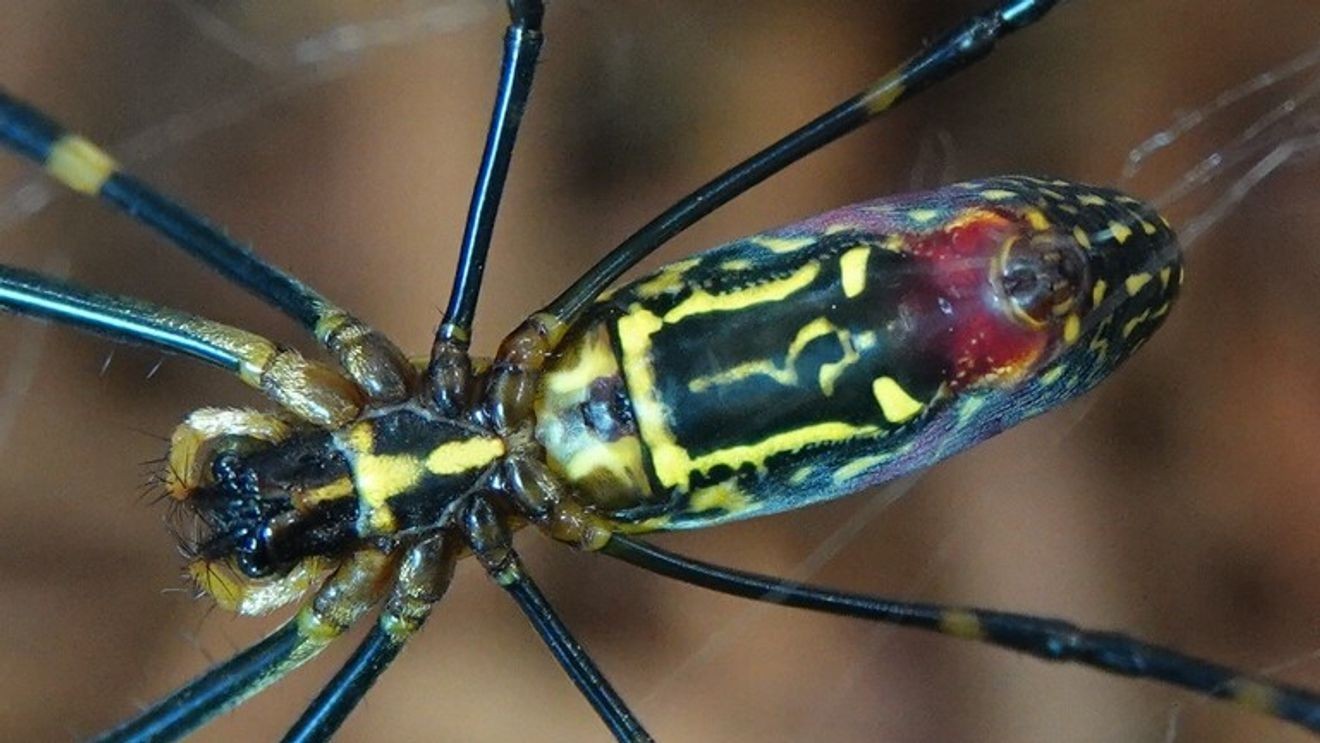
SANTA BARBARA, Calif. (FOX26) — A large, eye-catching spider native to eastern Asia is making its way across the United States and has now been spotted in Southern California.
The Joro spider, known for its striking yellow and blue markings and its ability to grow up to the size of a human palm, was reported in the region this month. While its size and appearance may alarm residents, experts say there is little reason for concern.
“They may look intimidating, but they’re not something to be afraid of,” said ecosystem expert Rebecca Wallace.
Like most spiders, Joro spiders are venomous, but their venom is not considered medically significant to humans. Wallace notes that while a bite could potentially cause an allergic reaction or infection, risks common with many minor injuries, it is unlikely to result in serious health concerns.
Female Joro spiders are especially noticeable due to their size and bright coloring, often growing up to three times larger than males. Males, by contrast, are smaller and brown, making them far less conspicuous.
Originally from eastern Asia, the species is believed to have arrived in the United States through human activity, likely hitching rides on vehicles or within shipping cargo. Since then, they have begun spreading on their own.
“They can disperse through a process called ‘ballooning’ or ‘kiting,’” Wallace explained. “Spiderlings release a silk thread that can catch the wind or attach to distant objects, allowing them to travel far from where they hatched.”
Joro spiders have already been documented in several states, including Virginia, Pennsylvania, and Maryland, and researchers are closely tracking their expansion.
Although the species is not considered dangerous, experts encourage the public to report sightings to help monitor its spread. Submissions, including photos, can be made through the website JoroWatch.org, where researchers can assist with identification.
Scientists are still studying the long-term ecological impact of the Joro spider’s presence in the United States.
“We know they’re established and self-sustaining,” Wallace said. “But we don’t yet know what impact they’re having on native wildlife.”
For now, officials advise residents to remain cautious but not alarmed if they encounter one of these spiders.