
NEED TO KNOW
North Carolina residents are warned to stay vigilant as warmer weather increases the likelihood of alligator encounters
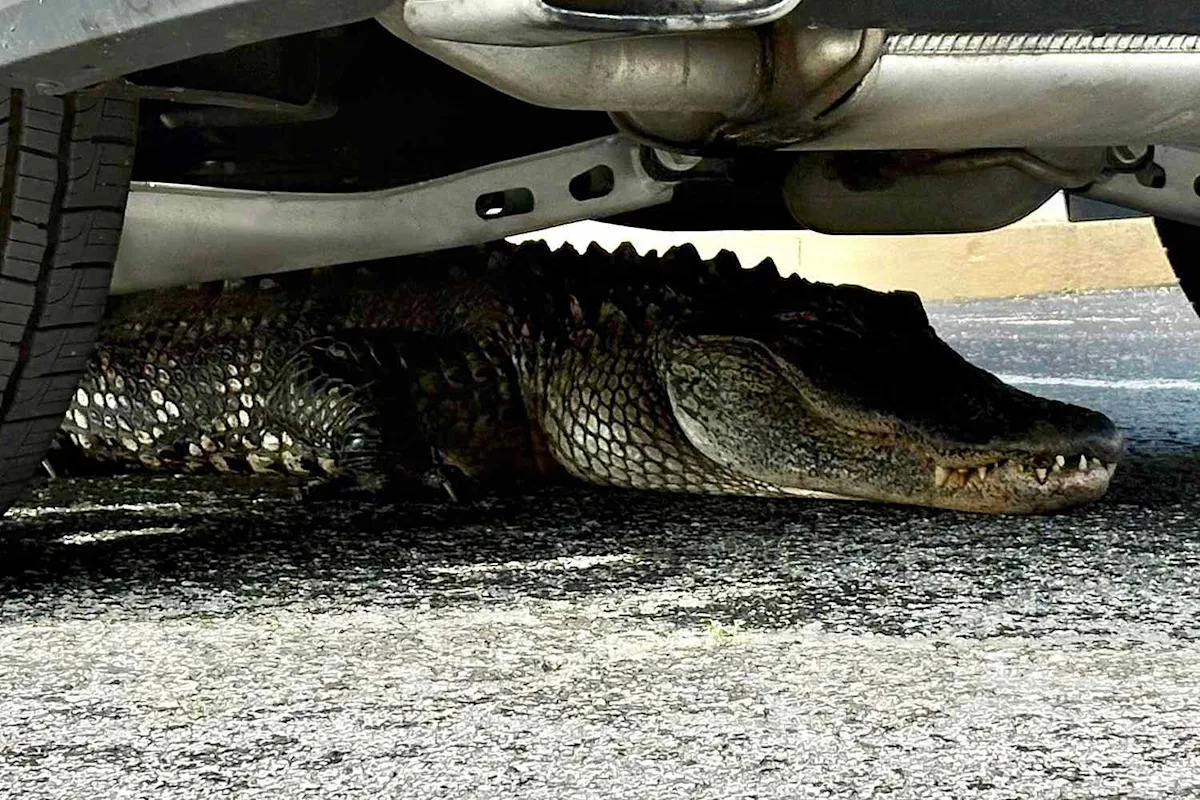
Officials relocated “a large alligator” found under a car at a Truist Bank drive-thru in Southport
Urbanization and population growth in North Carolina have led to more human-alligator interactions
North Carolina officials are advising residents to be extra vigilant in the coming months, as alligators may appear in the unlikeliest locations.
According to a Facebook post from the Southport Police Department, posted on Thursday, April 16, officials responded to a call about a “large” alligator that was hit by a car in the drive-thru at a Truist Bank.
In collaboration with the Southport Animal Protective Services (APS) and the Brunswick County Sheriff’s Office (BCSO), officials created a perimeter around the car as the teams worked together to pull the massive reptile from underneath the vehicle.
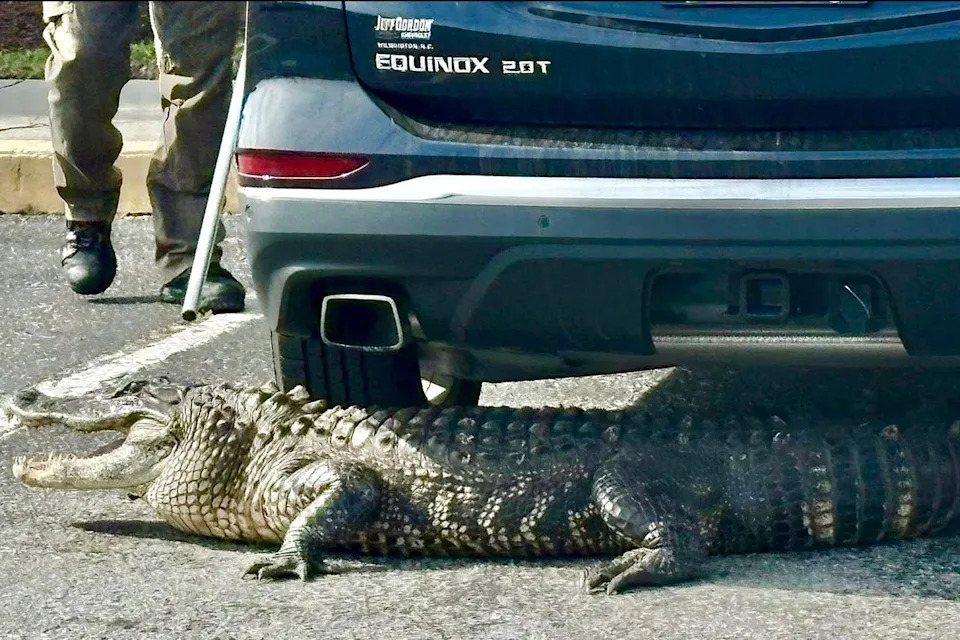
An alligator lying partially under the rear of an SUV in a parking lot with a person holding a pole nearby
Credit: Southport Police Department/Facebook
The North Carolina Wildlife Resources Commission (NCWRC) also arrived at the scene to offer an initial assessment of the animal. “NC Wildlife arrived and determined the gator would need to be relocated,” read the post. “The gator was loaded and transported away to a safer location.”
Officials also noted that alligator interactions are likely to increase as the weather warms, and therefore, heightened awareness is needed in the coming months.
The post went on to offer additional tips and lifestyle considerations to lessen the likelihood of negative run-ins with the reptiles, including not feeding the animals or disposing of “fish or food scraps in water.”
“Be responsible for people and pets in your care,” noted the police department, adding residents should keep a safe distance from alligators when seen and maintain hypervigilance “anytime you are in or near water” to avoid unexpected encounters.
In 2025, the NCWRC launched a program, GatorWise, to provide residents with more information on how to live responsibly alongside alligators.
“As development continues to expand into once-remote areas where alligators live, we need to become GatorWise in order to safely share the land with this species,” said NCWRC Wildlife Biologist Alicia Wassmer at the time.
According to the press release for GatorWise, NCWRC reported that the majority of its public calls concern alligators.
Never miss a story — sign up for PEOPLE’s free daily newsletter to stay up-to-date on the best of what PEOPLE has to offer, from celebrity news to compelling human interest stories.
North Carolina’s human population has tripled, encroaching on alligator habitats, making interactions far more likely.
“Urbanization is projected to increase at exponential rates in areas where alligator habitat occurs,” noted Wassmer. “This continuous conversion of natural spaces, coupled with a constant influx of newcomers who may not know that alligators are here or aren’t familiar with alligator behavior, has amplified the need for state wildlife resource agencies to proactively connect residents and visitors with vital information on how to coexist responsibly with the alligators that live in these communities.”
Read the original article on People