
When Sophia DaRosa Baptista works with patients receiving cardiac care at UCSF Benioff Children’s Hospital in Oakland, concerns around housing come up frequently.
Many of the families are low-income or homeless and don’t know where they’ll end up when their child gets out of the neonatal or pediatric intensive care unit.
Baptista, a medical social worker, generally doesn’t have much to offer. She can refer them to a waitlist for an affordable apartment, but that process can take years. Or she can send them to a family homeless shelter, but those programs sometimes deny children who have medical needs out of liability concerns, she said.
But a new joint program between the hospital, the Oakland Housing Authority, and the Alameda Alliance for Health insurance plan promises to provide 50 patient families with a secure place to live.
“Until now, I really did not have any concrete way to be able to help families,” Baptista told The Oaklandside.
Social workers like Baptista will identify children in the NICU and PICU whose families are low-income, homeless or at risk of becoming so, and on Alameda Alliance’s Medi-Cal plan. They’ll refer them to the housing authority, which will screen them for eligibility and place them in apartments close to the North Oakland hospital.
For up to five years, families will pay $250 per month toward their rent and the Oakland Housing Authority will cover the rest. They will also receive $1,600 annually for basic needs, two years of assistance with utility costs, and ongoing supportive services.
Housing and health are inextricably tied
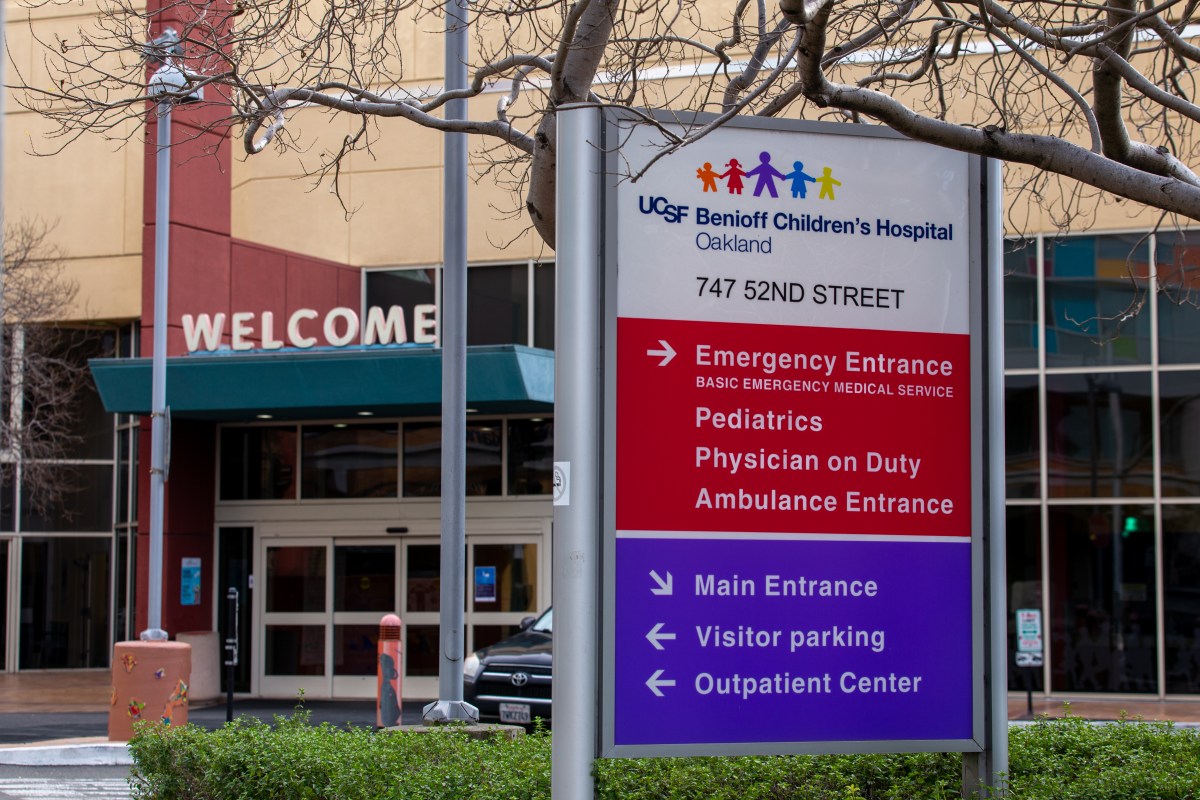 Families will be placed in apartments near Children’s Hospital. Credit: Amir Aziz/The Oaklandside
A wealth of research has shown that housing — affordability, quality, and stability — is a key determinant of health.
For the families who will benefit from the new program, called Building Bridges: Hospital to Home, this connection can manifest in ways both immediate and long-term, said Dr. Nicholas Holmes, president of UCSF Benioff Children’s Hospitals. A premature baby might be discharged with life-saving biomedical equipment that needs to be plugged in to operate. Or with medication that needs to be chilled.
Having access to housing with electricity and a fridge can be the difference between life and death, he said.
“These are the sickest of the sickest kids that are in neonatal intensive care,” said Holmes. Having housing afterward allows a child to “recover from the illness and to actually thrive and be on their normal developmental pathway.”
The Oakland Housing Authority will contribute up to $5.4 million in rental assistance throughout the program.
Nonprofit insurer Alameda Alliance is contributing $1.37 million, using funds from a state homelessness and housing program. The Alliance will also provide families with a range of supportive services, from in-home care to help with meals and scheduling appointments.
“We get to pull these kids out of this high-risk situation and stabilize their healthcare,” said Dr. Donna White Carey, chief medical officer at the Alliance. As a pediatrician, Carey said she saw how many emergency room visits, hospitalizations, and missed preventative care like vaccines could have been avoided had a patient had stable housing.
According to the Alliance, close to 10,000 of their Medi-cal members are unhoused, so executives expect to see the housing pilot fill up quickly.
The program is designed to provide not only better health outcomes but a “pathway to long-term economic independence,” said Patricia Wells, Oakland Housing Authority executive director, in a press release.
Two families have already been placed in housing through the program.
One family consists of a single mother and her son, according to social workers. Born in a different state, the son has a congenital heart defect. The pair moved to the East Bay, thinking they’d be able to live with family. That turned out not to be the case, and they were turned away from a shelter.
The son entered surgery at Children’s Hospital Oakland under these stressful conditions. But Baptista was able to refer the family to the housing program as he was recovering. Within two months, they were placed in an apartment near the hospital.
The mother “wants to go into the medical field because of her experience,” Baptista said. “She’s able to save and look into her future…instead of just trying to survive every day like she was doing before.”
The program leaders aim to expand the pilot to support unhoused families with patients in long-term care at Children’s, too.
“*” indicates required fields