
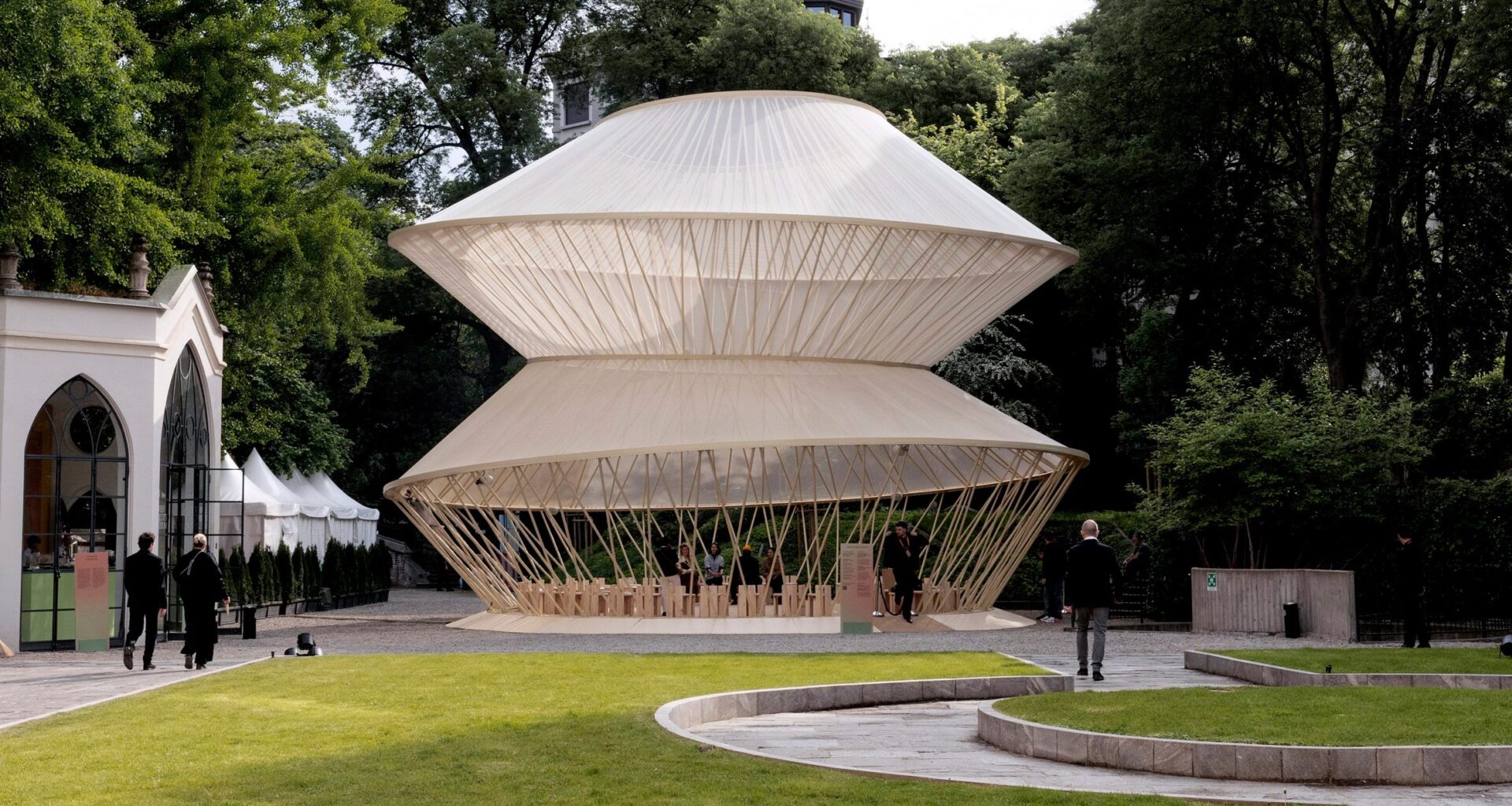
Promotion: architect Kulapat Yanatrast has unveiled a garden pavilion modelled on a “deconstructed yurt” alongside an exhibition exploring Uzbek craft traditions and bread-making practices at Milan design week.
Titled When Apricots Blossom, the exhibition takes over Palazzo Citterio from 20 to 26 April and marks the country’s debut at the event.
The exhibition is named after a 1930s poem by Uzbek writer Hamid Olimjon, with its themes of renewal and resilience echoed throughout the exhibition.
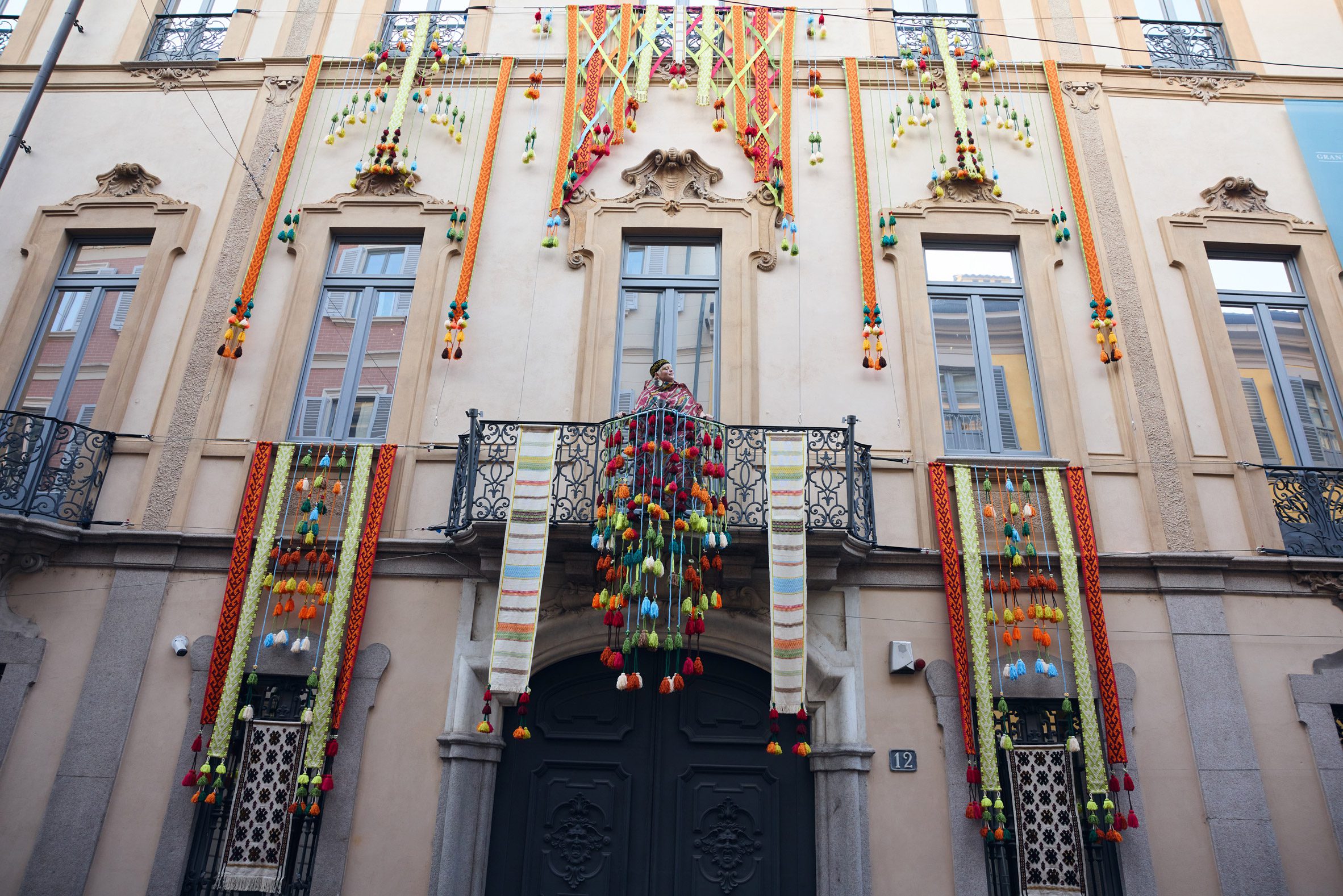 The exhibition takes over Palazzo Citterio during this year’s Milan design week
The project was commissioned by Gayane Umerova, chairperson of the Uzbekistan Art and Culture Development Foundation (ACDF), and curated by Yantrasast, founder of WHY Architecture.
The exhibition focuses on Karakalpakstan in northwestern Uzbekistan, where the Aral Sea has lost around 90 per cent of its volume since the 1960s.
It will also feature Where the Water Ends, a film directed by Manuel Correa and Marina Otero Verzier. The trailer is shown above, while the film will have its world premiere during Milan design week.
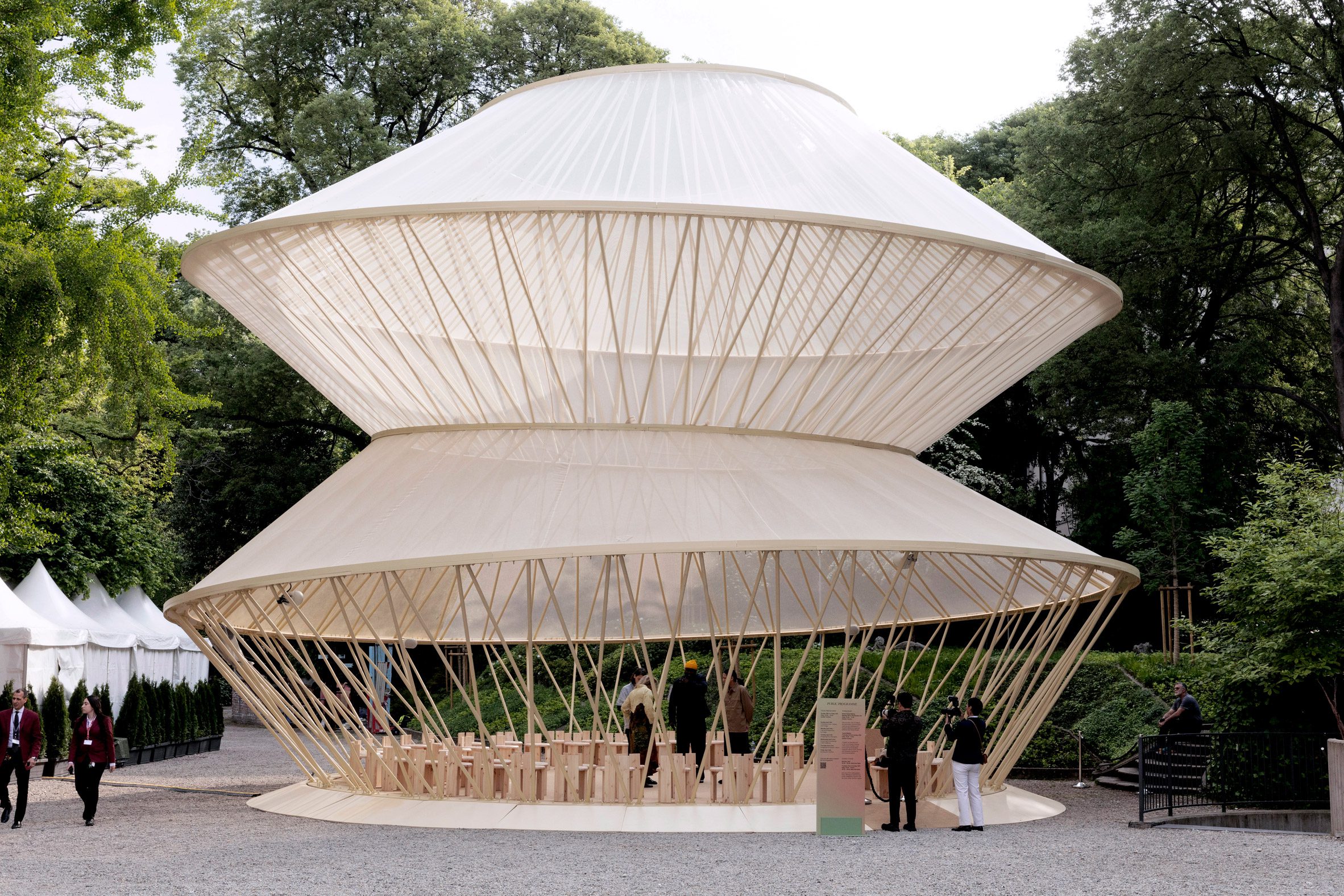 WHY Architecture created a pavilion informed by traditional nomadic yurts
Yantrasast developed the project following research trips across the country, identifying bread-making, yurt-building and tassel weaving as key regional crafts through which design can respond to environmental change.
Structured around the themes of food, shelter and textiles, the exhibition explores how essential needs have historically been addressed through local materials and shared knowledge.
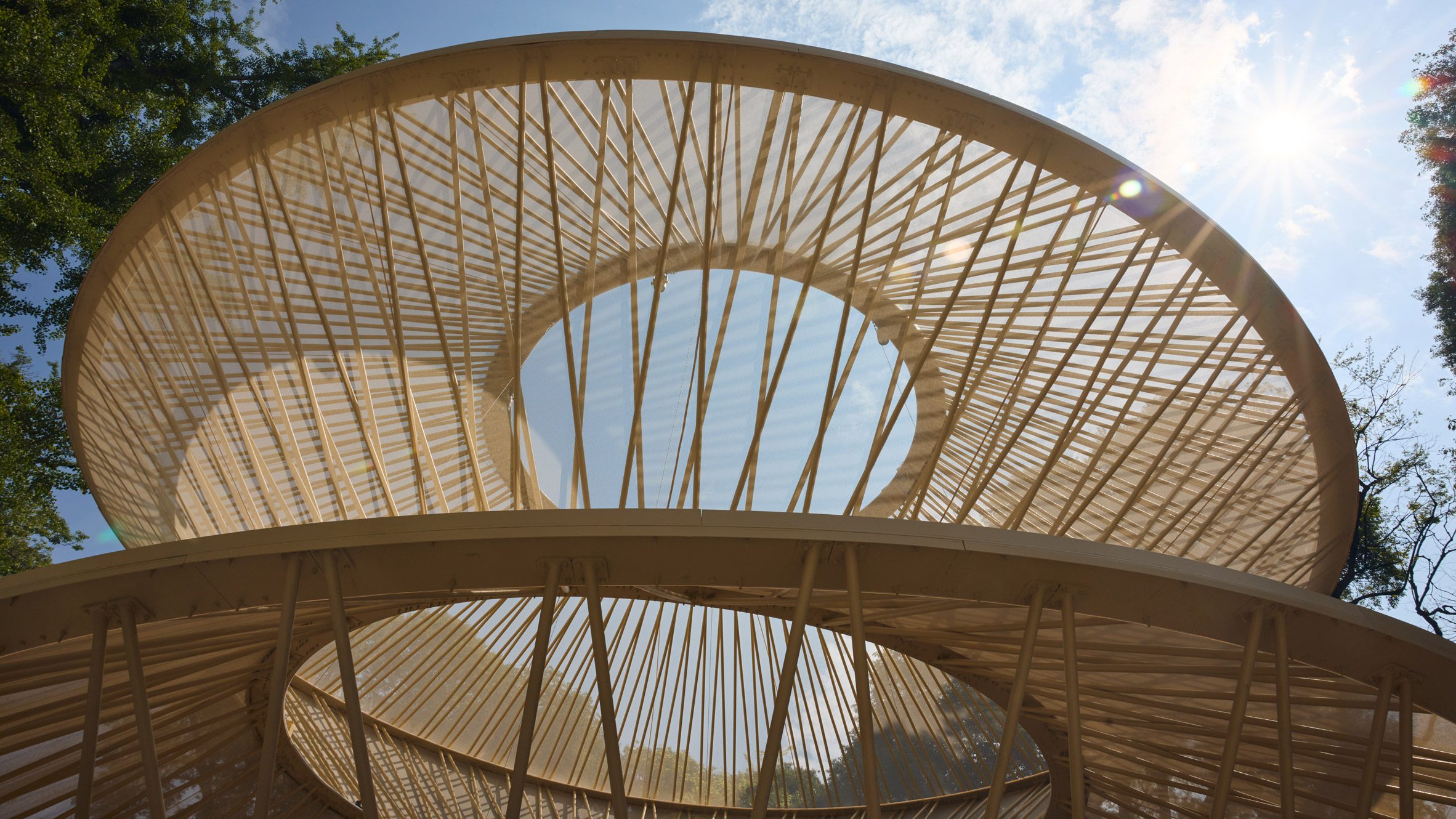 The structure reinterprets the yurt’s lattice framework as a gathering space
“The yurt is one of the most honest pieces of architecture ever made,” said Yantrasast.
“Born of nomadic life on the steppe, it is engineered to move with its people and hold the sky at bay across shifting landscapes.”
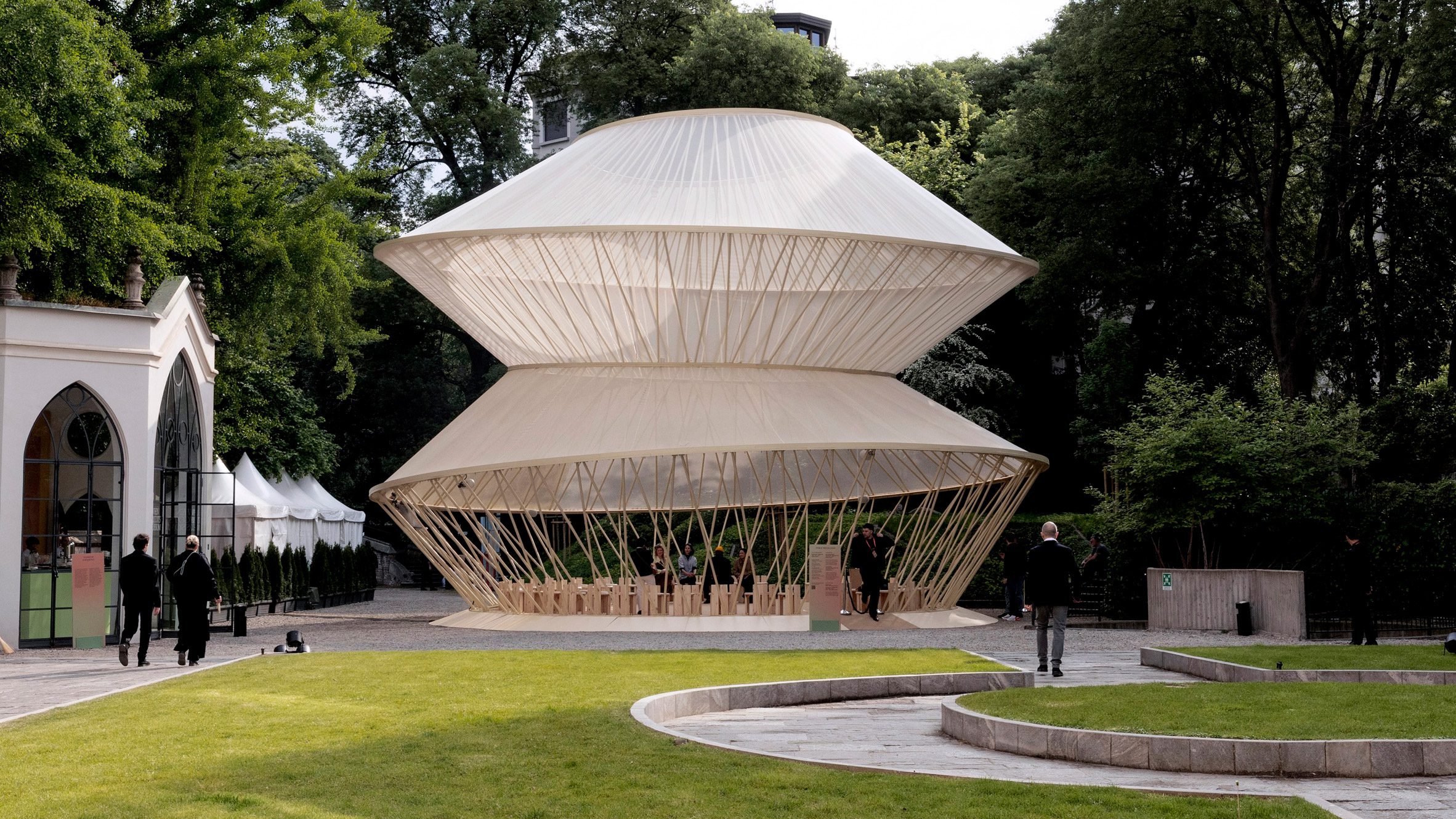 The pavilion will host talks, workshops and public events during the exhibition
This approach is reflected in the Garden Pavilion, which serves as a gathering space for talks, workshops and demonstrations.
Inspired by traditional yurts, the structure reinterprets their latticed framework as a lightweight, transportable installation designed to host conversations around craft, ecology and community.
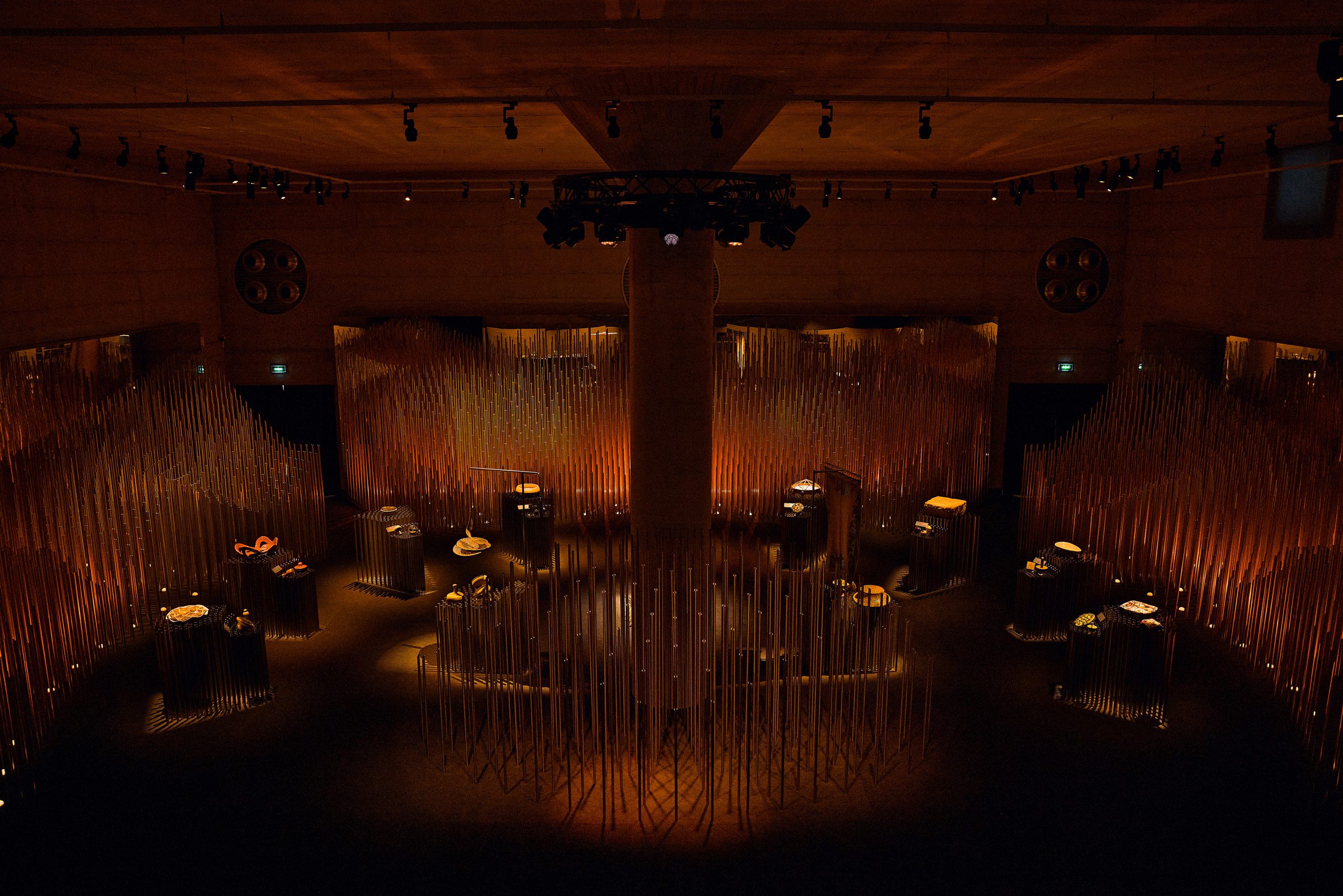 Inside, the exhibition explores Uzbek craft traditions, including bread-making
“For this pavilion, we wanted to crack that world open,” Yantrasast added, describing it as an exploration of how architecture can “hold absence” in response to the loss of the Aral Sea.
Inside the main exhibition, the focus shifts to Uzbekistan’s bread-making traditions.
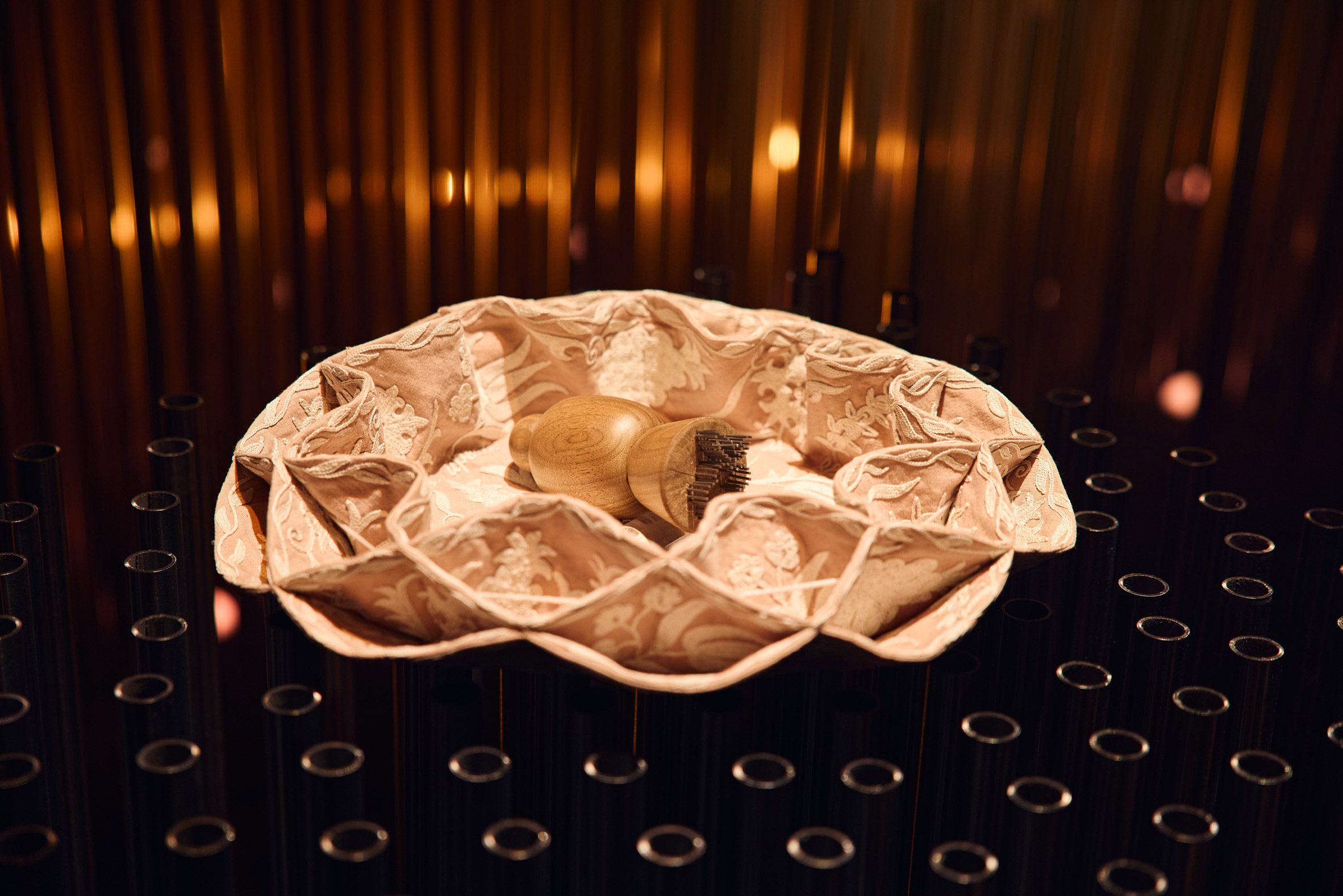 Designers reinterpreted traditional bread trays used in Uzbek baking
Twelve international designers, including Bethan Laura Wood, Fernando Laposse and Marcin Rusak, collaborated with Uzbek and Karakalpak artisans to reinterpret traditional bread trays and stamps known as chekich, which are used to imprint patterns into dough.
Working across materials including wood, ceramics, felt and reeds, the objects translate regional textures and motifs into contemporary design.
The works are displayed amongst undulating, reed-like forms designed by WHY Architecture, referencing the landscapes of Karakalpakstan.
 Traditional stamps known as chekich are used to imprint patterns into bread
The exhibition also introduces a number of initiatives focused on the Aral Sea region, where environmental degradation has reshaped local ecosystems and communities.
These include the Aral School, a postgraduate programme exploring design’s role in ecological challenges, as well as the next edition of the Aral Culture Summit, set to take place in Nukus in September 2026.
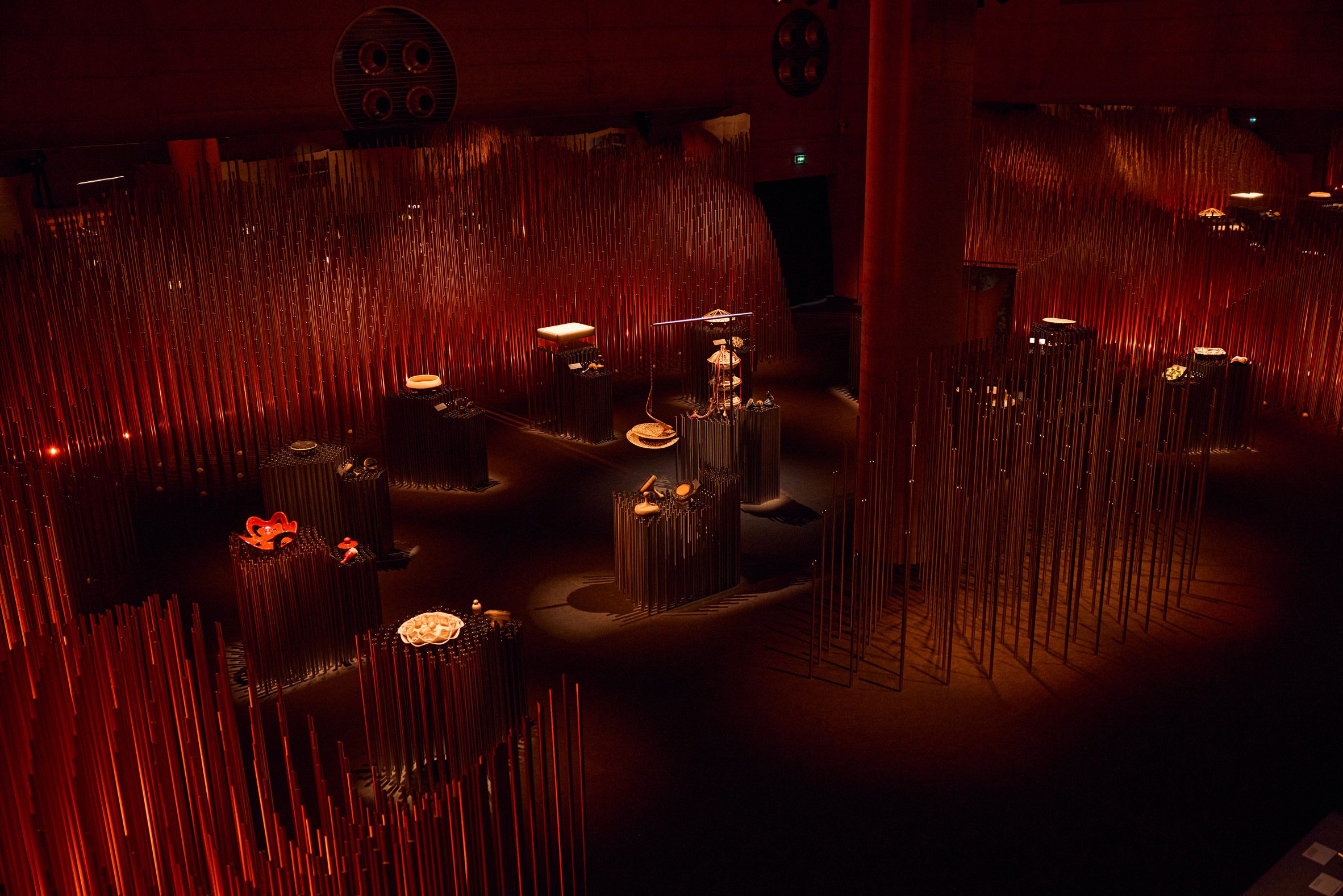 Works are displayed among reed-like forms referencing the Karakalpakstan landscape
According to Umerova, the exhibition positions craft and design as tools for regeneration in regions affected by the climate crisis, while highlighting the knowledge and traditions of local communities.
“The Aral Sea is both a cautionary tale and an opportunity to offer a blueprint for other regions facing extreme environmental change,” she said.
“In such contexts, design and craft play an important role because they begin with people and knowledge.”
Additional designers and studios taking part include Studio CoPain, Sevara Haydarova-Donazzan, Glithero, Bobir Klichev, Konstantin Lazarev, Nifemi Marcus-Bello, Raw-Edges, Ruben Saakyan, Roman Shtengauer, Sanne Visser, Kulapat Yantrasast and Didi Ng Wing Yin.
The Uzbek craftspeople involved include Shukurjon Azimov, Nigora Amangeldieva, Boburjon Atabayev, Abdulla Abdurazzokov, Abdulvahid Bukhoriy, Otabek Gaybullayev, Madina Kasimbayeva, Nursultan Qosbergenov, Lyudmila Yusupova, Yorqinoy Yuldasheva, Biybisara Kunnazarova and Altinay Naubetova.
Access to the exhibition and public programme requires registration via this link, including for walk-ins. The link also includes the full programme.
When Apricots Blossom will be on show at Palazzo Citterio in Milan’s Brera district from 20 to 26 April 2026. See our Milan design week 2026 guide on Dezeen Events Guide for information about the many other exhibitions, installations and talks that took place throughout the week.
Partnership content
This article was written for Uzbekistan Art and Culture Development Foundation as part of a partnership. Find out more about Dezeen partnership content here.