
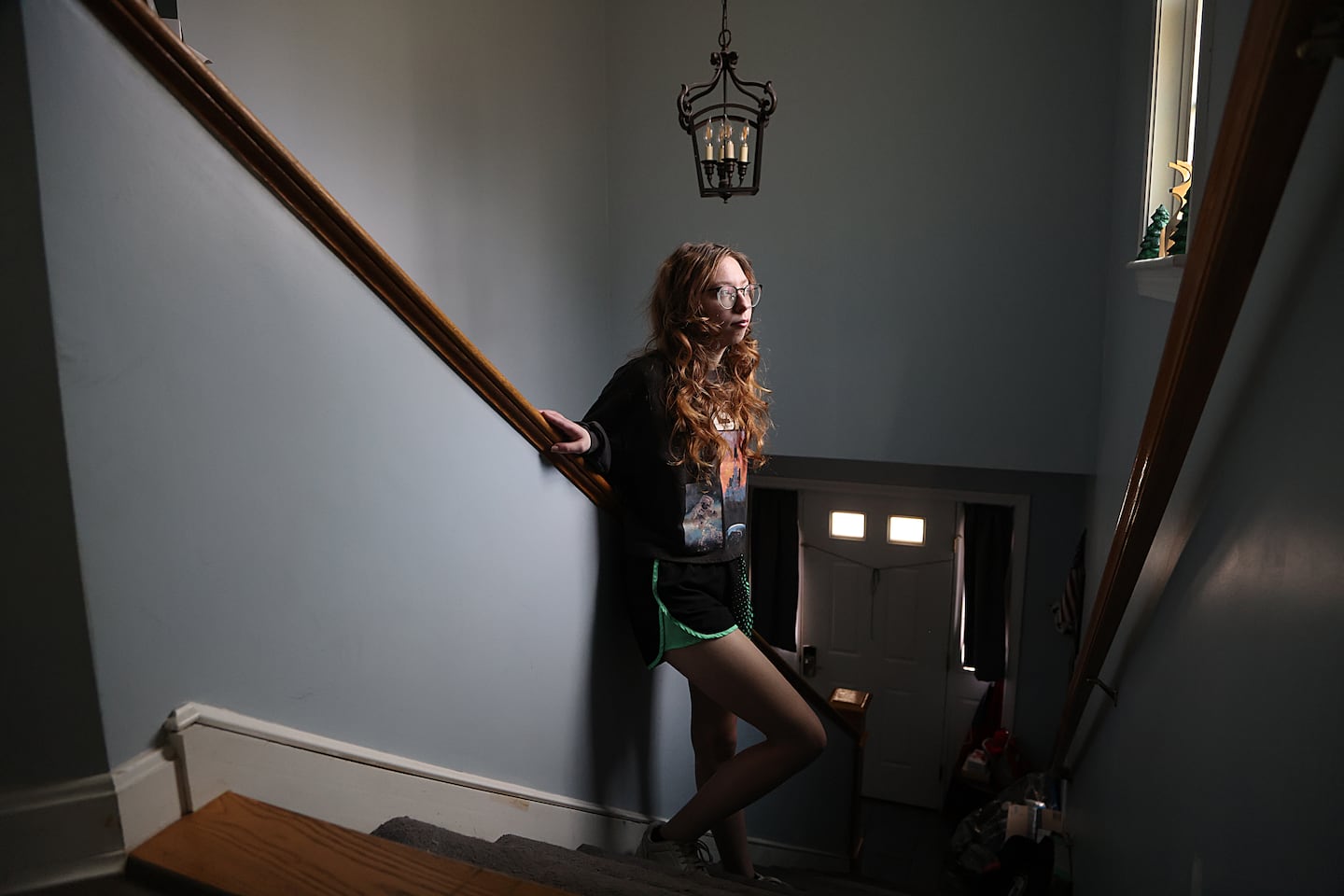
For Joaquim, a student at South Shore Charter Public School, life changed dramatically after she developed long COVID in 2022.
Defined as a chronic condition that lasts for at least three months after a COVID infection, long COVID is diagnosed not by a single test but by a pattern of symptoms that cannot otherwise be explained. Those symptoms can include fatigue, headaches, brain fog, sleep disruption, and pain, but they often look different depending on age.
Researchers are still gaining new insight into how it affects the youngest patients.
“Children do get long COVID, but it doesn’t always look the same as it does in adults,” said Melissa Stockwell, division chief of child and adolescent health at Columbia University and a lead researcher with the pediatric cohort of the National Institutes of Health’s RECOVER initiative, a program created to better understand and treat long COVID.
Researchers with the program published a study last year that estimated long COVID potentially affects nearly 6 million children in the United States, which would make it more common than asthma.
The study suggested that roughly 10 to 20 percent of children who contract COVID may develop lingering symptoms, though other research has put that figure much lower. Research shows vaccination may reduce the risk of developing long COVID.
Tanayott Thaweethai, a biostatistician at Massachusetts General Hospital and part of the RECOVER research team, said it’s hard to give a precise figure for the share of children affected both because of a lack of research on children and because they tend to be underdiagnosed. For some, the condition fades in months. For others, it can reshape daily life for years.
Joaquim first contracted COVID in January 2022, when she was 12 and not yet vaccinated. Her symptoms were initially limited to high fevers, and she appeared to recover within a week. But about six weeks later, everything changed.
She began sleeping up to 23 hours a day. Her body ached so intensely that she struggled to stand. Her memory faltered.
“We could be having this conversation right now, and five minutes from now, she wouldn’t even remember meeting you,” said her mother, Andrea Joaquim, 42, who works in information management at South Shore Health.
By June 2022, Joaquim had been diagnosed with long COVID at Boston Children’s Hospital. At one point, she was being seen by more than a dozen specialists.
“She just was a shell of a person for such a long time,” Andrea Joaquim said.
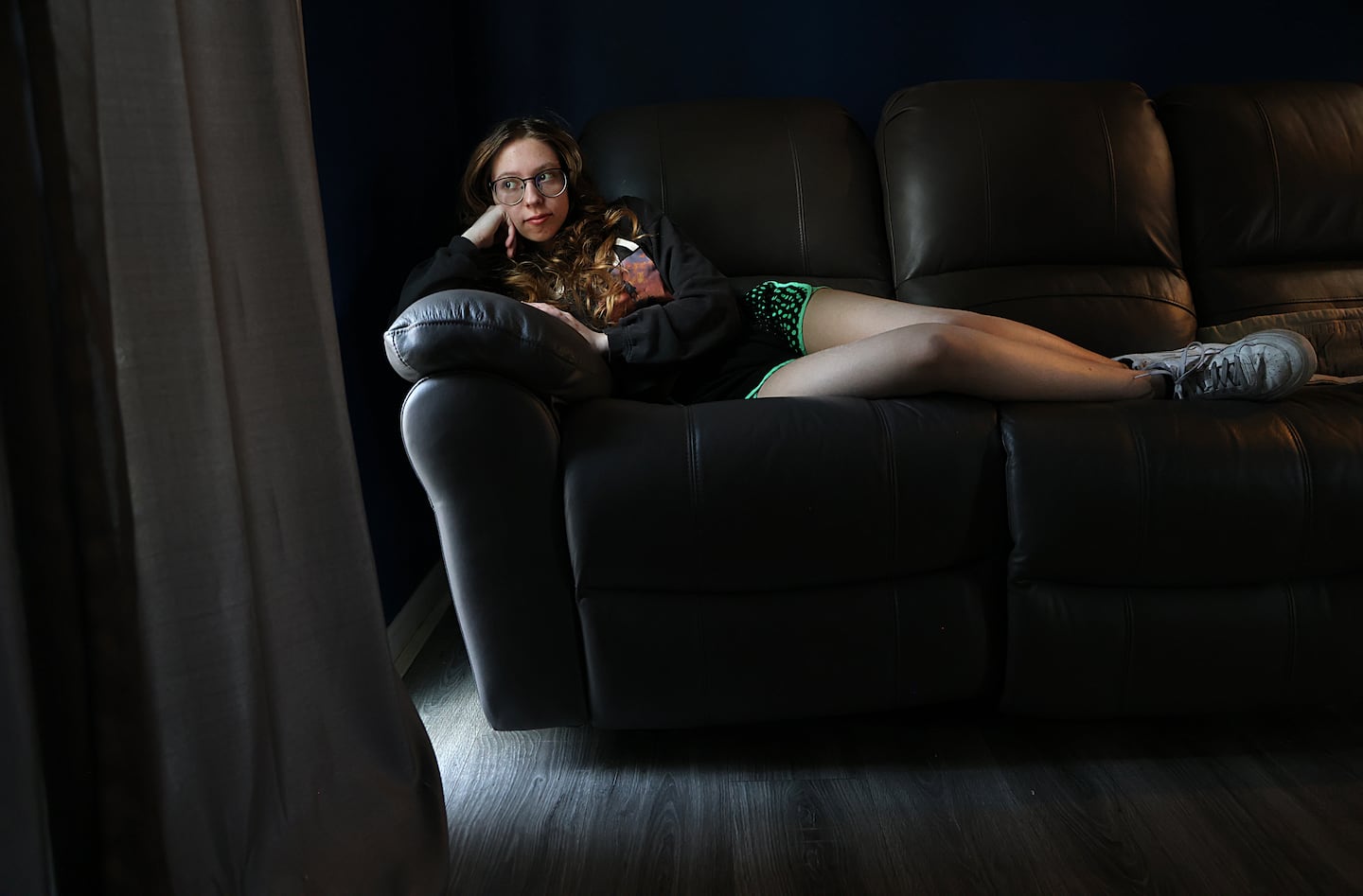 Kaylee Joaquim participates in fewer activities since developing long COVID. Suzanne Kreiter/Globe Staff
Kaylee Joaquim spent months largely resting, often sleeping on the couch because climbing the stairs to her bedroom was too difficult. She tried physical therapy, occupational therapy, and cognitive therapy, all with limited success. But about a year into her illness, chiropractic treatment helped ease Joaquim’s pain and allowed her to stand and move more freely again, her mother said.
Joaquim said she’s now feeling about 45 percent better. She was recently diagnosed with two conditions, both trigged by long COVID: fibromyalgia, a chronic muscular pain disorder, and Raynaud’s syndrome, where blood vessels overreact to cold or stress and restrict blood flow to fingers and toes.
She continues to see three clinicians: a neurologist, a chiropractor, and a rheumatologist.
Long COVID’s formal definition, adopted in 2024, identifies more than 200 possible symptoms.
“I just describe long COVID as like a salad bar,” said Dr. Molly Wilson-Murphy, a neurologist at Boston Children’s Hospital and one of Joaquim’s doctors. “You might have different combinations of ingredients, just like people have different combinations of symptoms.”
Even among children, long COVID symptoms vary by age. Younger children are more likely to experience stomach pain, nausea, vomiting, and skin issues such as rashes, for example. Adolescents, by contrast, often resemble adult patients, with symptoms such as fatigue, brain fog, loss of smell, and exhaustion after anything but the mildest exertion.
Some researchers, including Wilson-Murphy, suspect the differences in symptoms could be linked to differences in immune systems and development. Social factors may also play a role, Stockwell added, noting that new RECOVER found links between long COVID in children and challenges they face, such as low social support or high levels of discrimination.
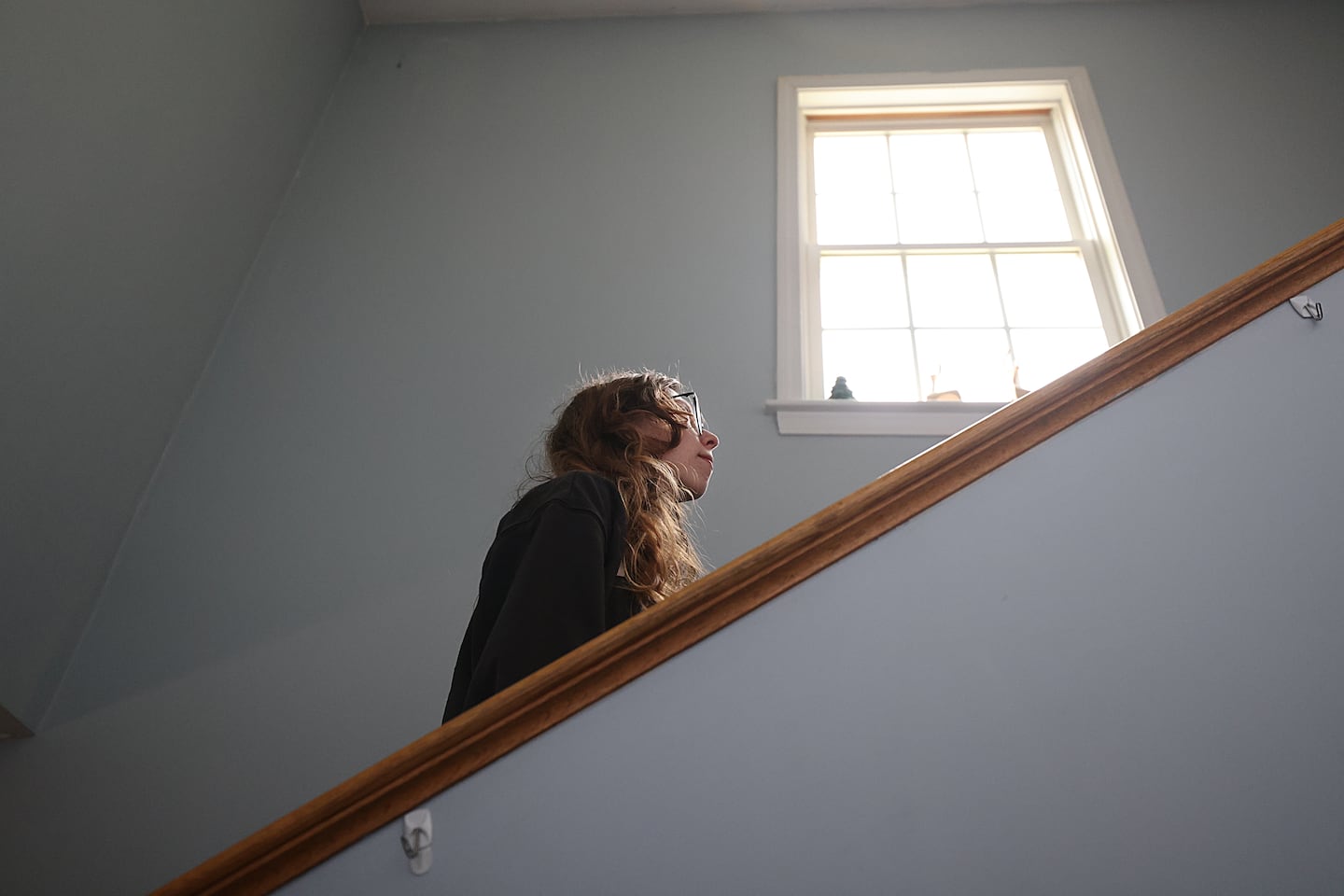 Kaylee Joaquim, photographed at her home, has trouble going up the stairs.Suzanne Kreiter/Globe Staff
For Joaquim, the effects have touched nearly every part of her life. Before getting sick, she was a tireless softball pitcher who could play through multiple games in a single day. Now, she doesn’t play at all.
She tried softball for a time in eighth grade, but couldn’t last more than one or two innings.
“I went from being the Red Sox to the White Sox,” she said.
School was another struggle. As fatigue and brain fog set in, the former A student fell behind.
“It’s really depressing when you’re reliant on your self-worth on your grades, and then you start getting Ds,” she said.
At one point, she was unable to attend school at all and completed her middle school education from home with Connections Academy, a K-12 online public school. She returned to school in person in ninth grade, though continues to miss days when her symptoms flare.
Although she’s once again back on top academically, and her school has been accommodating, she is far less active than before, lacking the energy to go bike riding or participate in gym class.
Joaquim’s experience mirrors what many families across the country are facing, said Megan Carmilani, who leads the national nonprofit Long COVID Families.
She said families often struggle to find doctors familiar with the condition, navigate school systems that don’t understand fluctuating symptoms, and manage the financial strain of long-term care. In many cases, a child may begin missing activities, then classes, and eventually entire school years, much to the confusion of parents.
“All they know is that their child seems to be slipping away from their own life,” Carmilani said.
There is no single cure for long COVID. Care is typically tailored to each symptom — addressing fatigue, headaches, sleep issues, and cognitive difficulties as they arise, Wilson-Murphy said. Recovery varies widely.
“Some children recover, some have symptoms that come and go, and others continue to struggle for years,” Thaweethai said.
Joaquim has learned to adapt to her condition. She pushes herself to show up, even on the hard days.
“I can tolerate it now,” she said, and that’s a start.
Aayushi Datta can be reached at aayushi.datta@globe.com.