
(Credits: Far Out / Alamy)
Fri 24 April 2026 7:18, UK
When it comes to the touring circuit in rock and roll, all’s fair in love and war.
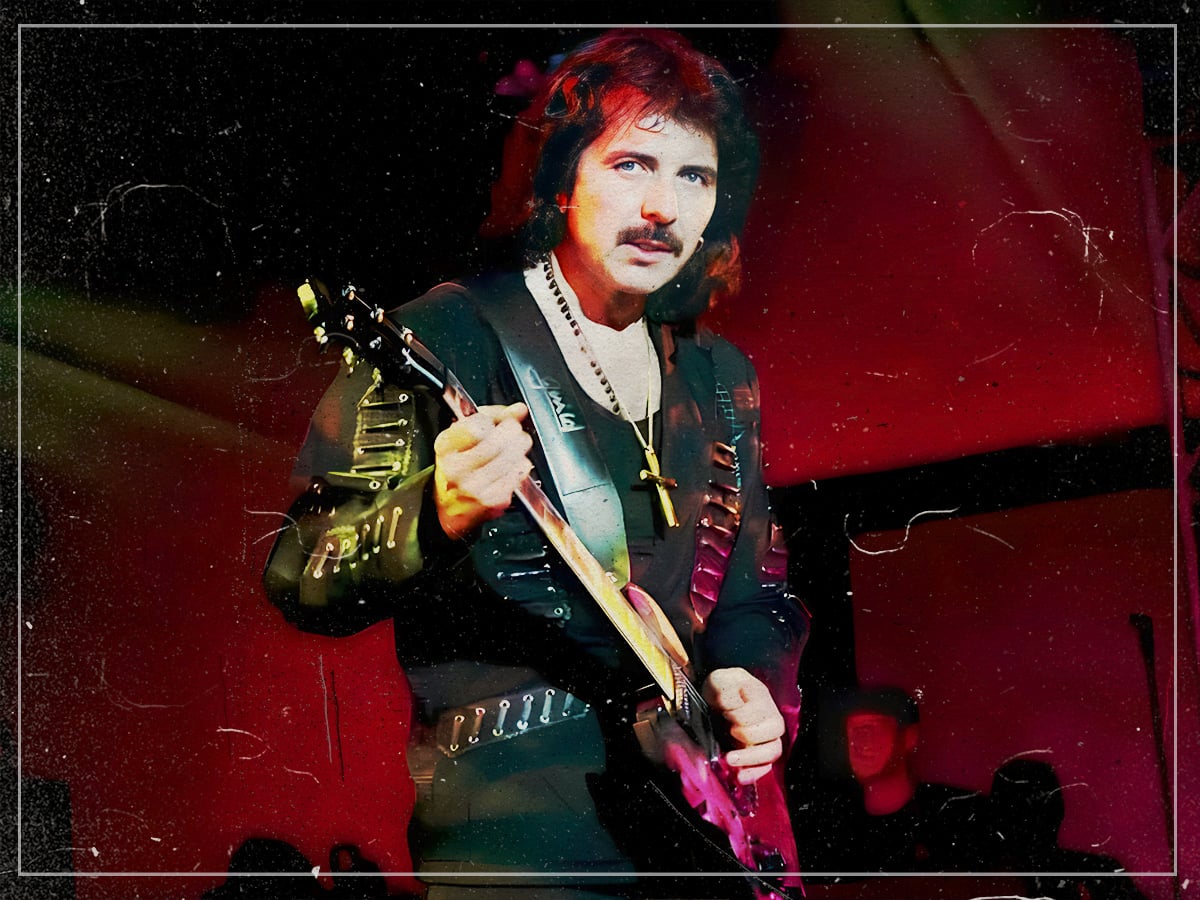
For every rock band willing to expose new blood to their audience, there are just as many who see their opening acts as a bit of a competition for them, which usually involves using everything they can to stomp them out before they even go on. While Black Sabbath were a bit more diplomatic when working with fresh faces like Van Halen, Tony Iommi couldn’t be bothered trying to keep up with what Kiss were doing.
Because of all of their connections to hard rock and heavy metal, Sabbath and Kiss couldn’t be further apart on the musical spectrum. Iommi was writing bluesy riffs that were intended to scare off anyone with non-tainted ears, and Kiss was so glamorous and cartoony that they might as well have been campaigning to have their own regular Saturday morning program behind the scenes.
It’s not like they didn’t know how to entertain an audience, though. Throughout their time together, Paul Stanley and Gene Simmons had built a rock and roll spectacle that they virtually couldn’t lose, brandishing everything from flaming torches for Simmons to spit fire to and equipping Ace Frehley with a guitar that shot rockets during his solos.
Not many bands could follow that on principle, but that wasn’t what Sabbath was about. There was always a slightly demented approach to everything the heavy metal giants did, so it was hard to really get an audience to settle into the groove of ‘War Pigs’ or ‘Children of the Grave’ when they were being moved by such eloquent works of poetry like on ‘Nothin’ To Lose’.
 (Credits: Far Out / TIDAL)
From the moment that Iommi saw the signs outside for their shows, he knew that Sabbath was in for a rough ride, telling Gibson, “We didn’t really get on with them. I remember seeing the sign outside which said ‘Black Sabbath and Kiss’. We changed the P to a K and put ‘Piss’. We used to see them at the airports, and we didn’t know who they were because they had makeup on.”
While the waters eventually settled as the tour got underway, it was hard for them not to see the writing on the wall. Sabbath had started to become the biggest name in heavy music, but once Kiss’s landmark album, Alive!, hit store shelves, a clear divide was made between both camps of hard rock.
Looking at how the genre spread out over the coming years, it’s not hard to see how both bands birthed two distinct factions of heavy. Once the 1980s got underway, Sabbath’s descendants seemed to be heavier acts like Iron Maiden and Judas Priest, while Kiss’s acolytes eventually forced the shock rockers to shed their makeup once the glam metal era got underway with acts like Poison and Winger.
Then again, maybe the rub came from Iommi seeing Sabbath getting a run for their money. There can be as many dark themes in one’s music as possible, but when your opening act comes equipped with a man spitting blood and a levitating drum kit, you’ve already lost before you even show your face to the crowd.
That tension ultimately reflects two completely different philosophies of what rock and roll should be. For Sabbath, the power came from the music itself, from the weight of the riffs and the atmosphere they created onstage. Kiss, on the other hand, treated performance as theatre, building an experience that went far beyond the songs. Neither approach was inherently better, but when placed side by side, the contrast was impossible to ignore.
In hindsight, that divide helped shape the future of heavy music. Bands would either lean into the darkness and musical intensity that Sabbath pioneered or embrace the spectacle and showmanship that Kiss perfected. Iommi may not have had much time for their antics, but the competition only highlighted how wide the genre could stretch, proving that heavy music had room for both substance and spectacle in equal measure.
