
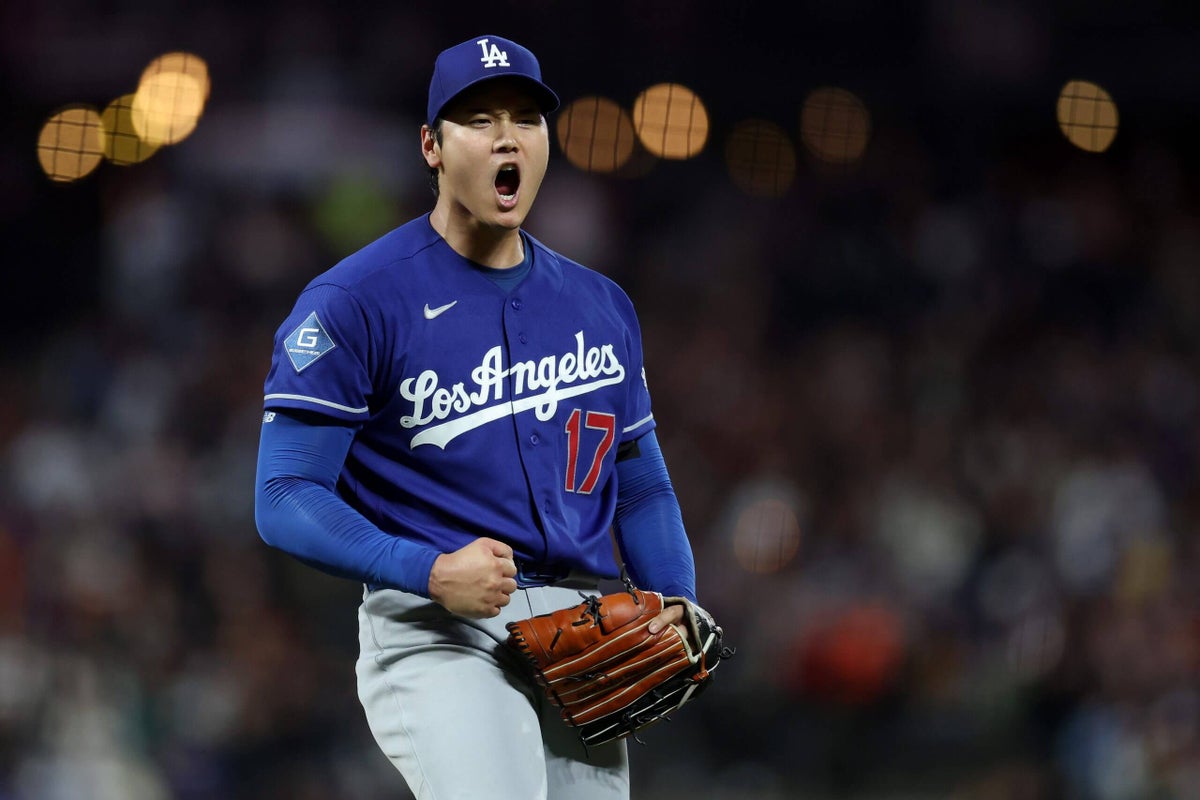
Chicago Cubs manager Craig Counsell isn’t the only person in baseball bothered by the rule that allows the Los Angeles Dodgers to carry an extra pitcher because of Shohei Ohtani’s designation as a two-way player.
One head of baseball operations, granted anonymity for his candor, says the combination of that rule and another allowing Ohtani to remain as a hitter after he is removed as a pitcher creates the “most lopsided” advantage in major professional sports.
Counsell’s remarks sparked a fresh round of anti-Dodger sentiment among some fans and even broadcasters. But Major League Baseball and the Players Association did not enact the rules to benefit the Dodgers. They established them three years apart, while Ohtani was still a member of the Los Angeles Angels.
Many in the game are fine with the accommodations made for Ohtani, the best and most unique player in the sport. Some, though, are frustrated that the rule allowing Ohtani’s team to carry a 14th pitcher extends his already outsized impact. Still, others view his ability to remain in the lineup as a DH once he is done pitching as an inequity all its own.
Let’s sort all this out.
How did the rules come about?
The league and union agreed upon a designation for a two-way player in 2019, prior to Ohtani’s second season in the majors. The rule initially was created to specify under which conditions a position player could pitch.
Prior to 2020, the parties agreed that designated two-way players from Opening Day until Aug. 31 would not count against the limit of 13 pitchers on a team’s 26-man roster. But the limit, because of COVID, did not take full effect until June 2022.
The other Ohtani rule, the one allowing him to remain in the game as a designated hitter after departing as a starting pitcher, also was introduced in 2022. It states in part, “In the event the starting pitcher will bat for himself, the player will be considered two separate people.”
Hence, the incongruity.
Ohtani counts as one player when building the roster and two when managing the game.
Did the rules promote the use of two-way players?
That was part of the idea, at least according to public statements in 2022 from officials with both the league and the union.
The sport has experienced an uptick in the number of two-way amateurs drafted and signed internationally, with a total of 22 drafted between 2021 and ‘25. But those players, often under direction from their clubs, almost always choose between pitching and hitting, abandoning the chance to do both.
Giants first baseman Bryce Eldridge and Kansas City Royals right fielder Jac Caglianone were first-round picks who gave up pitching. New York Mets right-hander Nolan McLean was a third rounder who gave up hitting. And those are just some high-profile examples.
As detailed by The Athletic last August, some would-be two-way players cannot handle the physical and mental strain. Picking one path or the other often creates a faster promotion to the majors. Players and teams also fear an increased risk of injury.
The requirements for two-way status add to the degree of difficulty: A player only qualifies if he pitches at least 20 major-league innings and starts 20 games as a position player or DH, with a minimum of three plate appearances per game, in the current or any of the two previous seasons.
Only Ohtani, the ultimate unicorn, has pulled it off.
“He’s the best player most of us will ever see, and while we could all develop a two-way player, the likelihood we would be in a similar talent bucket is pretty low,” Arizona Diamondbacks general manager Mike Hazen said.
Are the Dodgers taking advantage?
Of course they are! And they paid for that privilege, awarding Ohtani a 10-year, $700 million free-agent contract with $680 million deferred in Dec. 2023.
By then, the rules accommodating Ohtani had been in effect two full seasons. The other teams bidding for him were fully aware of the added competitive benefit, and considered it part of his appeal.
Counsell, when asked Monday why clubs don’t have additional roster flexibility when dealing with pitching injuries, said, “there’s one team that is allowed to carry basically one of both, and he gets special consideration, which is probably the most bizarre rule. For one team.”
That one team could have been the Angels, if only they had shown the foresight to keep Ohtani. Or any of Ohtani’s other suitors, a group that included the Cubs (who had just hired Counsell), Toronto Blue Jays and San Francisco Giants.
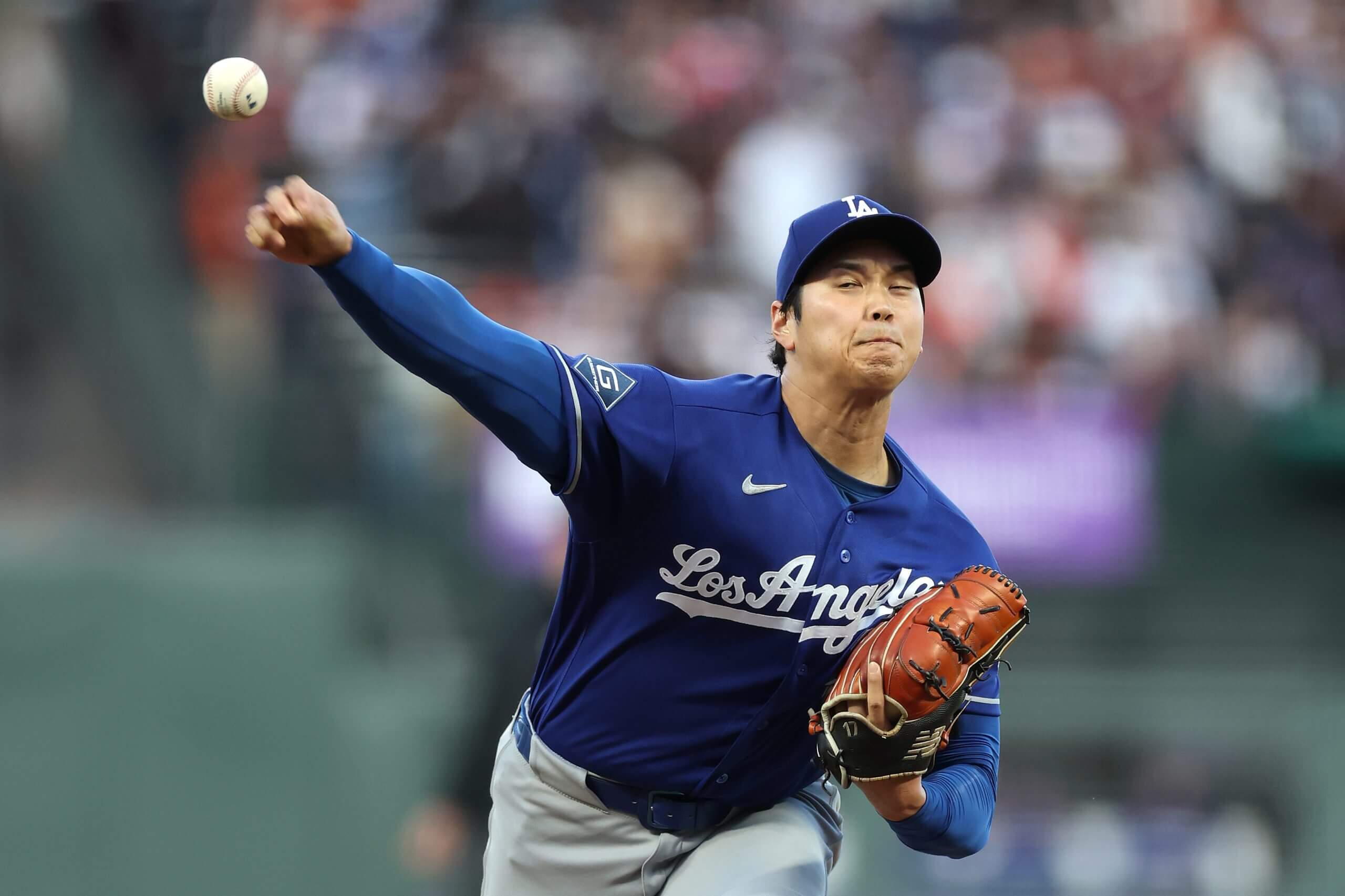
Through four starts this season (24 innings), Shohei Ohtani has an ERA of 0.38. (Ezra Shaw / Getty Images)
The Dodgers, just as they did with Ohtani’s deferrals, are operating within the rules. Even rival executives who believe they gain too big an advantage with Ohtani do not blame the team — “they are doing exactly what I would do,” one said.
Hazen, whose Diamondbacks compete against the Dodgers in the NL West, referenced the number of games between division opponents each season.
“The bigger disadvantage,” said Hazen, “is having to face him 13 times.”
Is it all too much?
Fair question.
The biggest challenge teams face is maneuvering their pitching through a 162-game season. Injuries wreck plans. Starters pitch fewer innings than in the past. Front offices are constantly juggling, and pitchers who lack minor-league options limit their flexibility.
The Dodgers, thanks to Ohtani, are playing with 14 pitchers while their opponents are restricted to 13. Carrying an extra arm enables them to reduce the workloads of their relievers and better protect their staff as a whole.
If Ohtani counted as a pitcher, the Dodgers still would hold an advantage; he essentially would become a 14th position player. That advantage, though, would be less pronounced. Every team would prefer an extra pitcher to an extra position player.
One AL manager said he actually is more bothered that Ohtani can remain a hitter even after he is done pitching. Once a position player is removed from a game, he cannot continue to contribute offensively. He’s done for the night.
“When you take Ohtani out, it should cost you something,” the manager said. “There’s no fear of taking him out of a game as a pitcher.”
The counter-argument is that the rule keeps Ohtani on display for the fans — no small consideration when talking about the game’s biggest gate attraction — and provides a better incentive for teams to commit to two-way players.
One solution might be to leave that rule intact and eliminate the one giving Ohtani’s team a 14th pitcher, but don’t count on it happening anytime soon. Counsell is pretty much on an island, at least publicly. And the league and union can rightly argue that every team is free to develop its own two-way stars.
Easier said than done, of course. The guy with the Dodgers stands alone.