
Some state lawmakers want to create an exemption in state law to let Franklin County buy or condemn land in Vance, Warren and Halifax counties — even if those counties don’t agree to it.
The Republican-backed bill, which is scheduled for a vote this week, makes no distinction over what kind of property Franklin County would be allowed to take, or for what reasons. If it passes, opponents say, it’ll set a dangerous precedent in the high-stakes fights over a key resource in this fast-growing state: water.
Nearly all 100 North Carolina counties are currently under severe or extreme drought conditions, leading to cities including Raleigh implementing new restrictions on residents’ water usage. It’s a historic drought for North Carolina, WRAL has reported — part of a larger national trend. For the U.S. as a whole, CNN reported, March was the driest month on record since the Dust Bowl in 1934.
But even without the current drought conditions, water is increasingly in focus in North Carolina. It’s not an infinite resource, and every bit of growth requires more water. People need it for their homes and lawns. Businesses need it for everything from bathrooms to massive industrial applications — especially one of the state’s most important industries, pharmaceutical manufacturing.
“Water and sewer are really important for things like life sciences-related business recruitment,” Chris Chung, chief executive of the Economic Development Partnership of North Carolina, told lawmakers last week during a legislative oversight committee meeting.
And as the state’s population continues to grow unevenly — many rural areas have been shrinking even as the big cities and suburbs are exploding in size — the battles between counties over water have grown more pronounced. Franklin County, for instance, projects that over the next 50 years its population will more than double and its water needs will more than triple.
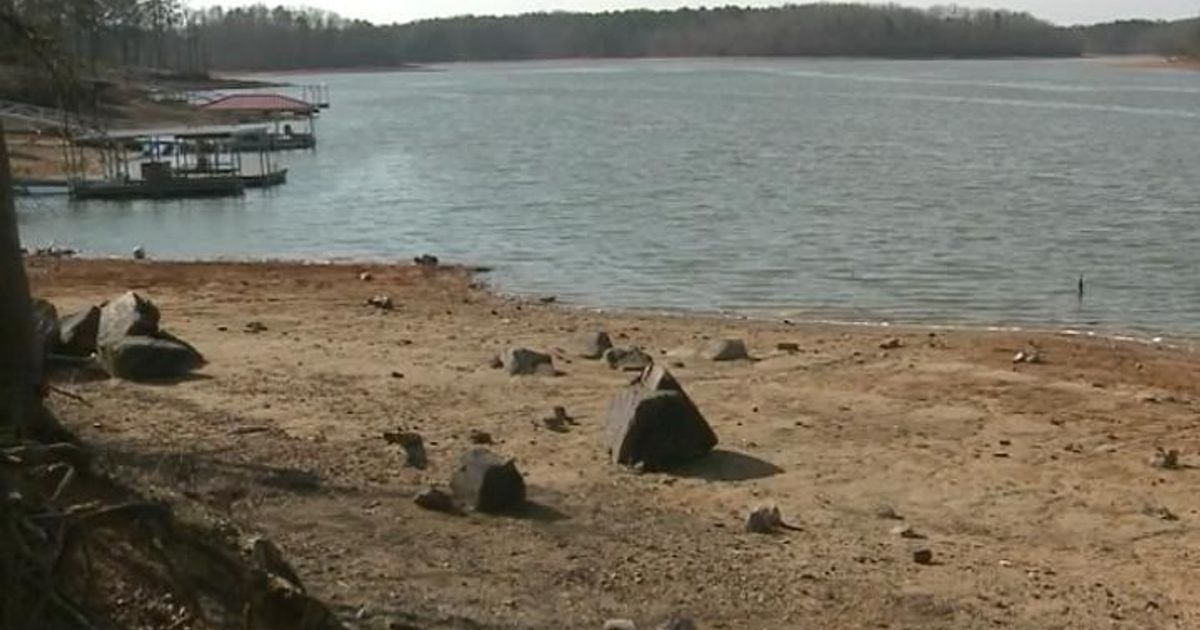
The bill would enable Franklin County to get around its current water-buying arrangement by taking land in Vance, Warren and Halifax counties — three upstream communities that are home to major rivers and lakes, including Kerr Lake, whose water could potentially be shipped south.
Rep. Brian Cohn, D-Granville, said many of the towns and cities north of the Triangle — Oxford, Henderson and Warrenton, among others — get their water from Kerr Lake, a massive and manmade body of water that straddles the Virginia-North Carolina border.
Some of the border municipalities co-own a water plant, treating and cleaning water for their own residents’ use, and selling water to communities downstream, including Franklin County. And tensions over control and pricing of the water are nothing new.
“This is like a Hatfield-and-McCoy type of situation,” Cohn said in an interview, referring to the legendary Civil War-era feud between families on the Kentucky-West Virginia border. “It stretches back, probably to the 1970s, among the partners in this water plant.”
‘A generational challenge’
Recently, Cohn said, Franklin County has asked to join in the partnership controlling that water plant. That makes sense, he added, given its population boom. Franklin County’s population grew about 35% to 82,000 residents from 2010 to 2025. “All growing communities want to secure their source of water for the future,” Cohn said. “There’s nothing nefarious about that.”
But where he and others have a problem is in the solution being proposed: Rather than having Franklin County work with the neighboring counties who control the water, and work out a deal like in the past, the bill would let Franklin County buy or condemn any land it wants in any of those counties.
Franklin County is open about its intentions. A page on the county’s official website, updated in 2025, declares its search for more water “a generational challenge” and lays out its plan to solve that challenge: “Franklin County’s pursuit of a direct Kerr Lake water intake is the product of years of planning, responsible resource management and good-faith regional engagement.”
The new bill would appear to give it the power to make that plan a reality, even over opposition from the counties Kerr Lake is in.
“It’s very narrowly tailored so that it’s only giving access to water resources to Franklin County,” Rep. Matthew Winslow, a Franklin Republican who supports the plan, said in response to questioning during a House floor debate last week.
The bill language appears to be broader than Winslow’s interpretation. It would allow Franklin County to buy or condemn any piece of land, for any reason, in Vance, Warren and Halifax counties, with no restrictions or limitations.
Cohn said during last week’s House debate that the proposal was “absolutely breathtaking,” not only for its content but for the apparent secrecy involved. The bill was only made public Tuesday night, ahead of a planned vote Wednesday.
“I’ve been on the phone since 7:45 this morning with colleagues across the district, who knew nothing about this,” Cohn said during the House debate Wednesday. “They didn’t ask for it. They don’t want it. These are folks on both sides of the aisle. We ought to make a big deal in this chamber about protecting the rights of local governments and local elected officials. And this goes right into the face of those comments and those positions that we have taken in the past.”
Statewide implications?
Franklin, Vance, Halifax and Warren counties aren’t the only places in the state warring over water.
Leaders in Wilmington and Fayetteville are embroiled in an effort to block the southwestern Wake County suburb of Fuquay-Varina from being allowed to take more water out of the Cape Fear watershed, which also provides the drinking water for southeastern North Carolina. And state lawmakers are also getting involved in that fight.
“Protecting our water is non-negotiable,” Sen. Michael Lee, a Wilmington Republican, wrote this month on social media in a post opposing Fuquay-Varina’s request. He’s one of half a dozen state senators who signed a letter to the state seeking to block Fuquay-Varina’s plans.
But Lee voted on Wednesday in favor of the bill allowing Franklin County to take property from its neighbors to circumvent their water source. Every other Republican in the state Senate voted for it, too, except Sen. Norman Sanderson, who represents two of three counties targeted, Halifax and Warren.
Sanderson didn’t respond to a request for comment. But the House member who represents those same two counties, Democratic Rep. Rodney Pierce, heaped praise on Sanderson for being willing to go against his party to stick up for his constituents. He also had heavy criticism for Republicans who pushed the bill ahead.
“I’m a history teacher by trade,” Pierce said during debate over the bill on the House floor. “This straight-up sounds like Manifest Destiny. We just say this is what we want in your county, and we take it.”
Winslow, the Franklin County representative who backed the provision, declined an interview request and instead provided a copy of a letter from Franklin County Manager Ryan Prebble defending the proposal. The letter notes that with the amount of businesses moving into Franklin County, efforts to boost growth there could create jobs for residents of the counties targeted by the bill.
“Franklin County’s growth benefits the entire region,” the letter said. “The employers, families and businesses choosing Franklin County create jobs and economic activity that extend well beyond our borders.”
However, after the strong opposition from Cohn, Pierce and multiple other Democratic lawmakers Wednesday, House Speaker Destin Hall made the rare move of pulling the bill from the calendar, delaying a vote until this week.
Cohn said he believes Hall is a pragmatic leader and hopes he heard the point that he and others were making about setting a precedent for other counties to seek the type of special treatment Franklin might receive if this bill becomes law.
“What happens when Raleigh wants water?” Cohn said in an interview. “I can’t imagine anyone’s going to be too excited when Wake County starts asking to take over other counties’ land, or Mecklenburg County, or anyone. That’s what we’re trying to prevent.”