
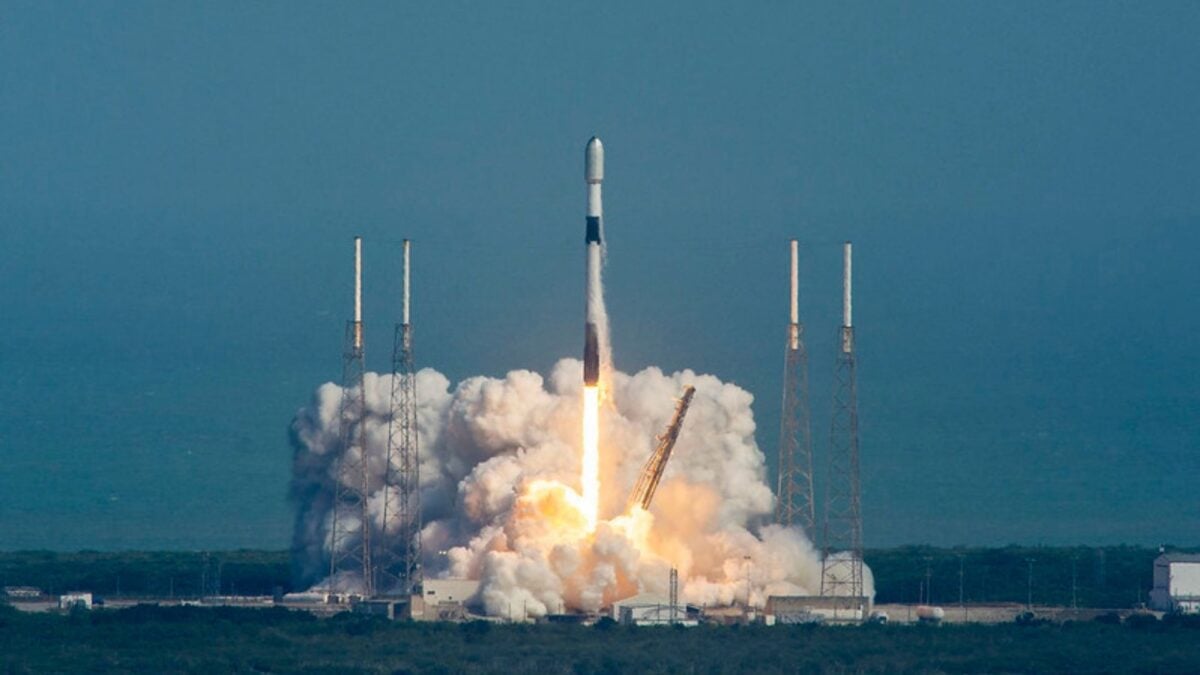
Rocket companies will soon be required to pay a user fee for the skies as the Federal Aviation Administration (FAA) moves forward with charging money for launches and reentries.
The FAA recently published a notice announcing its new policy for imposing commercial space launch and reentry licensing and user fees. The collected fees would go toward the FAA’s Office of Commercial Space Transportation (AST), helping fund needed resources to keep up with the growing space industry.
Pay the piper
As it stands today, the FAA charges small fees that cover the application process for launch and reentry licenses acquired by companies like SpaceX. In return, the FAA clears airspace of commercial and private flights during rocket launches and along the path of reentry.
Last year, a provision of the budget reconciliation bill proposed that the FAA begin charging licensing fees to rocket companies starting in 2026. The fees would be based on the size of the payload, starting with $0.25 per pound in 2026 and gradually increasing by approximately $0.10 every year. In 2033, companies will potentially have to pay $1.50 per pound of payload. The fees will be capped at $30,000 per launch or reentry.
In its notice, the FAA said it would begin including terms and conditions that outline the fee assessment and collection procedures for future licenses and permits issued by the administration. Rocket companies with existing licenses will still be liable for the user fees for all launches and reentries that will take place in 2026, according to the FAA.
Rocket companies have to inform the FAA of the weight of the payload at least 60 days before liftoff. The FAA will use that information to calculate the user fees and issue a pay notification to the company, which will then have 30 days to pay up.
Disgruntled users
At the dawn of the space industry, the FAA initially waived fees for companies to help the industry grow during its infancy. Over the years, the space industry has placed an added burden on the FAA as the administration struggles to keep up with frequent rocket launches and the licensing processes that they entail.
Airlines, on the other hand, do pay fees to the FAA, which go into the Airport and Airway Trust Fund that makes up nearly half the administration’s annual budget. And the FAA has finally decided that it’s time for the space industry to do the same.
Elon Musk’s SpaceX is responsible for the majority of orbital launches each year. In 2025, SpaceX alone achieved a record-breaking 165 orbital launches with its Falcon 9 rocket. Other companies fell far behind, with United Launch Alliance closing out the year with only six rocket launches.
SpaceX executives have also been the most outspoken against the FAA’s lack of resources, which they claim hinders the development of the space industry. In 2023, SpaceX’s Vice President William Gerstenmaier spoke at a hearing by the Senate subcommittee on space and science, warning that the FAA’s licensing department is in “great distress” and “needs twice the resources it has today.”
The collected user fees would go into a trust fund to help AST acquire said resources, which it desperately needs to manage the growing number of rocket launches, particularly from SpaceX’s Flacon 9 workhorse vehicle.