
Nowadays, the average person has their entire world on their phone. From banking to e-commerce and beyond, consumers have come to expect one-tap convenience and frictionless UX across the board, all wrapped up in a sleek little package. Healthcare is no different, and the old, cold, clinical feel of days past doesn’t cut it. In a crowded field of digital clinics, the ones that feel human win, and design is doing more of that work than credentials alone ever could. Think of it as the modern-day, trust-building version of a sunny bedside manner.
Dan Kenger has spent the better part of his career figuring out what actually makes people stick with a brand. As Chief Design Officer at Hims & Hers, he leads design for a digital healthcare platform with more than 2.5 million subscribers. Previously a partner at Gin Lane Media, where he helped shape the modern direct-to-consumer playbook for top retail and lifestyle companies, he treats design less as polish and more as leverage, using it to build trust and push healthcare further into the consumer world.
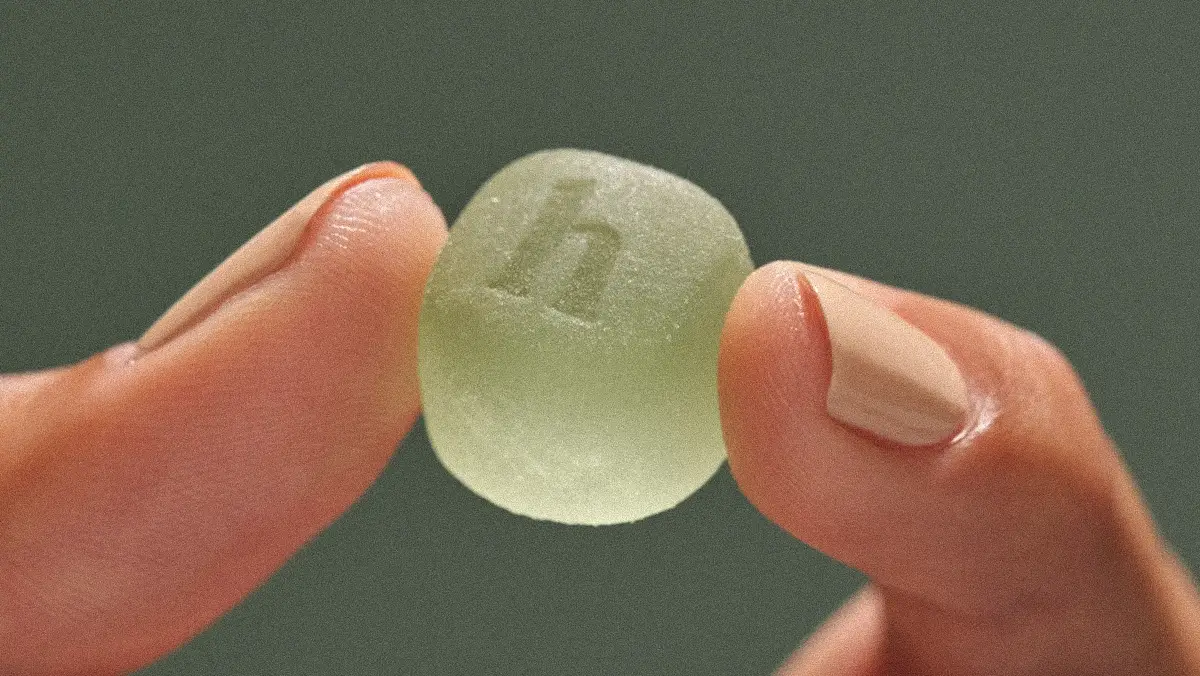
“We swapped the unappealing orange prescription bottle for a sleek, recyclable frosted glass jar that catches the light and illuminates the gummies inside,” Kenger says, describing The Biotin + Minoxidil Gummy for Hers. “It’s designed to look like a high-end beauty product, inviting it onto your counter rather than hiding it in a drawer.”
Medicine à la mode: Kenger’s team attacks the traditional doctor’s office aesthetic, identifying the clinical coldness of legacy medicine as a massive UX vulnerability. So instead of just tweaking the marketing, Hims & Hers rebuilds it from scratch. Treatments show up more like something from a beauty shelf than a medicine cabinet. The idea is to take something people used to keep out of sight and make it part of a routine they don’t mind seeing every day. “That visibility is intentional; when something is beautiful, it becomes a habit you actually want to keep, which is important when you’re talking about medicine because keeping the regimen is how it actually works,” he notes, linking aesthetics directly to clinical adherence. “Great design doesn’t need to shout. It supports and delights while fitting into your life.”
Those same instincts show up in how the brand talks at scale. Kenger takes the playbook he once used to make awkward topics feel normal on subway ads and points it at something bigger: affordability. Hims & Hers went straight to the Super Bowl to call out the health-wealth gap. By centering the message on healthcare affordability, the brand tapped into cultural frustration to declare that the era of health as a luxury should be over.
Un-gating the velvet rope: On the Rich People Live Longer big game spot, Kenger points to a feeling most people already recognize. Preventive care has long felt like something reserved for those who can afford it, kept just out of reach of the masses. “To gauge how we’re actually shifting the needle, we’ve moved beyond basic reach to deep social listening and brand tracking,” he says. “We’re measuring changes in belief, not just clicks. The conversation on social moved from ‘what are they selling?’ to ‘this is about equity.'”
Super soul: For Kenger, the Super Bowl is just the starting point. The real work happens in what comes next, carrying that message across creators on Meta, YouTube, and TikTok, then reinforcing it through moments like the Olympics so it sticks. “We’ve been really intentional about building this brand in-house because you can’t outsource the soul of a company. Given we are often telling stories that are vulnerable, stigmatized, or medically nuanced, having production in-house means we approach casting, storytelling, and execution with the care and context these topics deserve, not as a one-off brief.” That control extends across the entire journey, from the first ad to the lab results in the app, where every touchpoint has to earn trust. “We recognize the inherent mistrust in this industry, which is why every touchpoint is designed to be a bridge, delivering clinical credibility with the respect people crave.”
The Netflix fix: He frames it as a connected journey where every step has a job to do, from ads that can push a little to product and care experiences that make things clear without dumbing them down. The goal is to take something that usually feels dense and distant and make it easier to stay engaged with all the way through. “Healthcare is finally having its Netflix moment,” says Kenger. “Think about how much your phone has already revolutionized how you bank, shop, or get a ride. Healthcare is the last major frontier to be modernized. For decades, it was the only industry that didn’t have to care about the user experience, but that’s over.”
Expectations shaped by consumer tech now dictate how people evaluate care. “Patients are officially acting like consumers. They’re making decisions based on trust, ease, and how a brand fits into their identity, not just who is closest to their house. We’re seeing a massive sea change where everyone from drugmakers to diagnostics is moving toward DTC channels because that’s where the people are. The fact that over 2.5 million people trust Hims & Hers is proof that people are tired of waiting for the traditional system to catch up. They’re taking ownership and demanding care on their own terms.” Kenger views Hims & Hers as the blueprint for that transition. “We’re the representation of that cultural shift. Hims & Hers is proof that high-quality, innovative care should be as intuitive and consumer-centric as any other part of your life.”