
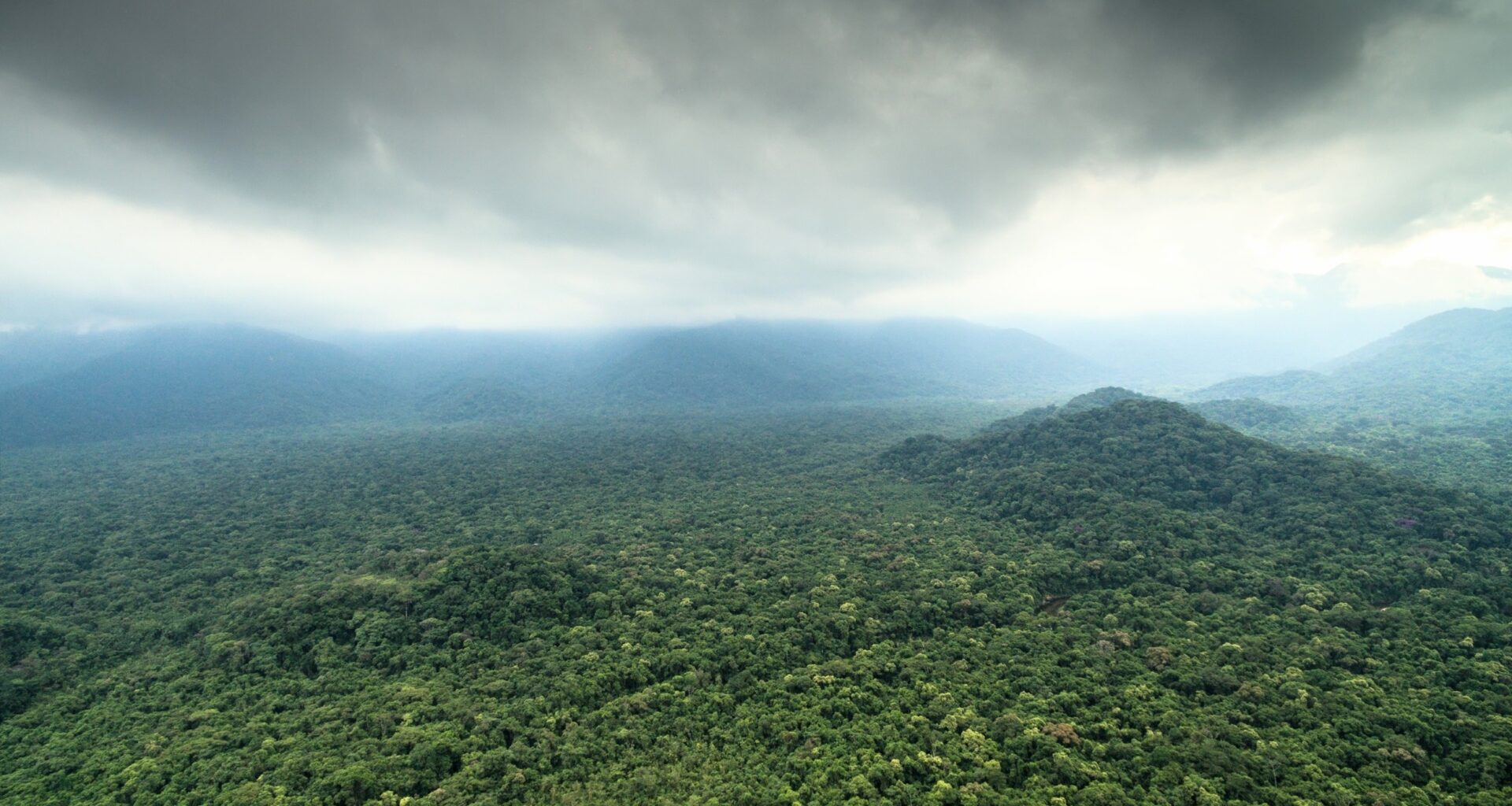
The Brazilian Amazon has become a little harder to clear outright in recent years. But that does not mean it is safe.
A new study suggests that while deforestation has slowed in many areas, a quieter kind of destruction has kept spreading through the forest.

This leaves behind damaged landscapes that still look alive from a distance but are steadily losing their ability to store carbon, shelter wildlife, and resist fire.
That is the core warning from an international research team led by the University of Cambridge.
The researchers found that some of the policies credited with cutting deforestation over the past two decades did little to stop forest degradation – a slower process that often escapes public attention but may be just as serious.
A forest under strain
For people working on the ground, this is not an abstract argument.
Antonio, a firefighter in the Brazilian Amazon, has spent years confronting fires in the Chico Mendes Extractive Reserve, one of the most biologically rich parts of the forest. What he has seen in recent years has convinced him that something is changing fast.
“2024 was the most extreme year for fires. I had never seen anything like it,” Antonio said.
“The forest burned like dry pasture – it was frightening for those of us who risk our lives to protect it.”
The Amazon is supposed to be wet, dense, and hard to burn. When firefighters begin describing it as dry pasture, something fundamental has shifted.
Damage without clearing
Deforestation is easy to recognize. Trees are cut down, land is opened up, and the forest is visibly gone.
Degradation is different, and that is part of why it can be missed.
The trees may still be standing, at least for a while. But the forest has already been weakened by fire, illegal logging, fragmentation, drought, or over-hunting.
The shade is thinner, the moisture is lower, the forest floor dries out, new grasses creep in, and animals disappear.
“There’s still a forest there, but it’s so damaged that the carbon it once stored starts leaking, the animals have disappeared, and new grass species colonise the forest edges,” said lead author Federico Cammelli from Cambridge.
“Tropical forest fires are low intensity, flames often go undetected under the canopy, but after one or two years, trees die while standing, and the forest transforms into a cemetery of dead standing trees.”
A policy blind spot
Brazil has, to its credit, made real progress on deforestation.
The first phase of the government’s Plan for Prevention and Control of Deforestation in the Amazon, launched in the mid-2000s, was estimated to have cut tree clearing by 60 to 80 percent.
Private-sector measures mattered too, including the soy moratorium and agreements meant to stop major meatpackers from buying cattle linked to newly deforested land.
Those efforts helped reduce large-scale forest clearing. But according to the new study, they did not do nearly enough to deal with what was still happening inside forests that remained on the map.
The researchers looked at four major anti-deforestation policies across three Brazilian states and found that none of them reduced degradation.
That is a sobering result, because it suggests governments and companies may have been congratulating themselves for protecting the forest while a slower form of destruction kept spreading underneath.
When success backfires
Some of the findings are even more uncomfortable than that.
The study suggests that in one case, a policy that helped reduce deforestation may actually have made another form of forest damage worse.
The G4 cattle agreement, signed by Brazil’s four biggest meatpackers, appeared to be associated with more timber extraction.
One possible explanation is that as cattle ranching became more tightly watched, some businesses shifted toward logging, where regulation was weaker.
That does not mean the policy was a mistake. But it does show how environmental pressure can simply move if enforcement is too narrow.
“However, we found no conclusive evidence that any of the supply chain policies, like the soy moratorium or the cattle agreements, tackled other big drivers of anthropogenic degradation, like fires, logging and fragmentation,” Cammelli said.
The forest is less stable
Back in Chico Mendes, Antonio says he can see the results of those gaps.
The dry season is lasting longer, the forest feels more fragile, and when rain does come, it often arrives with enough force to wash out bridges and cut off roads.
What Antonio describes is not just a hotter forest, but a less stable one. He is not convinced the law is keeping pace.
“Environmental laws should be stricter, and offenders should be properly published,” he said. “If we lose the forest, we indirectly lose our lives.”
The issue must be reframed
The researchers argue that the problem now is not just enforcement, but the way the whole issue is being framed.
A 2023 update to Brazilian environmental policy did begin to include degradation among the criteria for targeting law enforcement in municipalities with poor environmental records.
But the study argues that much more is needed, especially around fire and illegal logging.
“Fires often spread over many properties and entail complex liabilities: who is responsible for ignition, who for fire spread? They are best addressed at the landscape scale,” Cammelli said.
“The timber sector remains poorly regulated, and much can be done to crack down illegal logging,” Cammelli said.
The same criticism extends beyond Brazil. The researchers say the EU Deforestation Regulation still defines degradation too narrowly and largely misses the fire damage and fragmentation tied to beef and soybean production.
They also found no publicly documented examples of companies operating in the Brazilian Amazon that had set concrete targets specifically for reducing forest degradation.
Risks of waiting too long
A degraded forest is not yet empty land, which makes it easy for outsiders to imagine it can be saved later.
But the researchers warn that waiting is a dangerous mistake. Once the damage is deep enough, much of what made that forest valuable may already be gone.
“Avoiding deforestation and degradation is so much more important for climate and nature than restoring what’s already gone,” said senior author Professor Rachael Garrett from Cambridge. “There are certain things you can’t get back.”
And for the people living closest to it, that loss is already visible.
“Every year, the forest and wildlife become more vulnerable,” said Antonio.
That may be the most unsettling part of the whole story. The Amazon does not have to be fully cut down to be lost. Sometimes it can still look like forest, even as it is slipping away.
The study is published in the journal Proceedings of the National Academy of Sciences.
—–
Like what you read? Subscribe to our newsletter for engaging articles, exclusive content, and the latest updates.
Check us out on EarthSnap, a free app brought to you by Eric Ralls and Earth.com.
—–