


Listen to this article
Estimated 4 minutes
The audio version of this article is generated by AI-based technology. Mispronunciations can occur. We are working with our partners to continually review and improve the results.
City council greenlit a plan Tuesday to improve water efficiency across the city, introducing changes to indoor and outdoor water-use bylaws, including a mandatory outdoor watering schedule.
After hours of debate, council voted 10-5 to move forward with the Water Efficiency Plan, which sets a goal of reducing per-capita water demand by 20 per cent by 2040.
The plan outlines 11 actions to reduce water loss, including updating water meters, promoting the use of water-efficient fixtures and implementing a year-round outdoor watering schedule.
The watering schedule would see odd-numbered homes allowed to water lawns on Wednesday, Friday or Sunday, while even-numbered homes can water on Tuesday, Thursday or Saturday. Outdoor watering will be limited to between 7 p.m. and 10 a.m.
According to city administration, changes to how residents and businesses use water are necessary as the city’s “water security is under pressure” due to limited supply, rapid population growth and a changing climate.
“Managing water demand is key to servicing Calgary’s water needs while optimizing the capacity of our infrastructure,” the plan’s executive summary said.
While the majority of council approved the plan with no amendments, some councillors worried the mandatory watering schedule might come across as too heavy-handed.
Councillors Kim Tyers, Rob Ward, Mike Jamieson, Dan McLean and Landon Johnston all voted against the plan.
Councillors divided on need for watering schedule
Mayor Jeromy Farkas voted for the plan, but said he doesn’t support the mandatory watering schedule. Instead, he said, the city should focus on other aspects of the plan like speeding up infrastructure investments to prevent leaks.
“I don’t support mandatory restrictions outside of extreme drought or emergency situations,” Farkas told reporters Tuesday.
“I believe that the plan that was proposed to council and debated by the committee is well-intentioned, but it misses the mark in terms of what Calgarians can support at this point.”
City officials estimate Calgary lost 22 per cent of its treated water to leaks in 2024.
WATCH | City releases plan to update water system: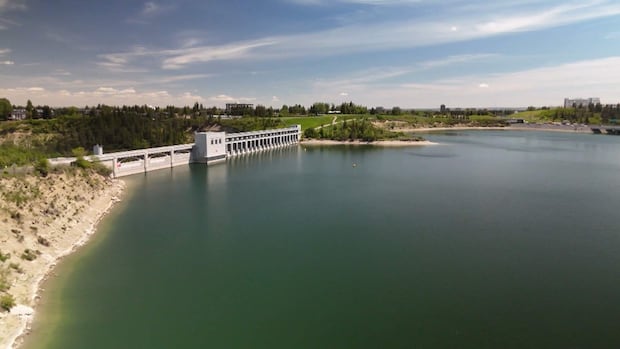
City of Calgary shares plan to improve water system
City administration has released an implementation plan based on the changes recommended by an independent panel earlier this month. It includes hiring a chief operating officer for a new water department and fast-tracking a second feeder main.
Ward 6 Coun. John Pantazopoulos said that needs to change, but a mandatory watering schedule should not be the first step. During the debate, he brought forward a motion to amend the schedule to a voluntary one, but it was voted down.
“We have to start with capital, we have to start with education and we have to make sure that we have that proactive approach talking to Calgarians,” Pantazopoulos said.
But Ward 10 Coun. Andre Chabot, who voted in favour of the plan, said Calgary is behind other municipalities that already have mandatory outdoor watering schedules.
 Ward 10 Coun. Andre Chabot says Calgary is behind several other municipalities that already have mandatory watering schedules. (Brendan Coulter/CBC)
Several other southern Alberta municipalities have watering schedules, including Airdrie, Okotoks, Cochrane, Chestermere and Strathmore.
“Reducing our consumption will also reduce costs by having to build more water treatment facilities, and allow us to reinvest some of that money back into existing failing infrastructure,” he said.
Some exceptions to the watering schedule do apply. Newly-planted trees, shrubs and sod, as well as food-producing crops are all exempt.
 Ward 5 Coun. Raj Dhaliwal says water is a “finite” resource and the outdoor watering schedule is crucial to conserving it. (Brendan Coulter/CBC)
The city says it plans to take an education-first approach to the watering schedule, but routine non-compliance could lead to fines of up to $200.
Ward 5 Coun. Raj Dhaliwal stressed the schedule is not the same as water restrictions, and is crucial for protecting such a “finite” resource.
“If we don’t do something like this and there’s another failure, that will automatically by default push us into Stage 1, 2 [water] restrictions,” he said.
City administration said implementing the plan will cost approximately $400 million in the next four-year budget, most of which will go towards updating existing infrastructure to prevent leaks.