
This article contains affiliate links; if you click such a link and make a purchase, we may earn a commission.
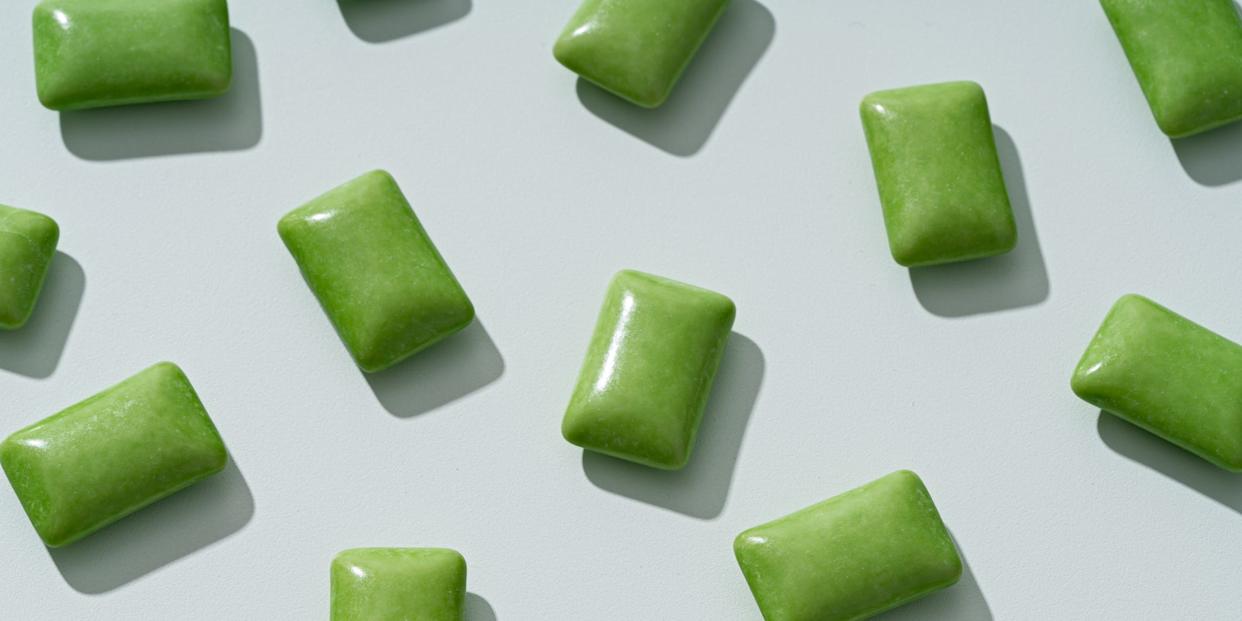
How a Special Gum Can Fight CancerMirageC – Getty Images
“Hearst Magazines and AOL may earn commission or revenue on some items through these links.”
You’re probably aware that certain head and neck cancer cases have been on the rise in the U.S. for years. And while many of these cases are linked to human papillomavirus (HPV), there are other microbes that can make things worse.
Now, researchers have discovered a special chewing gum that may help those affected by head and neck squamous cell carcinoma (HNSCC), a common cancer that develops in the lining of the mouth and throat. The gum may one day help reduce cancer-associated oral microbes, according to Henry Daniell, PhD, lead study author and vice-chair of the Department of Basic and Translational Sciences at the University of Pennsylvania School of Dental Medicine.
An anti-cancer gum is definitely an exciting idea, but there are a few things to consider. Here’s what you need to know.
Meet the experts: Henry Daniell, PhD, lead study author and vice-chair of the Department of Basic and Translational Sciences at the University of Pennsylvania School of Dental Medicine; Paolo Serafini, PhD, immunologist and translational leader of the head and neck site disease group with Sylvester Comprehensive Cancer Center, part of the University of Miami Miller School of Medicine.
What did the study find?
The study, which was published in the journal Scientific Reports, analyzed the impact of a chewing gum made with proteins from lablab beans (also known as bean gum).
For the ex vivo study, Daniell and his colleagues looked at the levels of three microbes linked to cancer: HPV, Porphyromonas gingivalis, and Fusobacterium nucleatum, taken from oral samples from patients with HNSCC.
While HPV infection has increased the rates of HNSCC, the two other microbes, Porphyromonas gingivalis and Fusobacterium nucleatum, are linked to worse survival rates in untreated, recurrent, or metastatic oral cancer.
The researchers discovered that the bean gum extracts reduced HPV levels by 93 percent in patients’ saliva, and by 80 percent in oral rinse samples. When the bean gum was bioengineered to contain protegrin, an antimicrobial peptide that can kill harmful bacteria, a single dose of the gum dropped the levels of Porphyromonas gingivalis and Fusobacterium nucleatum to almost zero.
A nice perk: The gum did this without impacting the good bacteria normally found in the mouth.
Why gum?
The researchers didn’t create an anti-cancer gum for kicks. “Oral medicines get diluted in blood and are not suitable for concentrated local delivery at the site of infection,” Daniell explains. Giving people antiviral and antibacterial drugs via chewing gum is “ideal” because it works at the site of infection, he says.
The gum is also meant as a complement to existing therapies. “All other treatments should be continued,” Daniell says.
How does this work, exactly?
The lablab beans in the gum naturally contain a special antiviral protein called FRIL. Daniell explains that FRIL traps viruses by binding to the surface proteins and essentially sticking them to the gum. “Antibacterial proteins poke holes in carcinogenic bacteria and kill them,” he says.
This mechanism can make a pretty big difference. “Chewing antiviral or antibacterial gums neutralizes more than 95 percent of viruses and pathogenic bacteria,” Daniell says.
What does this mean for cancer care?
It’s kind of hard to say at this point. “We do not know how long the gum can take the bacteria and virus away,” says Paolo Serafini, PhD, immunologist and translational leader of the head and neck site disease group with Sylvester Comprehensive Cancer Center, part of the University of Miami Miller School of Medicine. “My guess is for an hour. That is not going to have a big impact.”
Serafini also points out that the HPV vaccine is specifically designed to lower the risk of HNSCC—no chewing required. “The HPV vaccine that is available prevents cervical cancer and head and neck cancer in most people,” he says.
Looking ahead, Daniell says antiviral chewing gum is being evaluated in London, and similar trials for HNSCC patients will soon be initiated stateside at the University of Pennsylvania.
You Might Also Like