
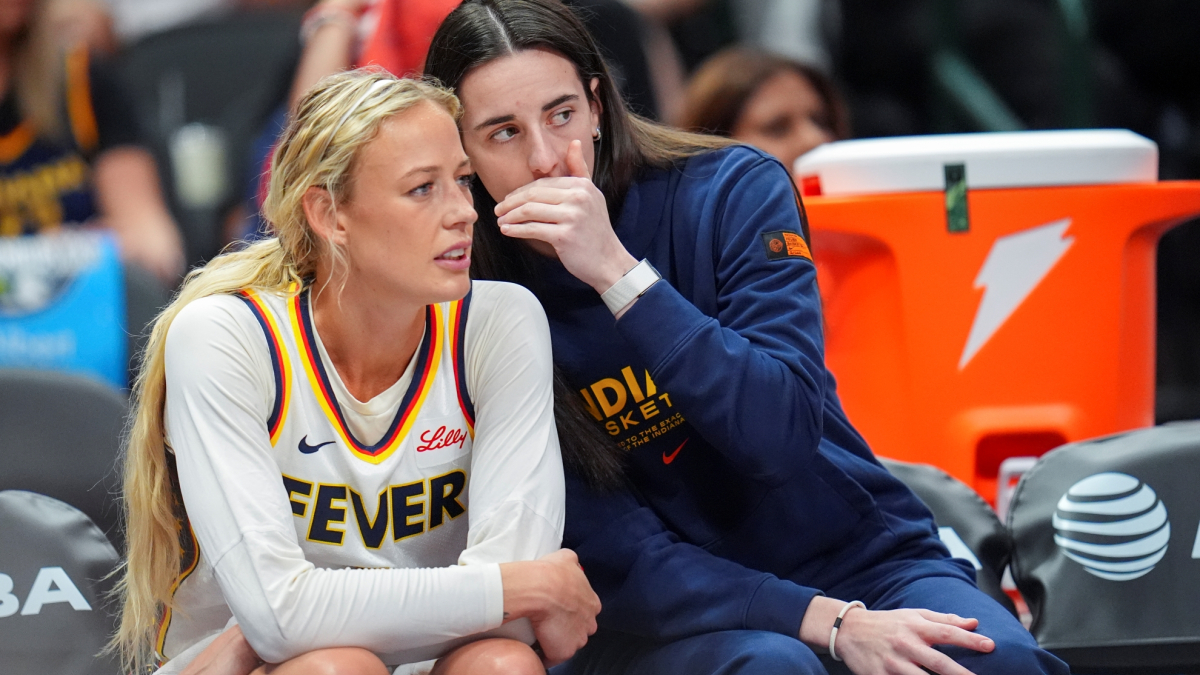
The WNBA is entering a historic milestone as it kicks off its 30th regular season on May 8th. With preseason action already in full swing, the league’s landscape has undergone a radical transformation. Following months of intense negotiations over the new Collective Bargaining Agreement (CBA), players are finally seeing the financial rewards they’ve fought for.
The minimum salary has now cleared the $300,000 mark, while the league average has surged to approximately $600,000. This unprecedented wealth is fueled by a staggering 466% jump in the salary cap, which has expanded from $1.5 million to a massive $7 million.
Much of this commercial explosion is credited to the “Caitlin Clark effect.” After a shortened 2025 campaign, Clark is back for a full season, and her star power is undeniable, the Indiana Fever have secured a 100% national broadcast rate, marking the first time in league history all 44 games of a single team will be televised nationally across partners like ESPN, ABC, and Amazon Prime.
The “Bodyguard” Stays in Indy: Sophie Cunningham’s Fight for a Forever Home
While the league celebrates its new wealth, the personal reality for players like Sophie Cunningham remains more nuanced. Known as the “bodyguard” for her fierce protection of Caitlin Clark on the court, Cunningham was a vital piece of the Fever’s identity last season, averaging 8.6 points and 3.8 rebounds.
This offseason, she inked a 1-year, $665,000 contract to return to Indiana. However, despite the high salary, Cunningham took to social media to express a specific kind of frustration that money can’t fix: the lack of contract longevity.
Cunningham clarified that her disappointment wasn’t about the dollar amount, but the single year of security. A resident at heart, she expressed a deep desire for a “forever home” in Indianapolis where she could finally settle down with her dog and her donkey. Her commitment to the city is clear, but for now, she will have to prove her value once more on a short-term deal.
All eyes are now on the Fever’s season opener on May 9th against the Dallas Wings, a high-stakes matchup featuring the last four and the last two first-overall picks, Paige Bueckers and Azzi Fudd, where Cunningham will look to secure her long-term future through her play on the hardwood.
The EPIC Provision: Caitlin Clark’s Fast-Track to a $1.7 Million Supermax
The 2026 season also introduces a revolutionary financial mechanism that is set to make Caitlin Clark the highest-paid player in the history of the sport. Under the new “Exceptional Performance on Initial Contract” (EPIC) provision, young stars who dominate immediately can bypass traditional salary scales.
Because Clark swept Rookie of the Year and All-WNBA honors in her debut window, she has unlocked an accelerated earning path that most veterans can only dream of.
This season, Clark’s salary is projected to leap to roughly $530,000, nearly seven times what she earned previously. This is just the beginning of a massive upward trajectory. By 2027, the EPIC rule makes her eligible for a maximum salary of $1.3 million, with the potential to sign a staggering $1.7 million Supermax contract by 2028.
This new structure ensures that the league’s “generational talents” are compensated in a way that reflects their massive impact on TV ratings and ticket sales, effectively changing the financial ceiling for the next generation of WNBA icons.