
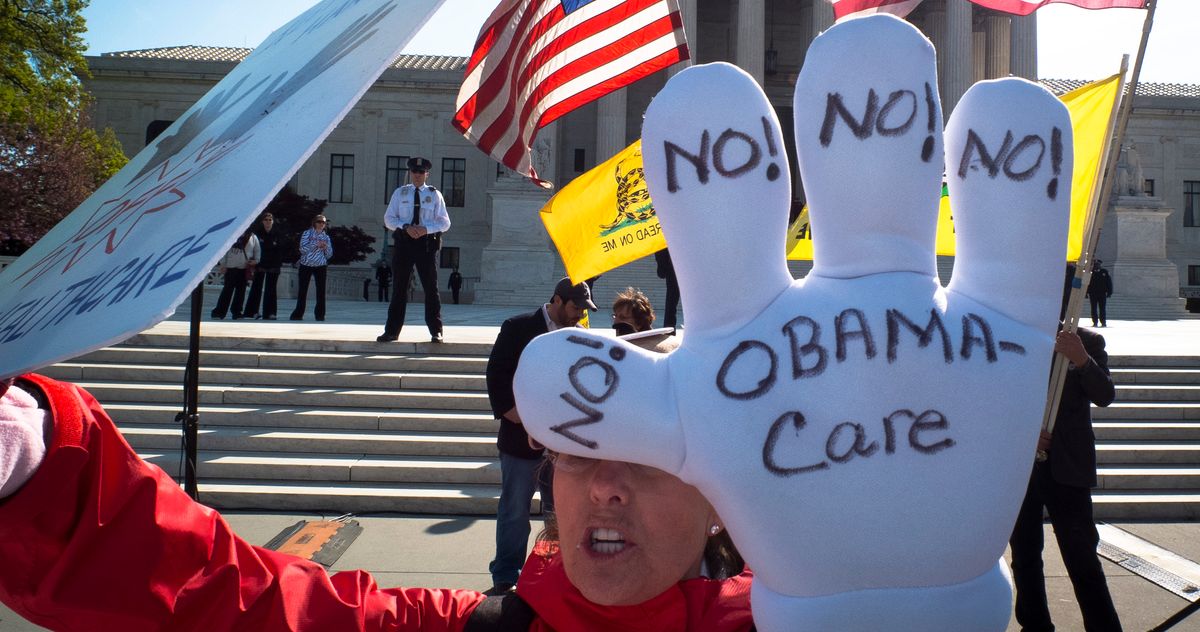
Photo: Mladen Antonov/AFP/Getty Images
Amid all the justified preoccupation with gasoline and grocery prices as leading indicators of affordability right now, it’s easy to forget the country is undergoing a health-care-cost crisis of enormous magnitude. As the New York Times reminded us today, the expiration of enhanced Obamacare premium subsidies at the end of 2025 is having a huge impact:
Millions of Americans appear to be dropping Obamacare coverage in the months since Congress failed to extend the generous subsidies that had become a defining feature of the Affordable Care Act …
Many insurers and analysts are estimating overall declines of about 20 percent, dropping to around 19 million from the 24 million who were covered under the A.C.A. last year. Other indications suggest there could be even larger potential losses by the end of the year, a deep retrenchment for Obamacare coverage and a reversal of significant gains in the last several years.
The rising cost of health care has shown up as a top concern among Americans in several public opinion polls. Premiums are rising for Americans who get insurance through work, too, as health care costs have been increasing nationwide. Out-of-pocket costs are growing too, as plans with high deductibles have become popular.
The Trump administration and the Republican-controlled Congress are not about to go back and extend the expired subsidies; that train left the station long ago, and most Republicans hate Obamacare anyway. Nor is there any indication whatsoever of an appetite for bipartisan legislation on this or any other topic prior to the midterms.
So the natural inclination of Republican politicians may be to continue to blame the problems of the health-care system on Obamacare, as they have been doing for 16 years now, and either tout some random Trump-administration initiatives that will allegedly lower prescription-drug costs or change the subject to more congenial matters.
It’s true that earlier this year Trump released a video announcing a Great Health Care Plan. It was extremely short on details but generally echoed the long-standing Republican claim that health-care costs can be contained by using federal policies and dollars to encourage people either to pay for their own health care without insurance or to buy high-deductible, low–co-pay insurance polices that are pretty cheap. This approach works fairly well for younger, healthier, and wealthier people, but it’s dangerous for everyone else — particularly those protected by the Affordable Care Act’s prohibition on preexisting-condition exclusions and other ways insurers and providers avoid health-care costs. This is the main reason Republicans have been kicking the can down the road on health-care policy for such a long time. So why should 2026 be any different?
The answer could be “It won’t be different at all.” But there is one opportunity on the immediate horizon for a major Republican health-care-policy offensive that could provide an irresistible temptation for an end to the usual GOP evasions and inaction. Last year, Republicans enacted most of Trump’s second-term legislative agenda via a filibusterproof, party-line budget-reconciliation package it called the Big Beautiful Bill Act. They are currently in the process of moving a second filibusterproof, party-line budget-reconciliation package aimed at ensuring massive funding for ICE and Border Patrol agents until the very end of the Trump administration. To secure quick passage of that narrow bill, Republican leaders in both congressional chambers have had to promise a third Big Beautiful Bill in order to secure some final conservative policy achievements before the midterms. Indeed, part of the motivation for this third bill is the realistic expectation that Democrats are going to win the midterms and deny Republicans the power to enact much of anything for the foreseeable future.
It’s not clear just yet exactly what the White House and its congressional allies will choose to cram into this final fire-sale legislative package. But given the cost-and-coverage crisis ravaging the country at present, it would be surprising if they don’t make some effort to include health-care provisions, some of which could blow up Obamacare itself.
If this final bill happens, it will happen very quickly and behind closed doors. First, House and Senate Republicans will agree on a broad budget resolution setting spending and revenue goals. Only then will House and Senate committees begin putting together their Beautiful Bill, and once they do, Republican unity is all it will take to enact it. It’s true that Republicans also controlled Congress in 2017 when Trump and his allies tried unsuccessfully to “repeal and replace Obamacare.” But the congressional GOP is a lot more subservient to Trump’s orders today and less inclined to disobey. When you look at Congress right now, it’s short on John McCains (the senator famously stopped the final effort to blow up Obamacare). So it may be up to Trump to decide whether another kamikaze attack on Obamacare is on tap for the final months of 2026. If it does happen, get ready for some really bad health-care policies to become the law of the land.
Sign Up for the Intelligencer Newsletter
Daily news about the politics, business, and technology shaping our world.
Vox Media, LLC Terms and Privacy Notice