
Broward County’s ambitious “master plan” for revamping the way we all dispose of our trash and embrace recycling is fast approaching a significant deadline, according to the chairman of the governing board and executive committee of the Solid Waste Authority.
The 28 municipalities that are part of the Solid Waste Authority must vote on adopting the master plan by Aug. 14.
According to Mike Ryan, mayor of Sunrise and chairman of the SWA, the plan will pass if governments representing 80% of the participating cities’ population approve it (the percentage was agreed to when the Solid Waste Authority was formed to make sure no single city could derail the plans). Otherwise, he said, or the Solid Waste Authority automatically disbands, and all of its proposals become empty suggestions for a future that might have been.
The Solid Waste Authority is a partnership of county governments, with each having a representative and a voice. Pembroke Pines, Hallandale Beach and Pompano Beach have not opted into the authority, though they will be welcomed if they decide to opt-in at any time.
Two weeks ago, on April 17, the SWA unanimously passed its master plan, which had been in development for years.
The plan calls for rethinking the way the county’s two million residents separate and dispose of their trash, along with what happens to it once it’s hauled away in garbage and recycling trucks. “Combining tonnage in economies of scale is in our best interest as a group,” Ryan said. Broward generates 5 million tons of garbage a year. The master plan hopes to significantly reduce that amount, curbing the region’s needs for disappearing landfill space.
If it fails, each city will have to come up with its own plan, negotiating individually with Waste Management and other private companies for disposal of trash and recycling.
“The fragmented approach doesn’t work,” Ryan said.
The ultimate goal, the centerpiece of the plan, is to reach a recycling rate of 75%.
Not long ago, in 2013, Broward’s recycling rate was approaching that number, at 60%.
But the lack of a unified plan, with cities individually deciding what was in their best interest, that number plummeted to 38%, according to Ryan.
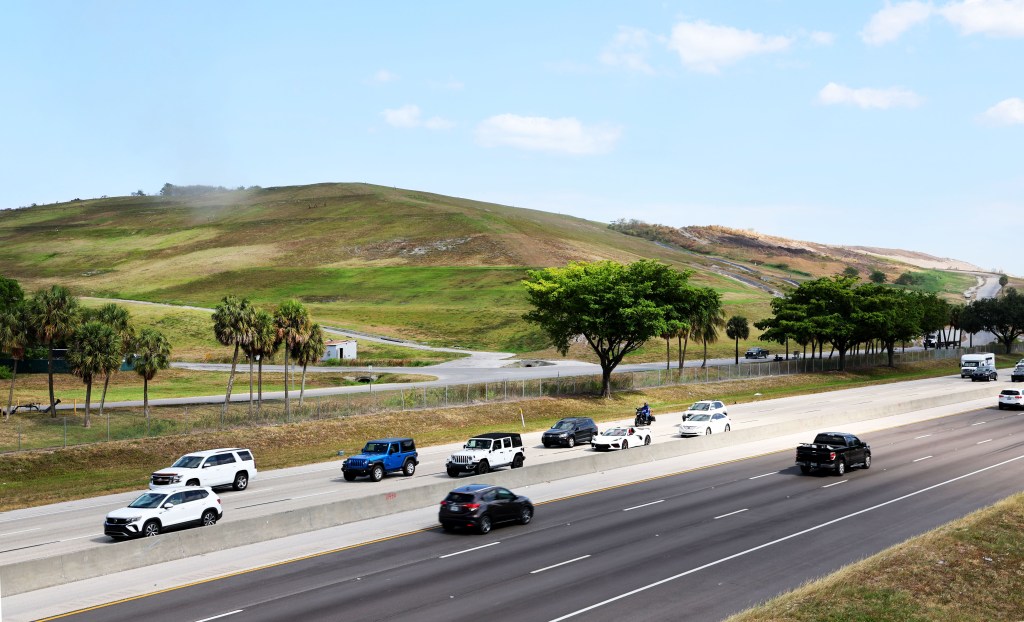
Broward once had two waste-to-energy facilities, built at public expense and handed over to a private company, Waste Management. A decade ago, the facility at Monarch Hill, which borders Coconut Creek, Deerfield Beach and Pompano Beach, was mothballed. It was finally demolished in 2024.
The decision to turn over control of Monarch Hill may have seemed economical in the short-term, but it left Broward at the mercy of markets in dealing with its future waste disposal needs, Ryan said.
Last year, the County Commission approved a plan to widen the base of the landfill at the Monarch Hill Renewable Energy Park and increase the height by 100 feet, to 325 feet, to help accommodate the 5 million tons of trash produced by Broward residents and businesses each year. It’s not nearly enough to accommodate the county’s long-term waste disposal needs.
Now Broward must reduce its waste significantly and increase its recycling proportionately or it will soon find it has no place to put its trash.
Various communities, such as Coconut Creek, Southwest Ranches and Sea Ranch Lakes, have already approved the master plan.
Fort Lauderdale has the issue on the agenda for its next commission meeting.
Rafael Olmeda can be reached at rolmeda@sunsentinel.com or 954-356-4457.