
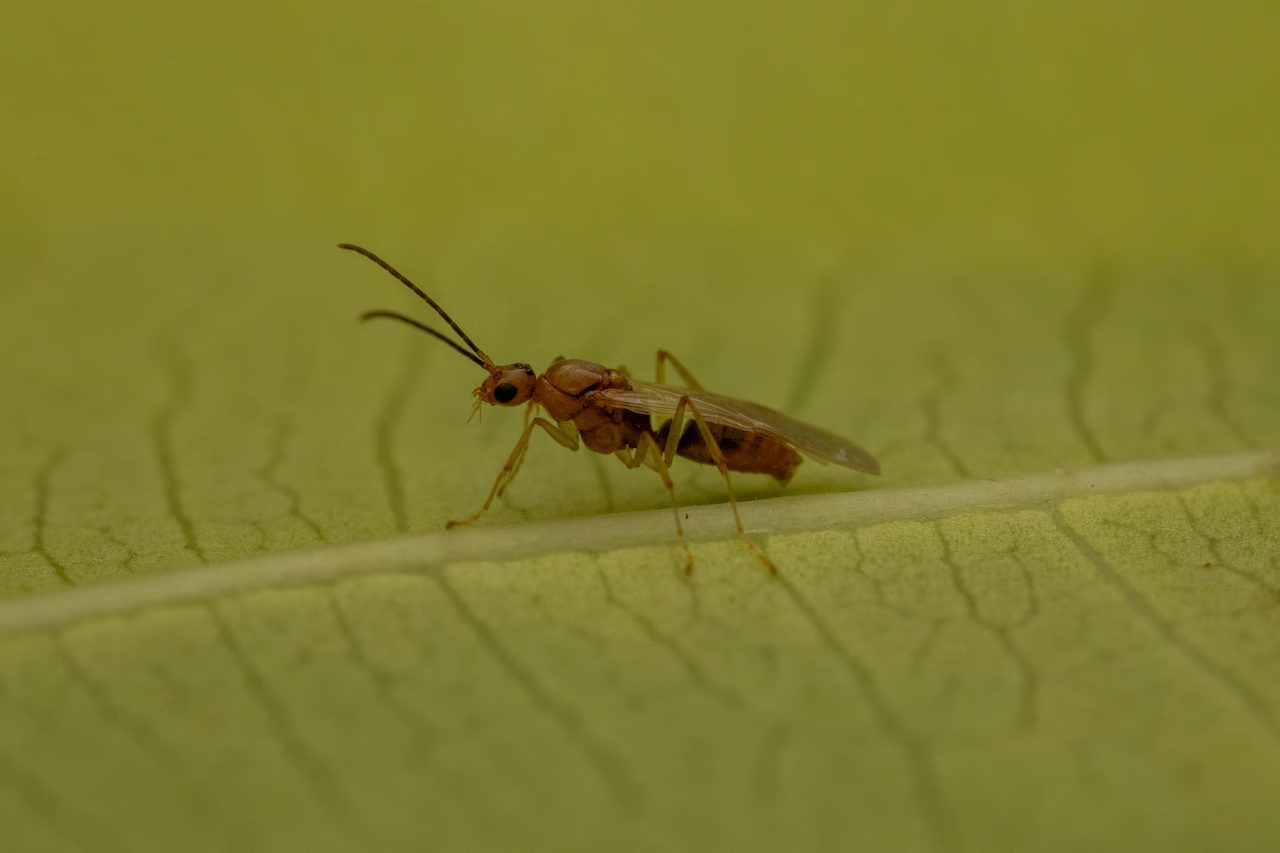
Researchers are warning residents across the Southeast about the reemergence of an invasive ant species that could pose significant health risks.
The Asian needle ant has been in the United States since the 1930s, but its recent expansion has raised concerns among experts.
Dan Suiter, an Orkin Distinguished Professor of Urban Entomology at the University of Georgia College of Agricultural and Environmental Sciences and UGA Cooperative Extension, told the university publication that ant populations peak in July and August, making awareness crucial.
The ants, scientifically known as Brachyponera chinensis, measure about 3/16 of an inch long and are dark brown to black with lighter orange-brown antennae and legs, according to a release from the U.S. Department of Agriculture.
Unlike fire ants that build visible mounds, Asian needle ants hide in leaf litter, dead logs, firewood piles, tree bark, rocks, and areas with high moisture, according to the release.
They establish themselves in pristine hardwood habitats and do not create visible foraging trails.
The species was first detected in Georgia in the 1930s but wasn’t extensively studied until about 20 years ago.
The ants have now spread along the entire East Coast and have been classified as a “medical pest” by UGA researchers because they inject venom when they sting.
The sting can cause life-threatening anaphylactic shock, with pain that can recur days later, according to the USDA.
Stings typically result in intense pain that comes and goes over several hours, skin redness, and hives.
In the ant’s native range of China, Japan, and Korea, 2.1 percent of people stung experienced anaphylaxis.
People who have reacted adversely to bee or ant stings in the past face a higher risk of anaphylactic shock from needle ant stings, according to Suiter.
He recommended those at risk of anaphylaxis carry an EpiPen.
The ants also damage native ecosystems by outcompeting other ant species important to the area’s ecology, according to the USDA.
They displace ants that disperse seeds for many herbaceous plants, potentially causing long-term negative effects on forest understory growth.
Researchers have found that native ant abundance and diversity decline in areas where Asian needle ants establish themselves.
Control measures exist but treating remote or forested areas remains unlikely due to costs and potential harm to desirable species.
Suiter emphasized that residents living near wooded areas should learn to identify these ants to stay safe.