
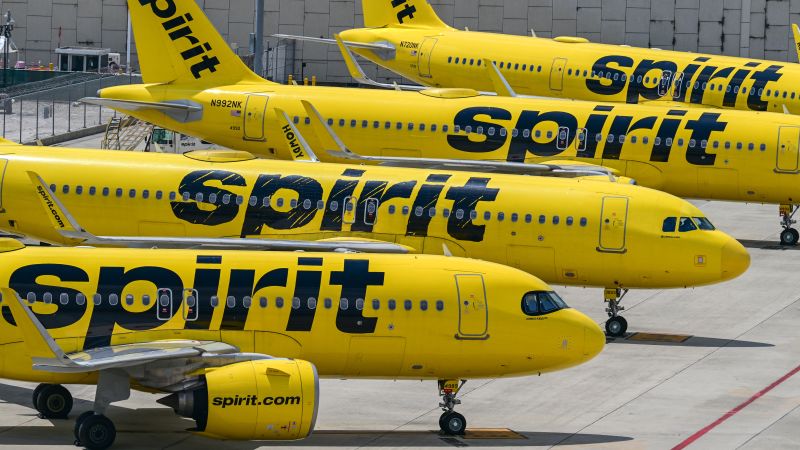
Lousy service, not the Iran war, killed Spirit Airlines.
Spirit was doomed to fail because of mismanagement, deep financial problems, and – crucially – its reputation for poor customer service. The spike in jet fuel prices during the war just accelerated Spirit’s inevitable demise.
The airline hadn’t been profitable since before the pandemic. Spirit has repeatedly warned investors in recent years it wasn’t sure it could stay in business – well before the United States and Israel went to war with Iran.
The discount carrier was in the midst of its second bankruptcy, auctioning off planes and airport gates and cutting staff in a desperate struggle to stay alive.
Spirit’s failure is a cautionary tale for other discount airlines: Competing on price alone can be a losing strategy. But that doesn’t mean other low-cost carriers are doomed.
Cheap fares alone also can’t explain Spirit’s problems – other budget carriers prove the business model can work. Airlines are first and foremost a service industry, and Spirit could not overcome its extraordinarily miserable reputation.
“A low percentage of passengers said they would fly the airline again after their most recent experience,” said Michael Taylor, senior managing director for travel, retail and customer service rankings at JD Power. “There will always be a market for airlines that offer the lowest fares possible. The question is: are they making the pizza too cheap to eat?”
Spirit had some of highest complaints and lowest consumer satisfaction rates in the industry.
It turns out passengers didn’t like being charged for every aspect of the flight, including carry-on bags. While Spirit met the industry average for on-time flights and lost baggage, Spirit also has the smallest amount of legroom, according to travel site Simply Flying.
“Cramming people into 28-to-29-inch seat pitch is uncomfortable, period. Especially on longer-haul flights,” said airline industry consultant Mike Boyd.
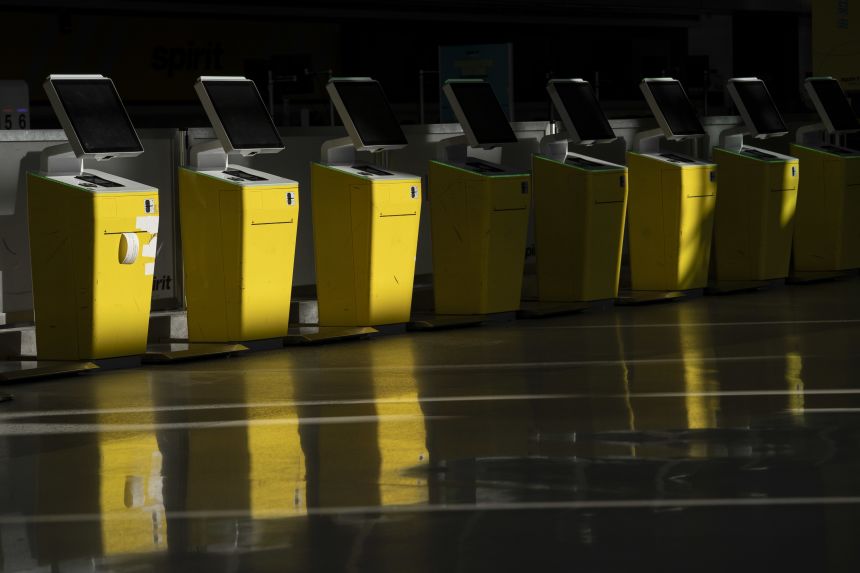
Even customers hunting for the lowest base fares expect things like free snacks or soft drinks, which is standard on most other airlines.
“They stripped out so much from the experience … that the folks who ended up stuck on Spirit often kind of despised the experience” said Zach Griff, author of airline newsletter From the Tray Table. “And they often were willing to pay $30, $40 $50, even $60 more just to have better experience on a different airline.”
Spirit operated as a charter airline in the 1980s before becoming a passenger carrier in 1992. A pioneer in ultra-low base fares, the airline was mostly profitable through 2019. But then demand for air travel cratered during the pandemic. When travelers wanted to return to the skies, they no longer wanted the kind of service Spirit offered and were willing to pay more the get it.
Spirit recognized the problem and tried to cater to higher-paying customers by offering larger seats at the front of the plane. The airline even bundled fares with baggage, Wi-Fi and even snack fees to save customers money.
“But it struggled to convince enough flyers that it had reinvented the service,” said Griff. “No one ever compared Delta and Spirit, at least when it comes to service.”
Spirit declined to comment for this story.
A low fare model and customer complaints don’t have to go hand-and-hand. There are several budget airlines with better reputations.
Allegiant, for example, ranks above average in the JD Power customer satisfaction rankings even with the same basic no-frills, low base fare business model.
“People think it’s a great value for the money,” Taylor said of the Las Vegas-based airline. “That’s how you can make money as an ultra-low cost carrier – you have people say, ‘Hey, you know what? This is cheap and it’s not bad.’”
Discount carrier Breeze, founded in 2021, is among the fastest growing US airlines.
There will always be bargain-hunting customers, so other discount carriers could benefit from Spirit’s demise. But it is a difficult time for all airlines due to the jet fuel spike. And given their customer base, budget carriers can’t raise fares like the major airlines to cover increased fuel costs.
A trade group representing the remaining discount carriers recently requested a $2.5 billion bailout from Congress and the Trump administration.
Many experts expect Spirit’s closure will accelerate airfare hikes where it had a large market share: Fort Lauderdale, Detroit and Las Vegas. But it won’t have much impact on fares on the routes it didn’t fly.
So low fares will still be available for US customers, just on other airlines.
“Bottom line: the day of being able to maintain business just on the basis of offering a low fare is over,” said Boyd. “It was not the price of fuel that did (Spirit) in. It just accelerated the demise of a doomed airline.”