
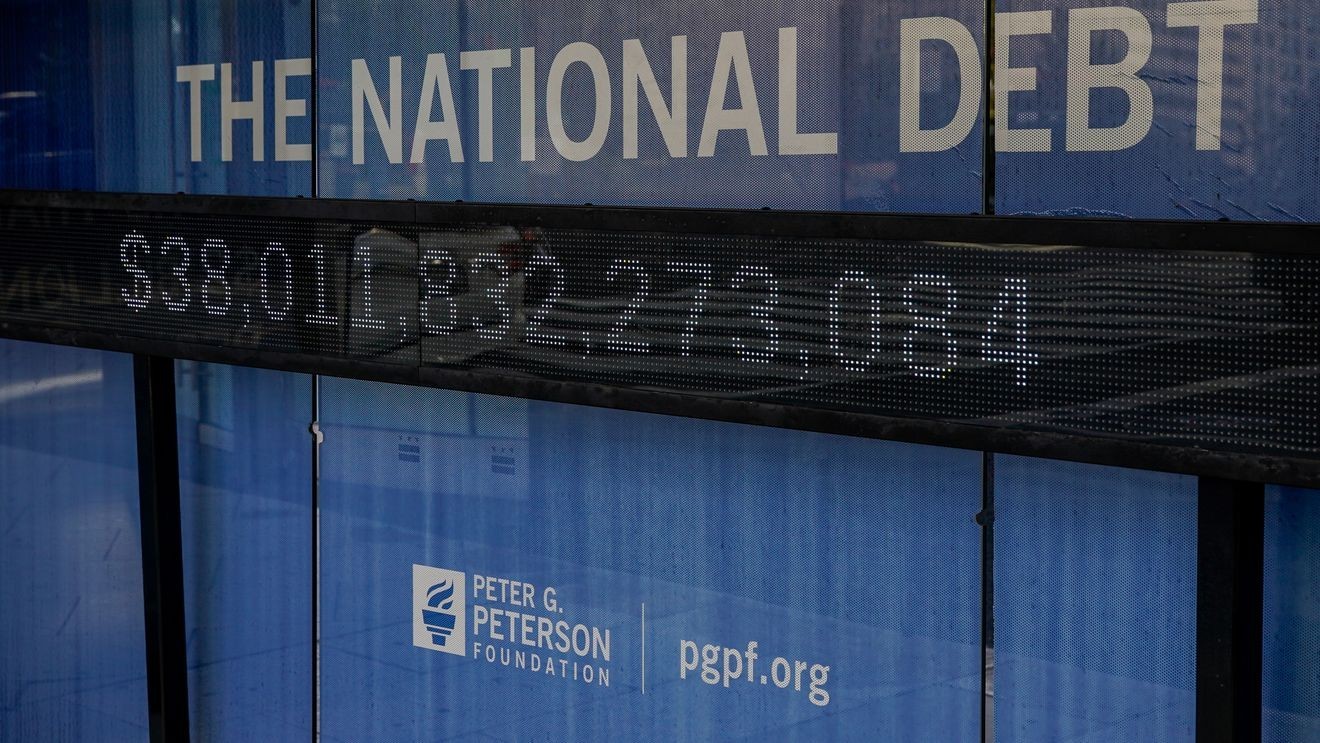
WASHINGTON (TNND) — A gaping hole in the federal budget has just reached a critical point.
In an April 23 speech on the House floor, Rep. David Schweikert, R-Ariz., raised concerns about federal spending. (TNND)
The national debt has now surpassed $39 trillion, which is greater than the entire U.S. economy, a milestone that’s only ever been hit twice: once for a brief period during the Covid 19 outbreak and another time in the wake of World War Two.
In an April 23 speech on the House floor, Rep. David Schweikert, R-Ariz., raised concerns about federal spending.
“It’s a live for today. Spend for today. Grab every dime you can for today, get your bonus today, and burn down the future,” he warned.
During a March 26 House Budget Committee hearing, Rep. Jimmy Panetta, D-Calif., said,
We have fallen into a pattern of cutting taxes and spending more, regardless of whether the economy is expanding or contracting.
The federal public debt, which recently reached $31.27 trillion, exceeds gross domestic product, estimated to be 31.22 trillion dollars, according to the Committee for a Responsible Federal Budget.
Economists have for years warned of one of the most alarming aspects of this, that annual interest payments on the U.S. National Debt have now surpassed more than a trillion dollars.
That’s more than we pay for our nation’s defense or massive healthcare programs like Medicare.
In a March interview with The National News Desk, Brandon Arnold, Executive Vice President of the National Taxpayers Union, said it’s a dangerous reality.
“This is just paying off our financial mismanagement of the past. It’s not providing anything of value to Americans, is not improving our health care, education or anything that we really care about in this country.”
Experts say what used to be considered emergency or wartime spending has now been built into the budget and often shrugged off, and many agree that the problem of overspending is a bipartisan one.
“Everybody’s kind of competing to see who can give away the most,” said Maya Macguineas, President of the Committee for a Responsible Federal Budget.
From the Affordable Care Act, known as Obamacare, to Republicans’ “One Big Beautiful bill,” the debt has been climbing at an accelerated rate.
“Ultimately, this is the job of our fiscal policymakers, congress and the executive branch, to come together and put us on a- on a sound fiscal trajectory, which we’re not on right now i don’t see an immediate crisis brewing, but at some point it’s going to be a problem,” said Neel Kashkari, President & CEO, of the Federal Reserve Bank of Minneapolis, in an interview Sunday on CBS’s “Face the Nation.”
With the war in Iran already costing more than $25 billion and Americans feeling financially strained today, there are increasing warnings that this landmark economic moment could reverberate for generations to come.