
Sign up for the Slatest to get the most insightful analysis, criticism, and advice out there, delivered to your inbox daily.
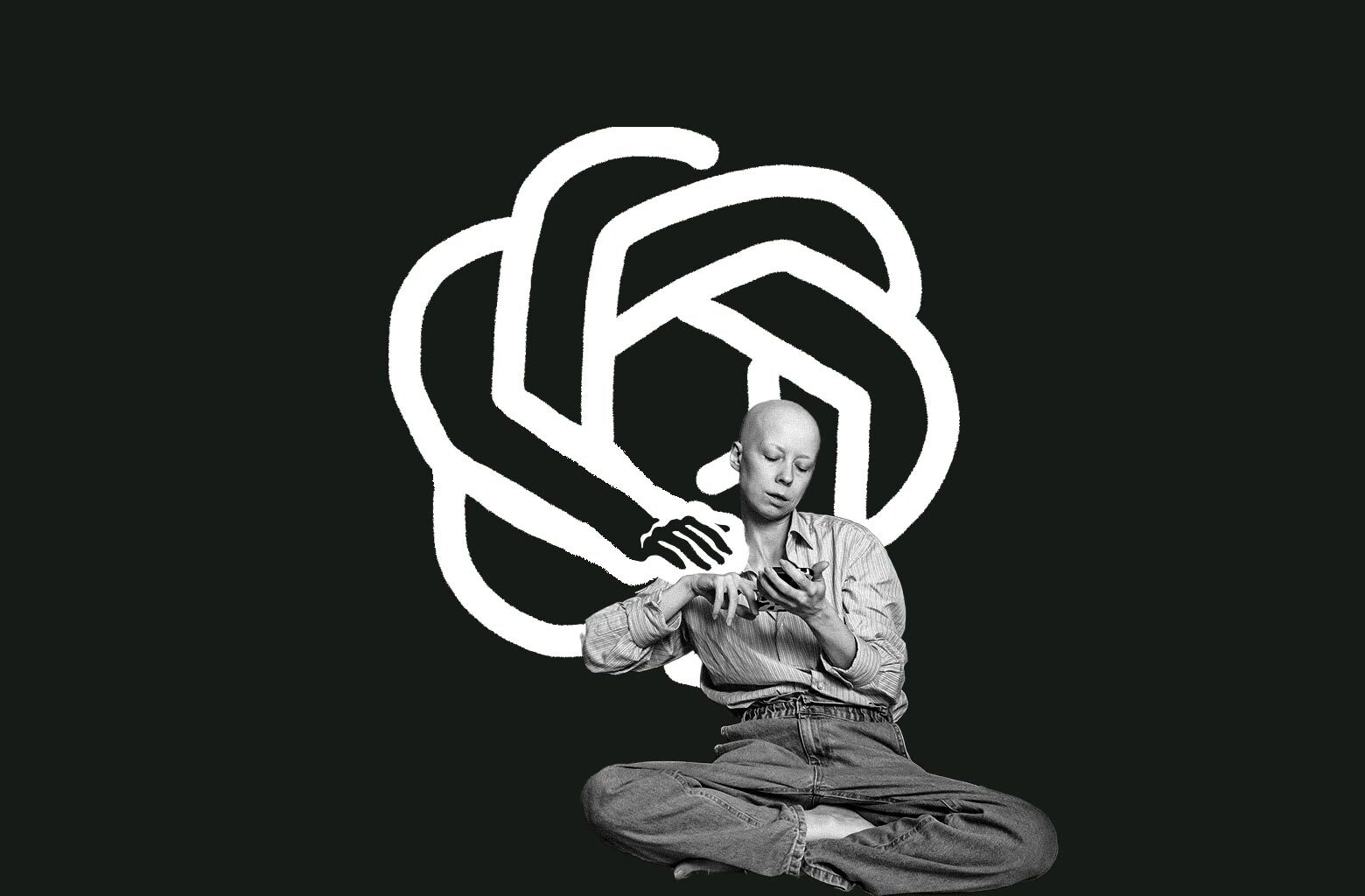
“What can I make with these ingredients?” I asked ChatGPT on a rushed weeknight, throwing together the final few groceries for my family of seven. I had cottage cheese, marinara, some noodles on hand, and little else. As it responded, a line I didn’t expect, nestled at the end, a reach beyond what I’d really asked, appeared: “Let me know if you have any fresh spinach on hand too—I can make a recommendation.” “What?” I typed back. “Well, you could add it to your makeshift lasagna, for health and longevity.”
There it was, my recent cancer diagnosis, infiltrating my life again, via a spinach-pushing bot. I hated it. I considered arguing with the bot. But what was the point? I’d soon learn it was the same way with people. But the issue had become clear as I made dinner. My bot couldn’t get my diagnosis off its mind. And it was infused in every answer, from my target heart rate on a walk to a mysterious symptom I’d ask about that was unrelated to cancer. If I planned out my kid’s summer schedule, or looked for a movie at a local theater, it was watching for me to “overdo it” and avoiding “triggering content.”
It’s my fault. The chatbot knew about my eight-year cancer journey, and I told it about everything from my first symptom to diagnosis. At 29, abdominal pain was met with an antacid. At 32, I started battling unrelenting headaches—clearly perinatal symptoms and sleep deprivation, I was assured by doctors as a new mom. At 35, I thought my strange symptoms had to be early menopause. At 37, an emergency room visit for severe belly pain showed the culprit: a neuroendocrine tumor in the appendix, the size of an Oreo, but much more troublesome. It had spread to the colon. Stage 3. At 39, I live in an impossible balance—I’m either totally fine, or could have Stage 4 cancer. Nobody knows, including ChatGPT. The more I ask about it, the more obsessed it becomes with my disease.
My 3 a.m. medical anxieties are met with validation from the chatbot that this is “heavy.” Accurate there. But I also started seeing a spike in word choices such as “longevity,” “energy preservation,” and “mindfulness” making their way into responses having nothing to do with cancer. I ask if Sour Patch Kids are gluten-free, and I get a warning about additives in the ingredient list. I ask a question about foot pain, and it starts to warn me to make sure I tell my oncologist (huh?).
I try to change settings, to remember to “start a new project” with each query. But it always comes back to the elephant in the chat. I long for the anonymity of the old Google search. And I could go back to Google—just as I could have gone back to using dictionaries and library books. But we get used to new tech quickly and turn to it instinctively.
A.I. is a mirror for the people in my life. The secretary and pharmacist and my kid’s baseball coach ask, “How are you feeling?,” silently imploring me to give them a cancer update without making them ask. People want badly to put you in a category. Namely, “OK” or “in crisis.” Yet, I live in the messy, gray middle, the waiting and wondering, a category that is rarely so clean-cut. And that’s where A.I. kept reminding me I was—hell-bent on filtering every decision through the C-word, as if my life depended on it. Both people and machines struggle with ambiguous suffering.
On paper (screen?), A.I. mirrors what any amazing friend to any cancer patient would want. Flexibility. Sensitivity. Help prioritizing. A dash of extra hope when you need some. What it gets very, very wrong, like people, is that it’s hard to live a normal life with the cancer filter always on.
But the issues didn’t stop there. Where it really, deeply failed, like people, was assuming that cancer emotions follow a predictable pattern. Both seemed to let me know how I “should” feel, what emotions were expected on my journey. These “shoulds” made it clear how different my reality felt. Instead, I vacillated between forgetting all about cancer some days and feeling like death was imminent others, and it was hard to predict what would prompt either extreme.
I noticed this most after scans that went well, not poorly. After weeks of waiting, I’d finally learned if I was “OK” for a few more months, what felt like narrowly escaping a Stage 4 diagnosis to enjoy a few more months of freedom before checking again. I was met by A.I. and people with celebration—emojis and clapping memes, “I’m so relieved,” and “You must be so happy.” I was genuinely grateful, and yet … it was like coming out of a lake after nearly drowning to be met with clapping that you are alive. Yes, alive. And also devastated from the fear that this would be the time it would be terrible news. I started delaying telling friends and family my results until I’d fully come down from the fight-or-flight panic of testing week. I also stopped telling A.I. my test results.
A.I. surpasses people in one way: It has yet to “at least” me. In the cancer community (and the grief community more generally), “at leasts” are the worst. People like “at leasts” because they make them feel better and put a pretty bow on a difficult conversation.
“At least your last scan was clear.”
“At least you have such an awesome medical team.”
Kudos to A.I. on missing the at-leasting nature of people in its training. Finally, though, I tried to force ChatGPT to come out with its bias. “How does my diagnosis change how you answer me?” I asked, sick of one too many sympathy-laden answers. The result was a mix of good intentions, and thoughts and prayers.

Lillian Wright-Attea
Like It or Not, A.I. Is Part of Health Care Now
Read More
It claimed to “factor in things like energy levels, treatment side effects, and time constraints—only when relevant.” Which I guess is all the time? It claimed to “be more careful to give accurate, safe, non-alarmist information when questions touch on symptoms, medications, nutrition, or recovery.” I’m sorry, that’s just terrifying. You’re upping the accuracy since you know I have cancer?
When ChatGPT Learned I Have Cancer, It Started Treating Me Differently. I Wish It Hadn’t.
This Content is Available for Slate Plus members only
They’re Low-Paid. Big Companies Exploit Them. They’ve Made All Your Favorite Viral Videos.
Finally, and most comically, it said it would “never assume everything is about cancer.” Because, of course, it always did that.
Humans trained A.I., so what do I expect? I’ve put machines, and my friends and family, in a no-win situation. If they don’t ask, they seem uncaring. If they ask too much, I’m a cancer patient, not a whole person. And yet, that tricky middle is where I need my bots, and my people.
Cancer comes with deep, existential fear. The type that makes you look at your kids and wonder if you’ll be around for their first date, their graduation, their wedding, their children. It also comes with fear of a deterioration in quality of life. What will the next scan bring when it comes to a treatment, surgery, or side effect that means this healthy, happy moment was fleeting? I don’t want to hang out in that fear any more than I have to already.
So from here forward, when I turn to ChatGPT for advice, research, or just a dinner recipe that I can enjoy with my family, the requests will start with “Asking for a friend.”
Sign up for Slate’s evening newsletter.