
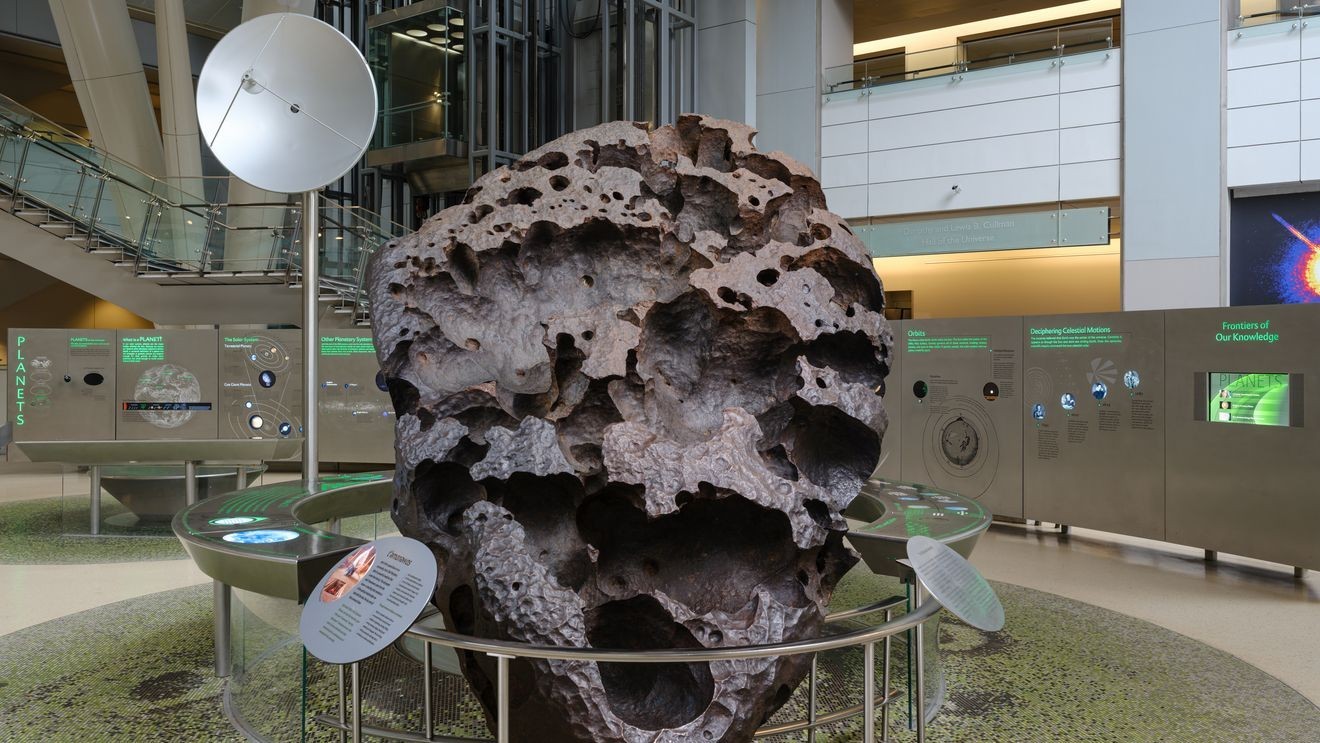
WEST LINN, Ore. (KATU) — One of Oregon’s claims to fame is the Willamette, the largest meteorite found in the U.S. Long before a farmer found it near West Linn, Ore., in 1902, the indigenous Clackamas people revered the meteorite as a healer sent to lend them strength.
A visitor from the sky
Thousands of years ago, the iron-nickel meteorite hurtled through the Earth’s atmosphere and crashed in present-day Montana. Glacial melt of the Missoula Floods carried the 15.5-ton (that’s 34,200 pounds) visitor to the Willamette Valley. From then on, it resided with the Clackamas people, who called it Tomanowos, meaning “spirit power.”
“Tomanowos was a traveler, a spirit sent to us,” said Cheryle Kennedy, the Chairwoman of the Confederated Tribes of Grand Ronde.
The Clackamas people would gather around the meteorite and conduct a ceremony. They would dip their arrowheads in the rainwater that gathered in the indentations of the meteor for help with hunting. This spiritual relationship persisted through significant hardship.
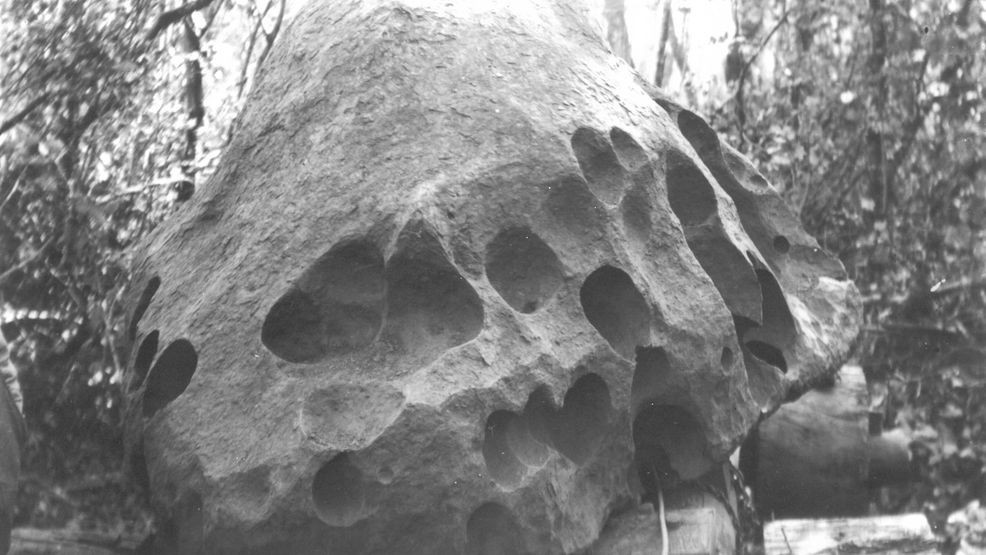
The Willamette is the largest meteorite found in the United States. Image courtesy: Oregon Historical Society
“It has been a long, treacherous journey,” Chairwoman Kennedy shared.
In 1855, the Clackamas people signed the Willamette Treaty to cede their ancestral land to the federal government and relocate to a temporary reservation in southern Oregon. They lived alongside 30 other indigenous tribes and bands, some of whom were their enemies. Beginning in February 1857, federal troops forced native people to march 263 miles north to the newly created Grand Ronde Reservation. This marked the beginning of Oregon’s “Trail of Tears.” Many would not survive the journey.
“We are an ancient people,” Chairwoman Kennedy said. “We have survived many things.”
Meanwhile, Tomanowos sat untouched until 1902.
The “discovery”
European settlers first became aware of the Willamette Meteorite after Ellis Hughes, a farmer in Oregon, stumbled upon it when he was logging illegally on his neighbor’s property. After failing to raise enough money to buy the plot of land surrounding the meteorite, he removed it. Armed with nothing more than a horse and his teenage son, Hughes somehow carted the nearly 16-ton relic to his property over the course of many months.
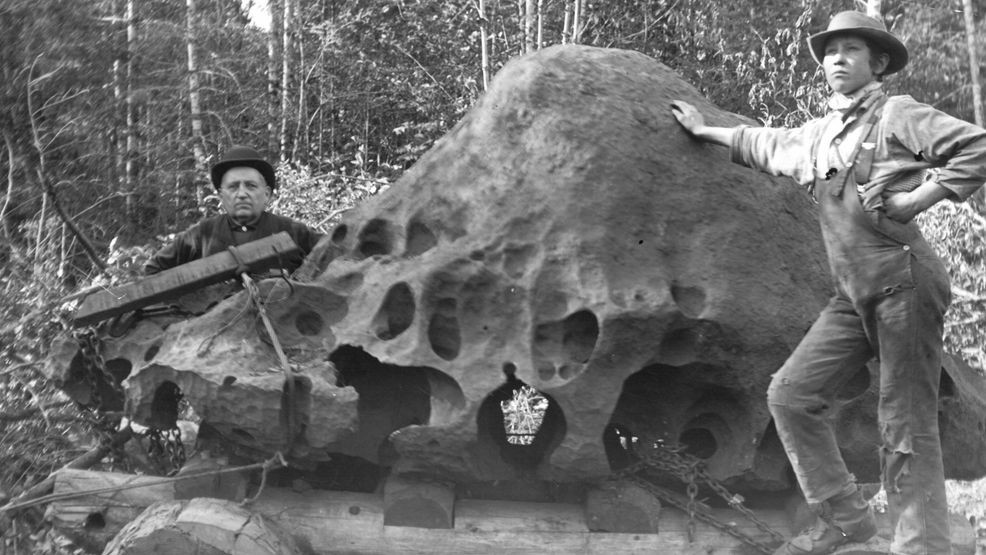
Two unidentified men stand next to the Willamette Meteorite. Courtesy: Oregon Historical Society
“He builds a shack around it, sends word out what he has found,” said Kerry Tymchuk, the Executive Director of the Oregon Historical Society. “[He] starts charging 25 cents admission to see this amazing meteorite.”
Unfortunately for Hughes, word spread quickly. A lawyer representing Hughes’ neighbor, the Oregon Iron and Steel Company (OI&S), saw some suspicious marks leading from his client’s property over to Hughes’. A legal battle ensued, making its way all the way to the Oregon Supreme Court, which ultimately ruled against Hughes and granted ownership to OI&S.
The meteorite changed hands a few more times before it was purchased by the American Museum of Natural History in 1906, where it remains to this day.
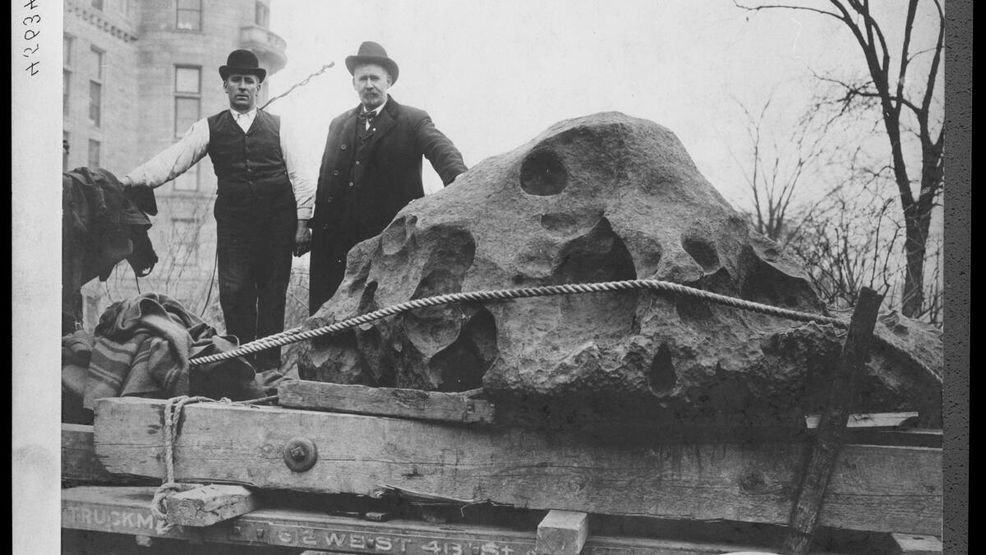
This image, from 1906, shows two men transporting the Willamette Meteorite into the American Museum of Natural History. Image courtesy: American Museum of Natural History
Binding the United States from coast to coast
The Grand Ronde Tribe’s federal recognition ended on August 13, 1954, when Congress passed the Western Oregon Termination Act. For nearly 30 years, Grand Ronde tribal members were landless.
Chairwoman Kennedy lived through termination. “I was an Indian, and I became non-Indian,” she said.
Even though Tomanowos resided in New York, Chairwoman Kennedy said that the Tribe still drew strength from it. “We kept seeking for restoration to be able to be the sovereign nation that we were always intended to be, and so the strength of it comes from our helper.”
After lobbying Congress and testifying before lawmakers on Capitol Hill, the Grand Ronde Tribe would receive that restoration. President Ronald Regan signed the Grand Ronde Restoration Act in 1983. The Tribe regained nearly 10,000 acres of the original reservation lost during termination. From there, the Tribe focused on rebuilding institutions and creating programs to aid its members. After this period of rebuilding, the Tribe set its sights on reclaiming Tomanowos through a process called repatriation.
The Grand Ronde Tribe filed a claim under the Native American Graves Protection and Repatriation Act in 1999, essentially compelling the American Museum of Natural History to release Tomanowos to them. Ultimately, the two parties reached a legal settlement in 2000, allowing Tomanowos to remain in New York for educational purposes, while granting the Tribe access to it for private ceremonies and a youth internship program.
In regard to the agreement, Sean Decatur, the President of the American Museum of Natural History, said, “It set up a framework of true connection and partnership for the stewardship of the meteorite.”
Every year, with the exception of 2020-2022 due to the COVID-19 pandemic, tribal elders have travelled to the American Museum of Natural History to have private ceremonies with Tomanowos.
In 2023, Mikayla Mercier, a current University of Oregon student and enrolled member of the Confederated Tribes of Grand Ronde, went to New York as part of the “Tomanowos Ceremony and American Museum of Natural History Internship.” That program is facilitated by Chachalu Museum and Cultural Center, an interpretive site located on the Grand Ronde Reservation in Yamhill County.
“We did a lot of personal work, a lot of reflection, a lot of connecting with our history and comparing how the museum all the way in New York portrayed our history,” she said.
As an assignment, Mercier and her cohort rewrote the plaque in front of Tomanowos. Two years later, what the interns wrote was made permanent and is now proudly displayed for all to read.
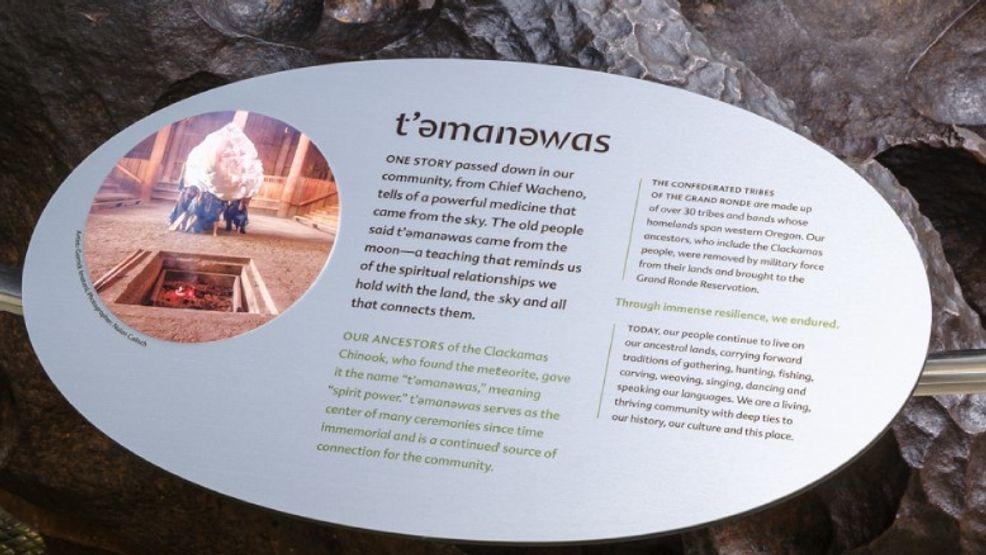
The official interpretive display in front of the Willamette Meteorite, written by interns from Oregon. Image courtesy: Alvaro Keding & Daniel Kim ©AMNH
“For me, it’s very significant and exciting that this exhibit has an interpretation that’s been shaped by the interns that are here,” Decatur said.
The Tomanowos display tells the story of the Confederated Tribes of Grand Ronde to people all the way on the other side of the country. However, the manager of Chachalu, Travis Stewart, says Tomanows also tells its own story.
“I don’t think you can help but connect with Tomanowos when you’re in the room with it,” he said.
He went on to share, “The tribe’s argument may have been one time for it to return home, but Tomanowos has always been moving. It came from space at the time the Earth was forming, landed out here, froze up, traveled out to the Valley and then ultimately traveled back to New York and has had interactions with people from all around the world and will continue to do so.”
The story of Tomanowos, the Willamette Meteorite, binds the U.S. from the West to East Coast, healing tribal members who return each and every year.