
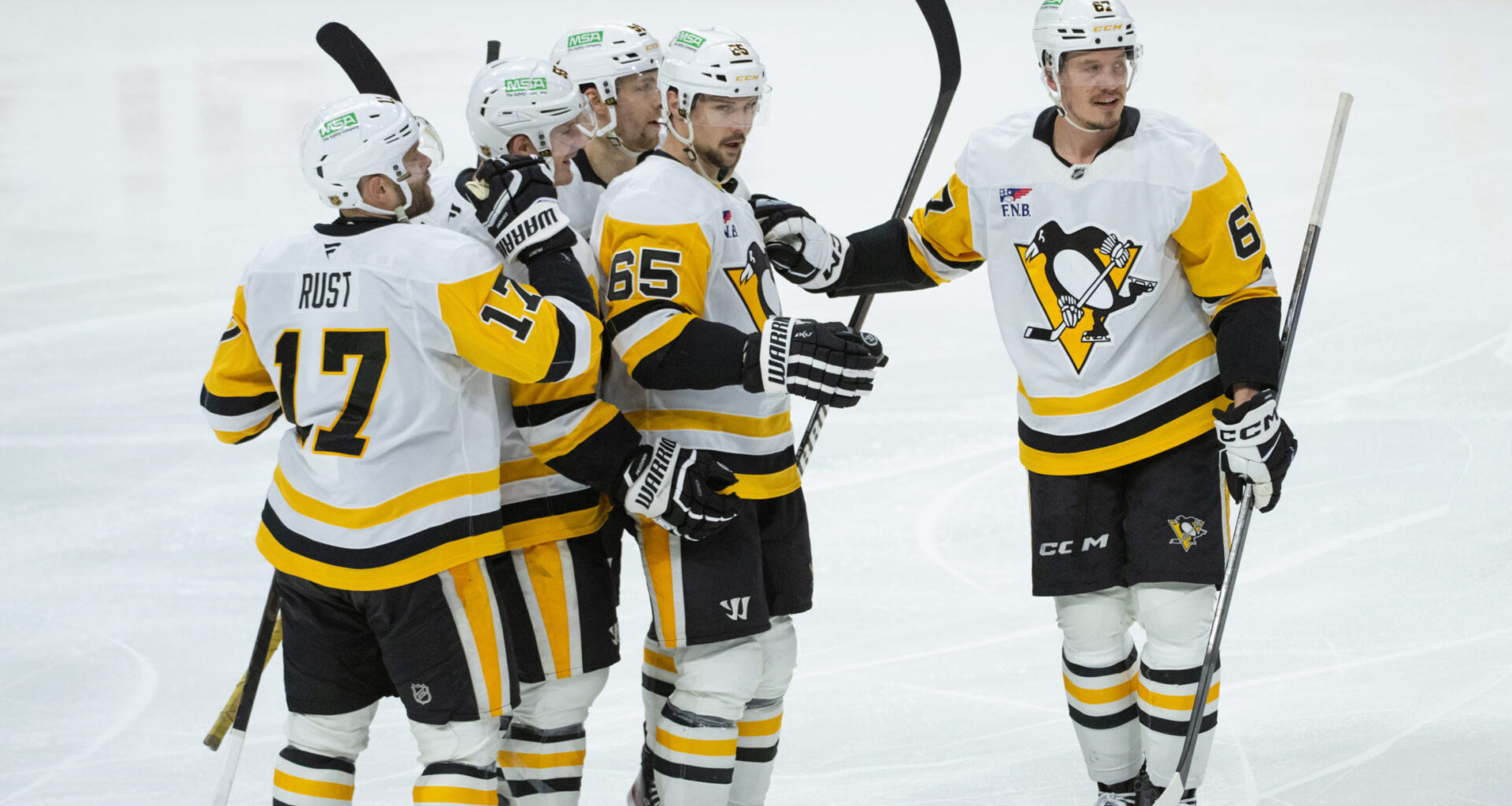
Tommy Novak was held goalless and largely irrelevant in the Pittsburgh Penguins‘ six-game Round One series loss to the Philadelphia Flyers. Justin Brazeau played in only one game in the series as he became a healthy scratch in favor of the even larger Elmer Soderblom.
Yet Novak and Brazeau were two of the Penguins’ primary depth scorers throughout the 2025-26 NHL season, and their disappearance late in the season only serves to highlight the struggle that Penguins general manager Kyle Dubas will face this offseason when looking to make trades. Novak was the Penguins’ second line center, and Brazeau was a top-nine winger.
Fellow top-nine winger Anthony Mantha scored 33 goals in the regular season, but provided little offense in the Stanley Cup Playoffs. He will be a free agent, and the other players at the top of the Penguins lineup are aging star players, which begs the question: Do the Penguins have any trade chips?
It would not seem Novak or Brazeau have value in that regard, or at least not enough worth noting.
No, the brutally honest answer is that the Penguins have trade chips, but only a couple. Of course, Dubas has hoarded draft picks like canned goods in Grandma’s cupboards, and therein lies opportunity.
Of course, hockey trade are always possible, too. While it currently seems unlikely, it’s not a 100% guarantee that Erik Karlsson will be on next season’s roster if the dynamic defenseman judges the Penguins as too far away from contending for the Stanley Cup. The opposite is true for Bryan Rust, who is ride or die with the Penguin, but his no-movement protection has expired and a team in desperate need of his particular combination of skill, grit, and leadership might meet Dubas’s “sky high” price to acquire him.
While anything is possible, the trade chips that Dubas will carry into the offseason market are few, but potentially valuable. Beyond the magic beans of the NHL Draft, the Penguins also have some prospects ready for NHL work and who may be blocked at the NHL level … and one top line player.
Penguins Trade Options
1. Rickard Rakell
At 33, Rakell has several more productive years ahead, and this season he proved he was not a product of being Sidney Crosby’s winger when he productively anchored the second line. Not only did Rakell overcome a slow start to score 24 goals, but his versatility in the middle should be quite attractive.
Last summer, Dubas set a high price on his top line wingers Rust and Rakell, but beginning this offseason and running through the NHL trade deadline will be Dubas’s best chance to get maximum value for Rakell.
The Penguins have little need for more second-round picks, but Rakell’s numbers show he’s worth a top-round pick, either individually or as part of a larger package.
2. Penguins Prospects
Tristan Broz. Owen Pickering. Rutger McGroarty. All three could play in the NHL next season, but neither have a clearly defined path, nor guaranteed open spot waiting for them. As other teams struggle with the same decisions, the Penguins will have to make on those three, perhaps there are equal swaps to be had, or they are part of a package which Dubas can use to obtain more established talent.
It would be unfortunate for any of those three to not get their full Penguins opportunity, but that’s the business. McGroarty and Pickering are both 2022 first-round picks, which carries inherent value that Dubas may choose to allocate elsewhere.
3. Draft Picks
Over the next four drafts, the Penguins have 19 selections in the first three rounds, including one first-rounder in each year but multiple second-rounders in each of those draft classes. And, as Dubas proved this season when he acquired Egor Chinakhov for a second and a third-round pick, younger players falling from favor can be had on that budget, even if getting Chinakhov seemed more like theft than a trade.
Categorized:Pittsburgh Penguins