
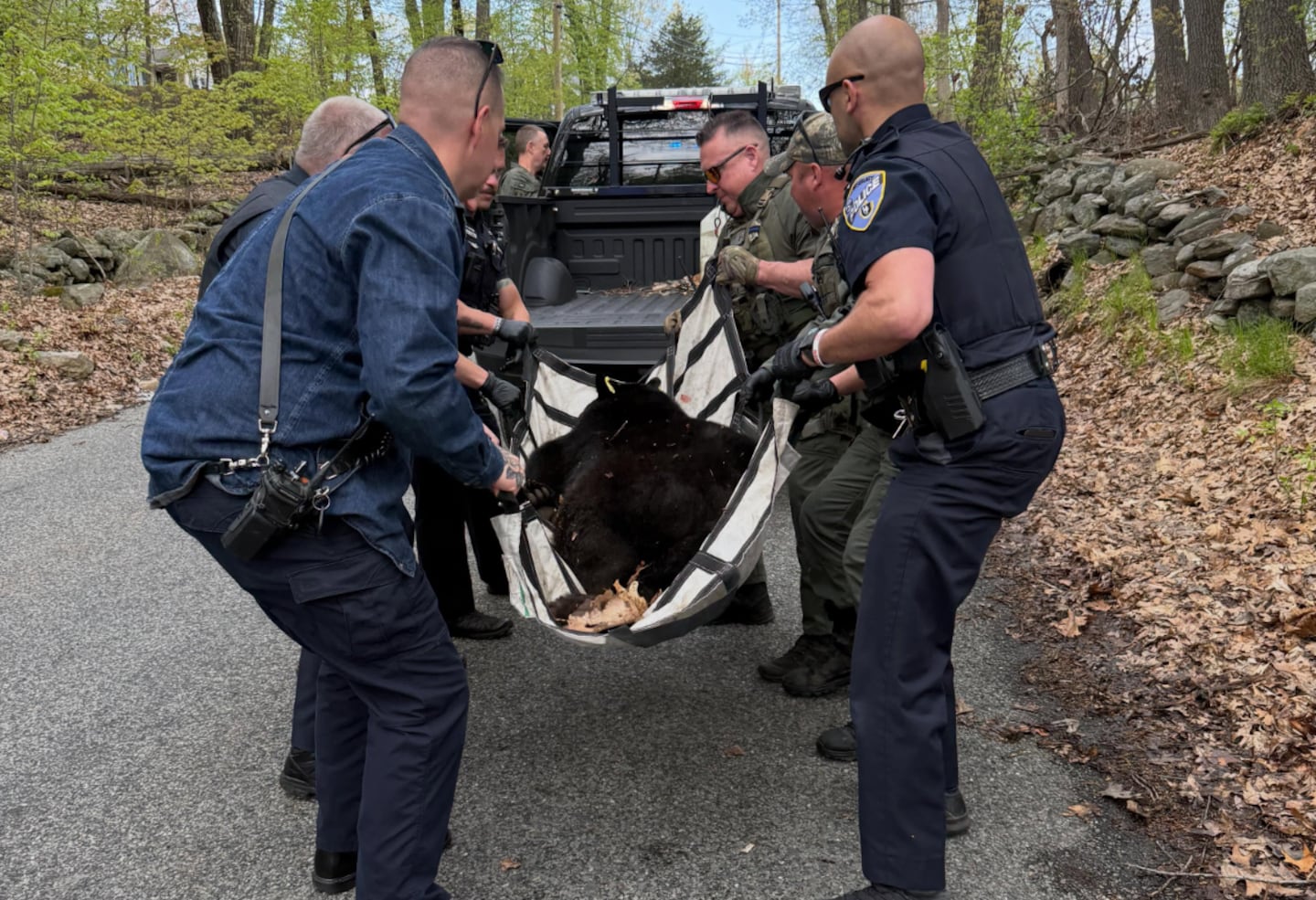
Large black bears are out and about this spring in Massachusetts, with a number of reported sightings during the past week, officials said.
Emergency responders in neighboring Grafton and Shrewsbury responded to multiple bear sightings last weekend, and a woman posted on Facebook this week that she saw a bear going through a neighbor’s trash in Chicopee.
Seeing a bear this time of the year is a common occurrence, said Dave Wattles, black bear biologist for MassWildlife. Residential backyards can offer free high-calorie meals for bears in May when a lot of natural food sources, such as berries, aren’t available yet.
“I guarantee it’s happening right now, somewhere in Massachusetts. There’s a bear in someone’s yard because of all the food that people have around their homes,” Wattles said. “We’re really begging everyone to remove the bird feeders, to secure the garbage so that you’re not attracting bears to your homes and then use electric fencing to protect your chickens and small livestock.”
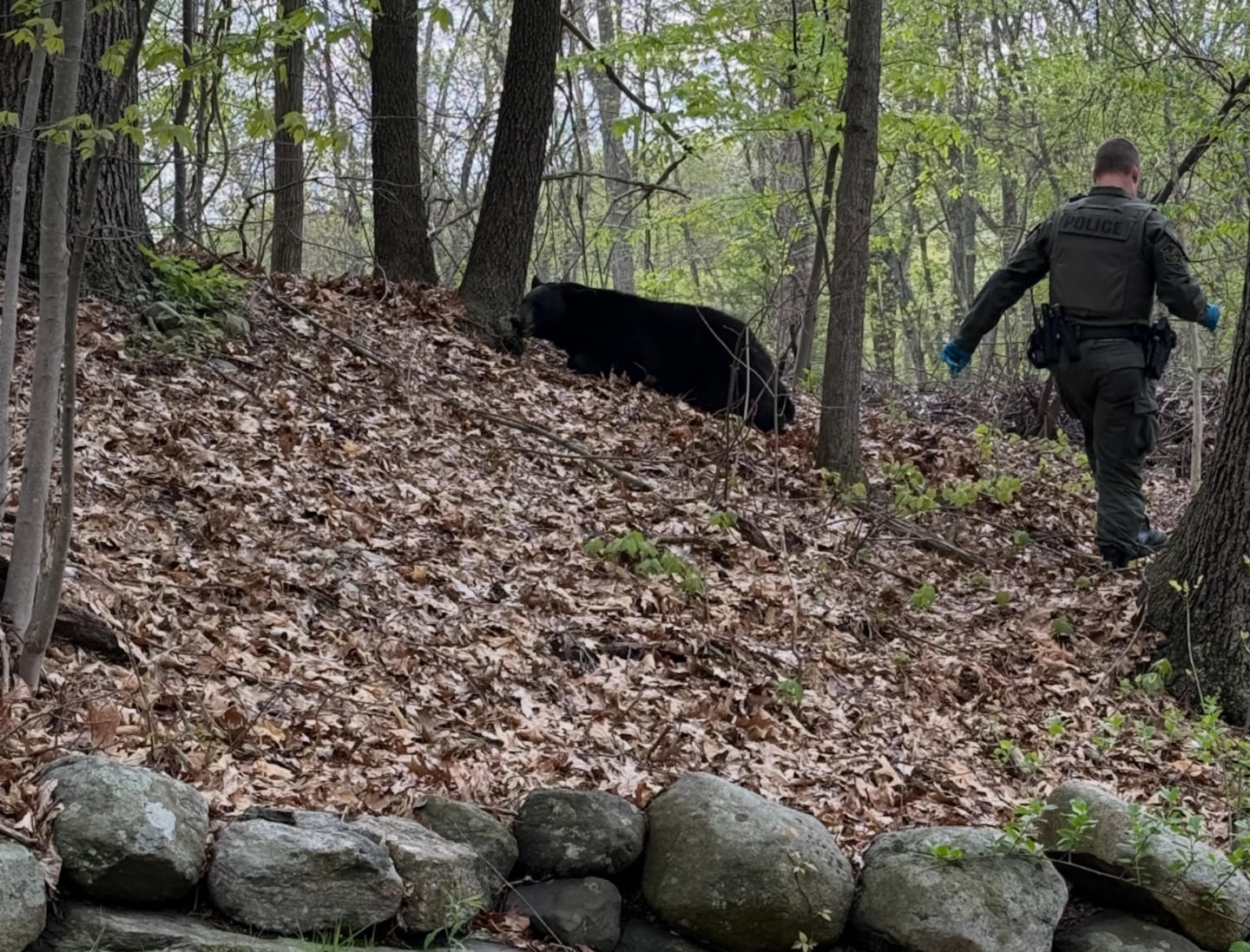 The bear transported in Shrewsbury is believed to be at the age where the mother and yearly first separate.Courtesy of Shrewsbury fire department
The only bear species that resides in Massachusetts is the black bear, Wattles said. Further west in Massachusetts, the bear population is denser and the animals are “fully integrated into the towns.”
“A bear’s home range encompasses tons and tons of neighborhoods,” he said. “They’re living literally right in and next to these neighborhoods, spending a ton of time in very close proximity to people.”
People who come across a bear should keep a safe distance, he said. He advised against trying to scare the bear off because the animal might decide to stand its ground instead of running away.
“They spend so much time in backyards that they are used to people yelling at them or people blowing air horns and things like that. And often they’ll just look at the person and be like ‘What? What are you going to do?’” he said. “We don’t get super concerned about black bears in people’s yards because they’re not inherently aggressive towards people, but we need to remember that this is a large, powerful animal that has the potential to do harm.”
The state Environmental Police receives between 700 and 900 bear-related calls each year, Wattles said.
May and June are peak times for bear sightings as 1-year-old bears are dispersing from their mothers, he said.
“You’ve got juvenile bears that are now moving about the landscape, so they can cause issues and just be seen more as they’re moving about,” Wattles said. “And it’s also approaching the mating season, which is a very high active activity period for bears in the state.”
Hannah Goeke can be reached at hannah.goeke@globe.com.