
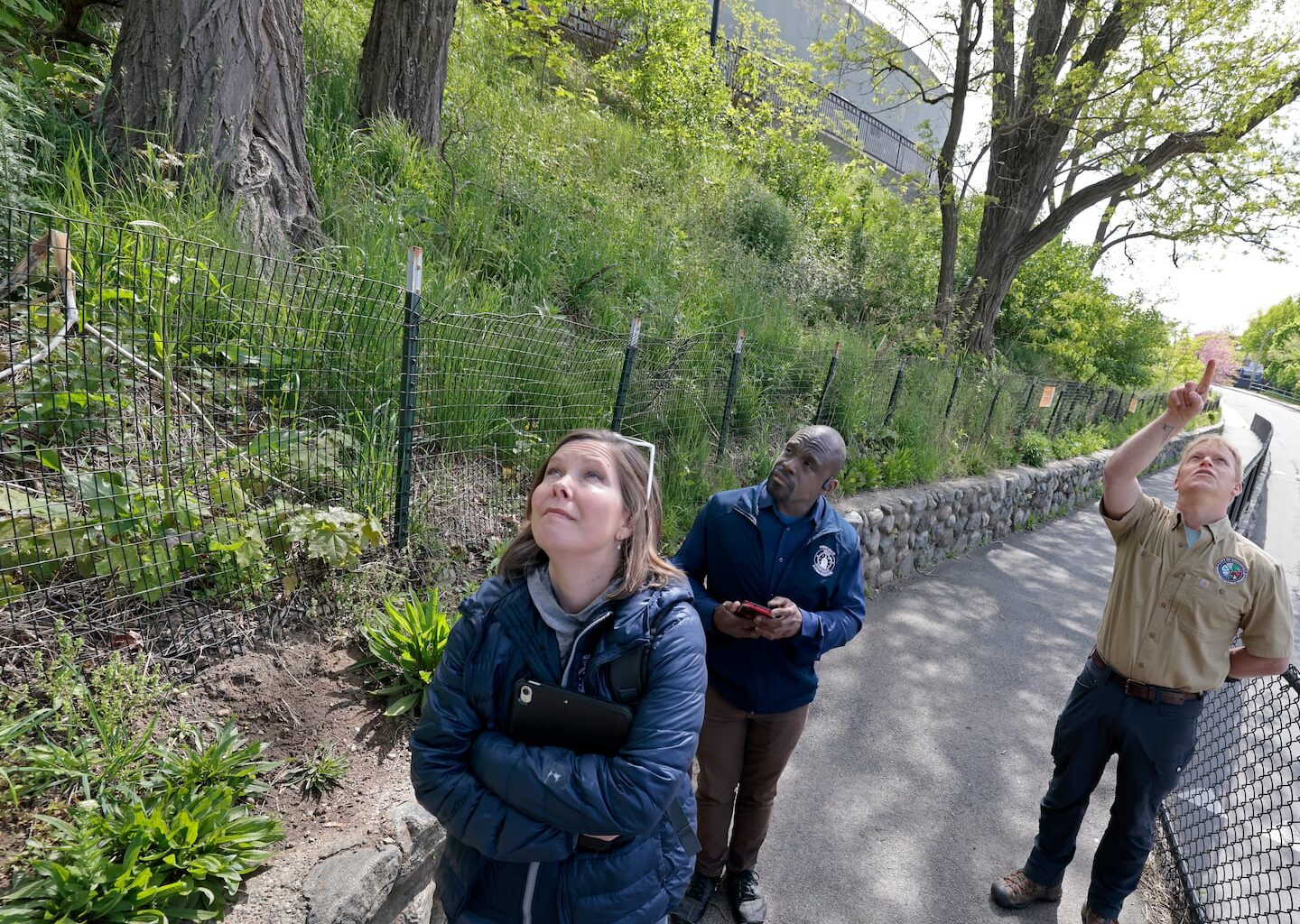
I’m going out on a limb here: Walking around Somerville, most people don’t spend as much time looking up as Vanessa Boukili, Malik Drayton, and David Jackson (above). On Monday morning, their eyes were constantly turned skyward. And it wasn’t to ponder the heavens, but to divine an answer about something more rooted among us: They were assessing the health of city trees.
Allow me to introduce Somerville’s “Tree Amigos.” Yes, that is what Somerville officialdom calls them. Boukili, Drayton, and Jackson are in charge of the thousands of trees on city land.
Boukili, who has a PhD in plant ecology, is the chief tree-planter, figuring out what kinds should go where. Drayton has expertise in riverfront conservation and leads on proactive tree maintenance. And Jackson — a native Mainer who bopped around doing different things until he climbed a tree for work and, boom, he knew that was his calling — is the city’s tree warden.
They have super interesting gigs, let me tell ya.
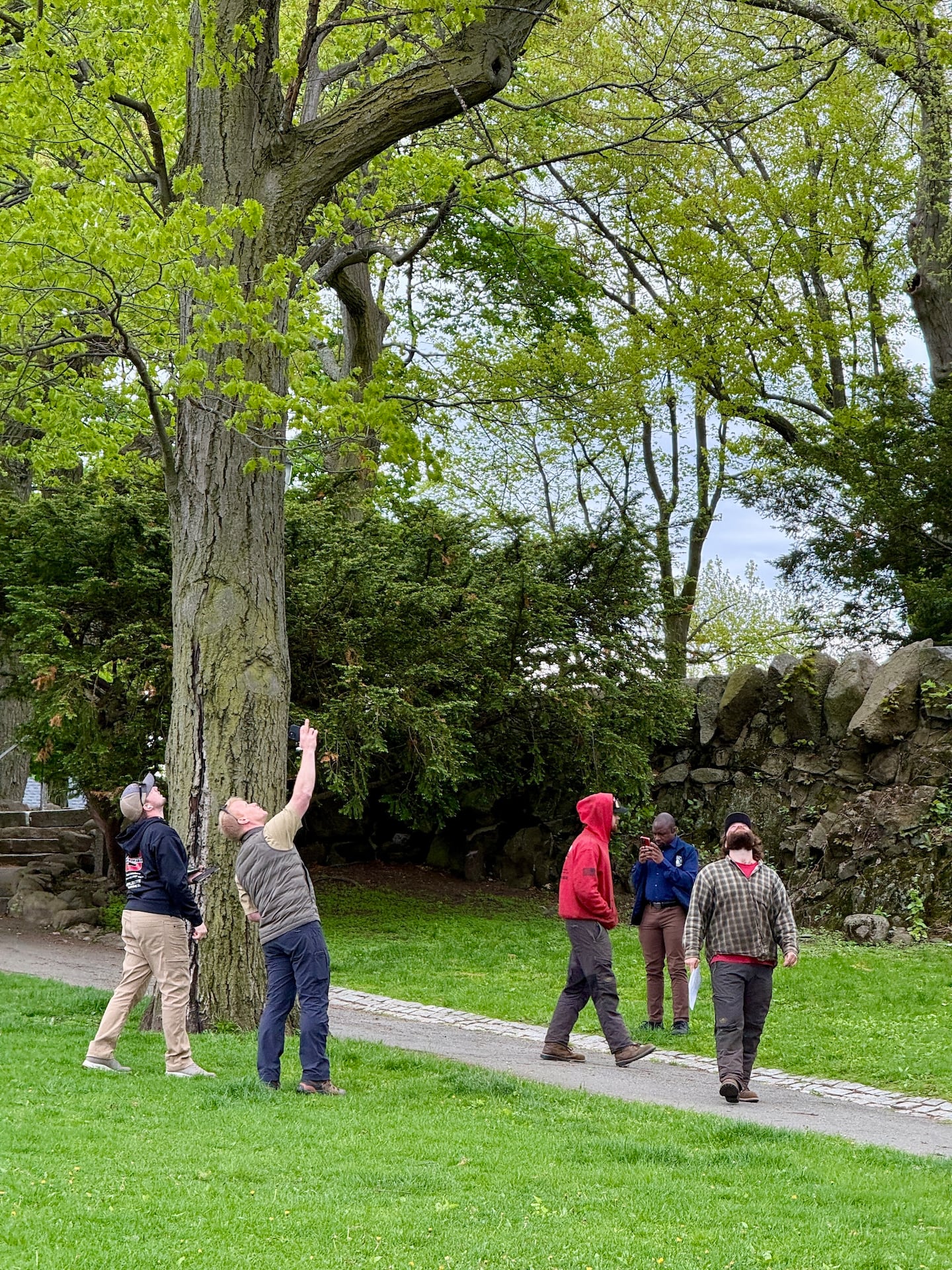 David Jackson (pointing) looked up at a tree in Somerville.Joshua Miller/Globe Staff
When I encountered Jackson on Monday, he was in Nathan Tufts Park talking at length with Drayton and a few guys from a tree service vendor. The topic was a red oak that stands not far from Powder House Square. And, in the eyes of the experts, it was quite unwell.
Jackson was worried about decay. There was a cavity on the tree pretty low down on its trunk. He had spotted a massive mushroom bloom around that same tree in the fall, a secondary sign of trouble. The red oak, he decided, needed to go.
“All trees have risk,” Jackson told me Monday. “When that risk level reaches a certain place, public safety demands we take them down.”
The potential danger of trees is surely top of mind after a child was killed by a falling one in Melrose last week. At the same time, no one wants to cut down trees unnecessarily. So how does his team figure the balance?
“Tough dance,” he replied.
As we made our way through the park, Jackson, who used to run his own tree business, had different solutions for different trees: an aerial inspection for a gigantic old oak, “weight reduction” on one side of another tree, “hospice pruning” for a troubled one. Yes, “hospice pruning.”
There were more rudimentary outcomes, too: Drayton told me a tree near a T bus stop simply needed some branches trimmed.
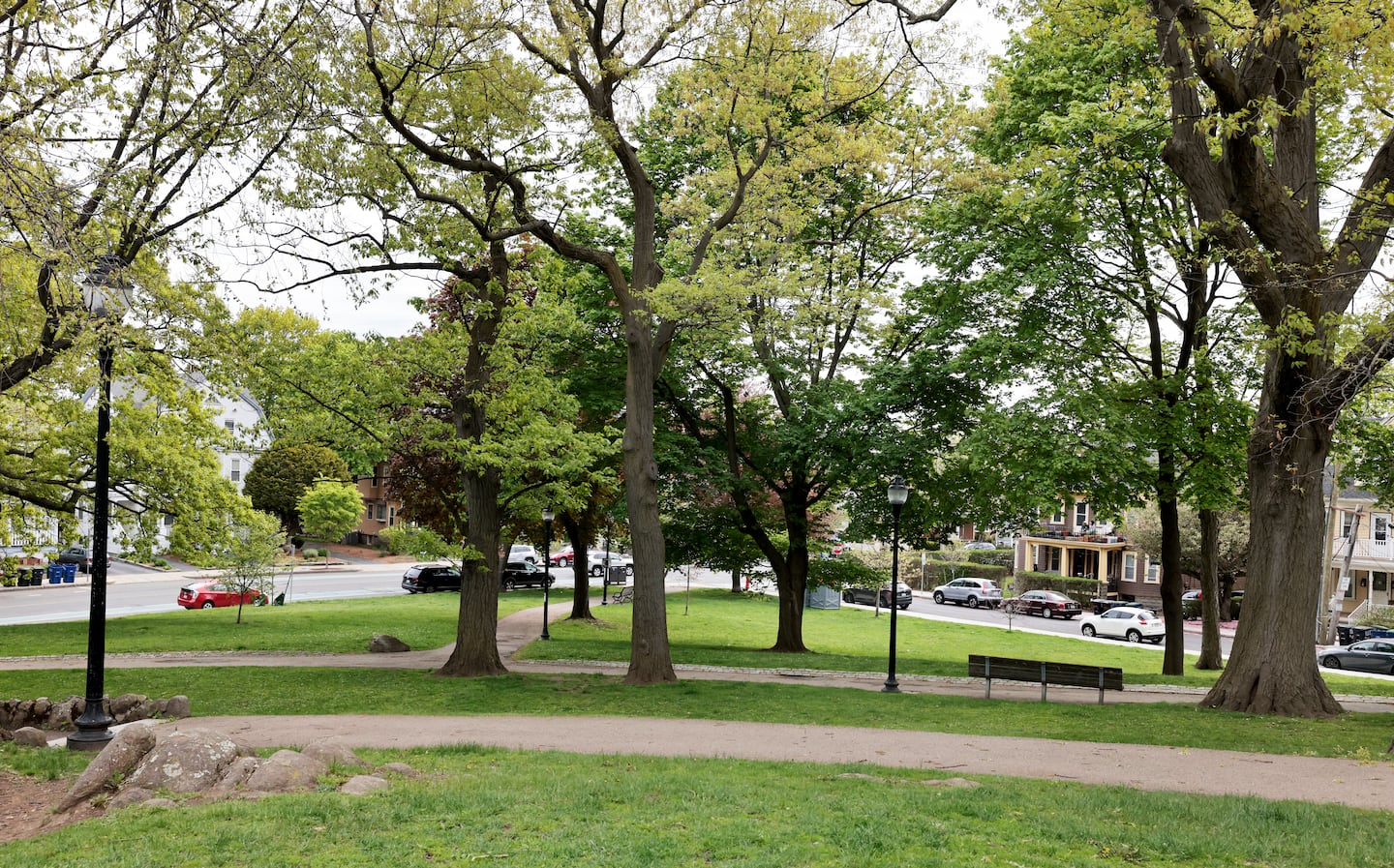 A red oak set to be taken down (center left).Pat Greenhouse/Globe Staff
Massachusetts has had a tree warden law on the books since at least 1899, making sure each municipality has someone in charge of “the care and control of all public shade trees in the town,” as the old statute described it. There were and also are deputy tree wardens.
In Somerville, Drayton, who has worked for the city since 2019 and has a unique know-how about tree roots, is one of the deputies. He’s also the city’s conservation agent and an urban forestry planner. On Monday, he had an inventory of every tree on government property in Somerville (city, state, MBTA) open on his phone and was recording what seemed to be a huge volume of information.
Boukili, who did her doctoral research in the Costa Rican rainforest and was the primary author of the Somerville’s 364-page urban forest management plan, is the other deputy tree warden. She’s also Somerville’s senior urban forestry and landscape planner. In both Nathan Tufts Park, and later in Prospect Hill Park, she was going tree by tree on an iPad, looking up, looking down, looking up, looking down.
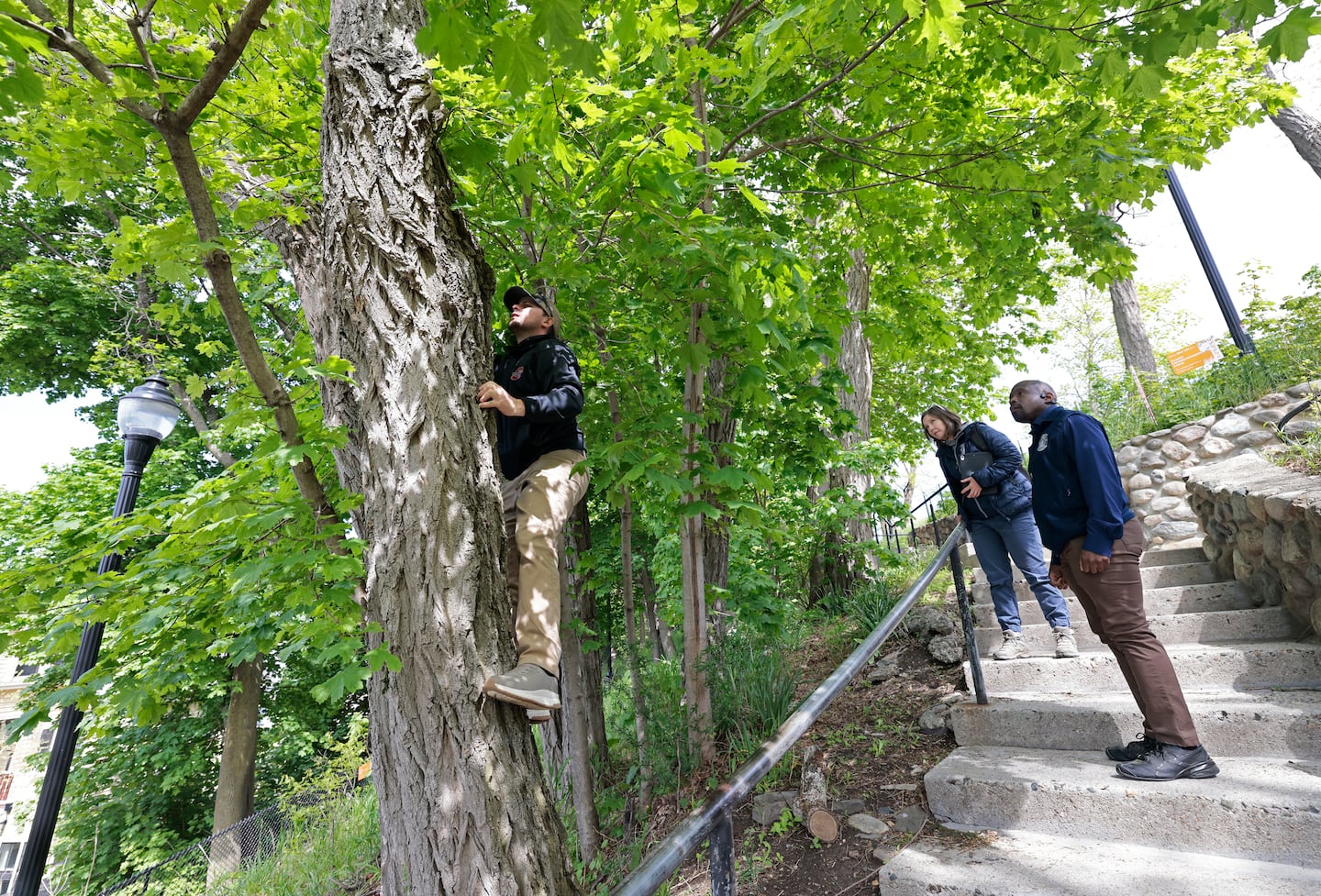 Tyler Merchant of Stanley Tree Service climbed up a black locust tree to take a peek at a void as Boukili and Drayton looked on.Pat Greenhouse/Globe Staff
It was meticulous work, as they talked through the potential trouble of each tree. But they gave me some time to ask questions like how they engage with people who love a neighborhood tree that’s getting chopped down.
Communication, Boukili said. “We would never remove a tree just because it’s more convenient. We remove it when there’s a danger and we can’t reduce the danger enough to be safe.”
Has the changing climate messed up their tree work?
“Sometimes we have a species that’s not doing well one year, and it’s hard to say if it’s climate change or a pest,” Boukili replied. Still, the city is moving toward planting more species that thrive in the mid-Atlantic climate, she said, since it won’t be long before our climate is a lot like Baltimore’s.
Jackson, who began as tree warden in July, underscored the difficulty: We’re in this “weird nebulous space” in between different climates. Tree-planting requires looking some years into the future. So the team is trying to thread the needle.
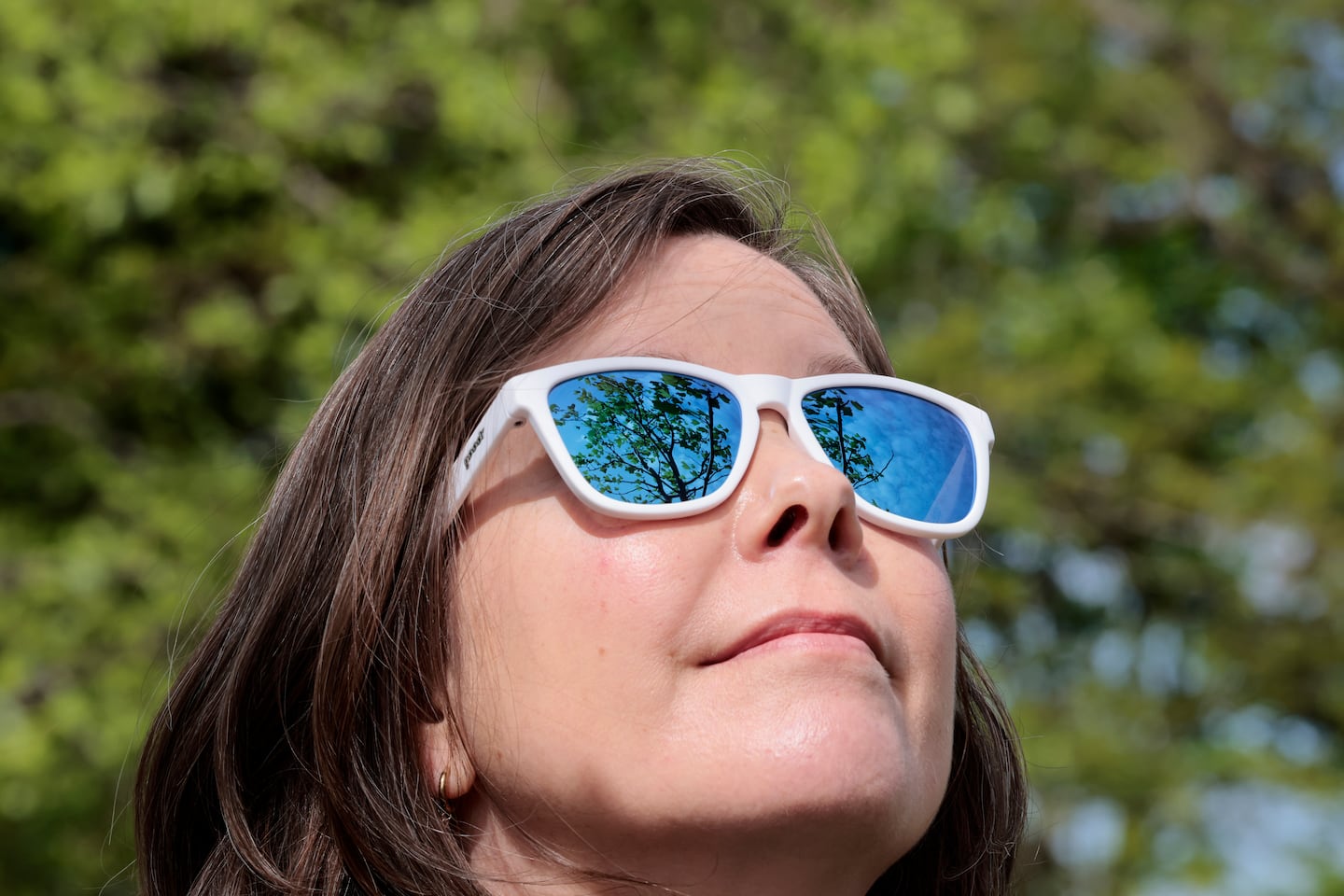 A tulip tree Boukili planted in Somerville is reflected in her sunglasses.Pat Greenhouse/Globe Staff
I asked Boukili what brings her joy in the work.
“I do all the tree planting. So I’ve seen the trees that I planted nine years ago grow to be normal-size trees,” she replied. “It’s really exciting to get to see that over time.”
She showed me a tulip tree she planted, full of new, green leaves. And then she pointed to a pin oak.
If everything goes according to plan, that oak will, decades from now, stand strong and tall in Prospect Hill Park, tended to by a new generation of Somerville tree amigos — who will most certainly be looking up.

Joshua Miller
Cambridge/Somerville Editor
Joshua Miller can be reached at joshua.miller@globe.com.