
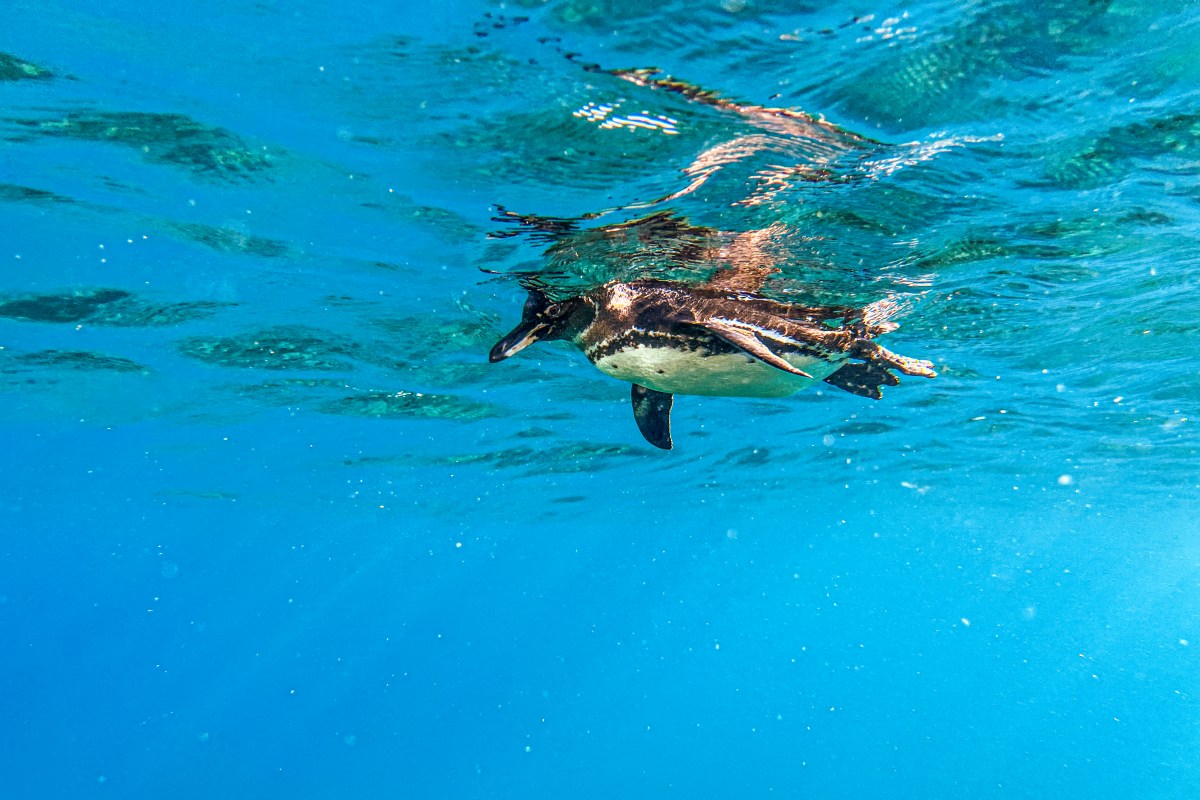
Fears are mounting that most of the Galápagos penguin population could die this year as forecasts point to the possible emergence of a powerful “super” El Niño event.
In its latest forecast discussion, the National Oceanic and Atmospheric Administration’s (NOAA) Climate Prediction Center said El Niño is now likely to emerge during the May-July period, following weeks of rising subsurface ocean temperatures and shifting wind patterns across the equatorial Pacific. While conditions remain technically ENSO‑neutral for now, forecasters say the atmosphere‑ocean system is increasingly aligned toward El Niño, a climate pattern known to influence weather across the world.
Meanwhile, forecasters continue to warn of a potential “super” El Niño that could develop later this year, meaning an unusually strong warming of the Pacific that could amplify weather extremes. Such an event could have devastating consequences for ecosystems in the Galápagos Islands.
In a post on X made on Friday morning, WFLA-TV chief meteorologist Jeff Berardelli noted that a past strong El Niño event wiped out 77 percent of the islands’ penguins. In addition, the climate pattern destroyed 97 percent of shallow water coral.
“With a Strong El Niño imminent, concern grows for life on the Galapagos,” Berardelli wrote in the post. “El Niño is a natural cyclical phenomenon but it can be devastating to the #Galápagos Islands. In the 1982-83 event 77% of the penguin population did not survive. 97% of the shallow water coral perished. That’s because cold water upwelling and nutrients are shutdown, as warm water invades the eastern Equatorial islands.”
There are only around 2,000 Galápagos penguins left.
While forecasts remain uncertain, experts say even the possibility of a strong event is enough to raise alarm, given how sensitive Galápagos wildlife is to changes in ocean temperature and food supply. Galápagos penguins, one of the rarest penguin species in the world, are particularly vulnerable because they rely on cold, nutrient-rich waters to survive. When those conditions change, their entire food chain can collapse as the fish they feed on migrate away to cooler waters, a 2023 report by the Galápagos Conservation Trust (GCT) said.
Marine iguanas also face a higher chance of death during strong El Niño years, with 70 percent of the population dying during the 1982-83 El Niño event because of a decline in algae, their main food source.
Other species on the Galápagos, however, could thrive from the conditions. For example, increased rainfall allows more food for the land iguana, GCT’s report said. Darwin’s finches have more success with breeding because of increased food availability.
However, invasive species like goats and rats also thrive for the same reasons, “which puts increased pressure on the endemic species on the Islands,” the report added.
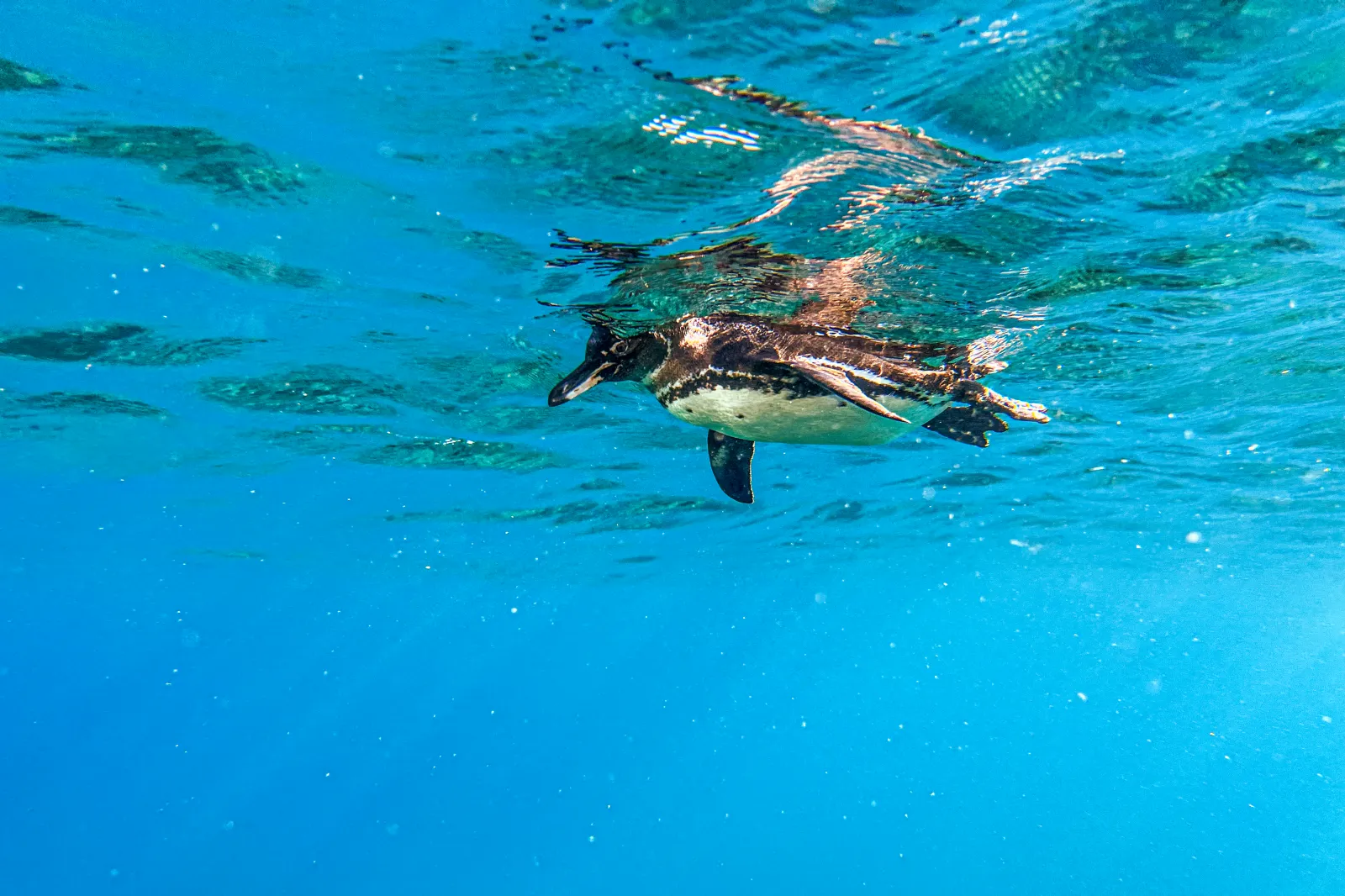 The Seesaw of Survival: How the Pacific Flips
El Niño is one half of the El Niño–Southern Oscillation cycle, with La Niña representing the opposite phase. While El Niño brings warmer ocean waters and weaker trade winds, La Niña is characterized by cooler waters and stronger winds.
These differences have major consequences for wildlife in the Galápagos. El Niño conditions reduce nutrient availability and disrupt food chains for marine species, while La Niña tends to enhance upwelling, increasing marine productivity and improving breeding conditions for species like penguins.
In practical terms, El Niño often leads to food scarcity and population decline for marine species, whereas La Niña can provide a temporary boost in survival and reproduction.
The contrast highlights why a strong El Niño is considered such a serious threat: it effectively reverses the ecological conditions that the islands’ species depend on. While forecasts remain uncertain, experts say even the possibility of a strong event is enough to raise alarm, given how sensitive Galápagos wildlife is to changes in ocean temperature and food supply.
What Happens Next: When Super El Niño Impacts Will Begin
Some impacts associated with a strong El Niño, such as increased rainfall in the Rocky Mountains and Southwest, as well as above-average temperatures in the Northeast and Mid-Atlantic, could begin as soon as June, AccuWeather senior meteorologist Tom Kines told Newsweek. Other impacts, such as increased thunderstorms and rain for the Southeast, will occur closer to the winter months.
However, for the Galápagos ecosystem, the stakes are far more immediate. Scientists warn that even a single severe El Niño could push already fragile penguin populations toward collapse, underscoring the growing concern reflected in recent forecasts.