
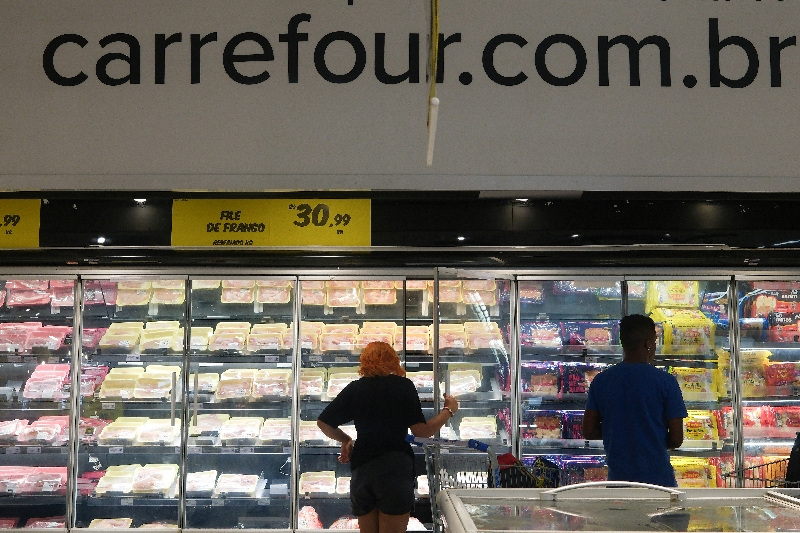
BRASILIA, May 18 (Reuters) – Brazil’s Finance Ministry on Monday sharply raised its inflation forecast for this year to 4.5% from the 3.7% projected in March, citing the impact of the Middle East conflict on oil and fuel prices and foreseeing a more modest monetary easing cycle.
Inflation is now seen at the top of the central bank’s official target range, centered at 3% with a tolerance of 1.5 percentage points on either side.
According to the ministry’s economic policy secretariat, the average oil price estimate for 2026 has risen 25% since its last forecast two months ago, to $91.25 per barrel this year.
That more than offset the effect of a stronger currency expected by year-end, the ministry said, noting that the projection also incorporates the impact of mitigation measures adopted by President Luiz Inacio Lula da Silva’s government to limit the pass-through of higher fuel prices to the domestic market.
The leftist administration now expects the rate-cut cycle launched in March by the central bank to leave the benchmark Selic rate at 13% at the end of this year, compared with a previous estimate of 12%.
The Selic currently stands at 14.5% following two consecutive cuts of 25 basis points each by policymakers.
Despite the revisions, the government remains more optimistic than the market.
Economists surveyed weekly by the central bank have raised their inflation estimate for this year for a 10th consecutive week, to 4.92%, and see the Selic ending the year at a higher 13.25%.
While the government kept its economic growth forecast unchanged at 2.3% for 2026, pointing to an expected slowdown in the second and third quarters and a slight rebound toward year-end, the median estimate in the survey of economists points to gross domestic product growth of 1.85% this year.
(Reporting by Marcela Ayres; Editing by Gabriel Araujo and Aurora Ellis)