
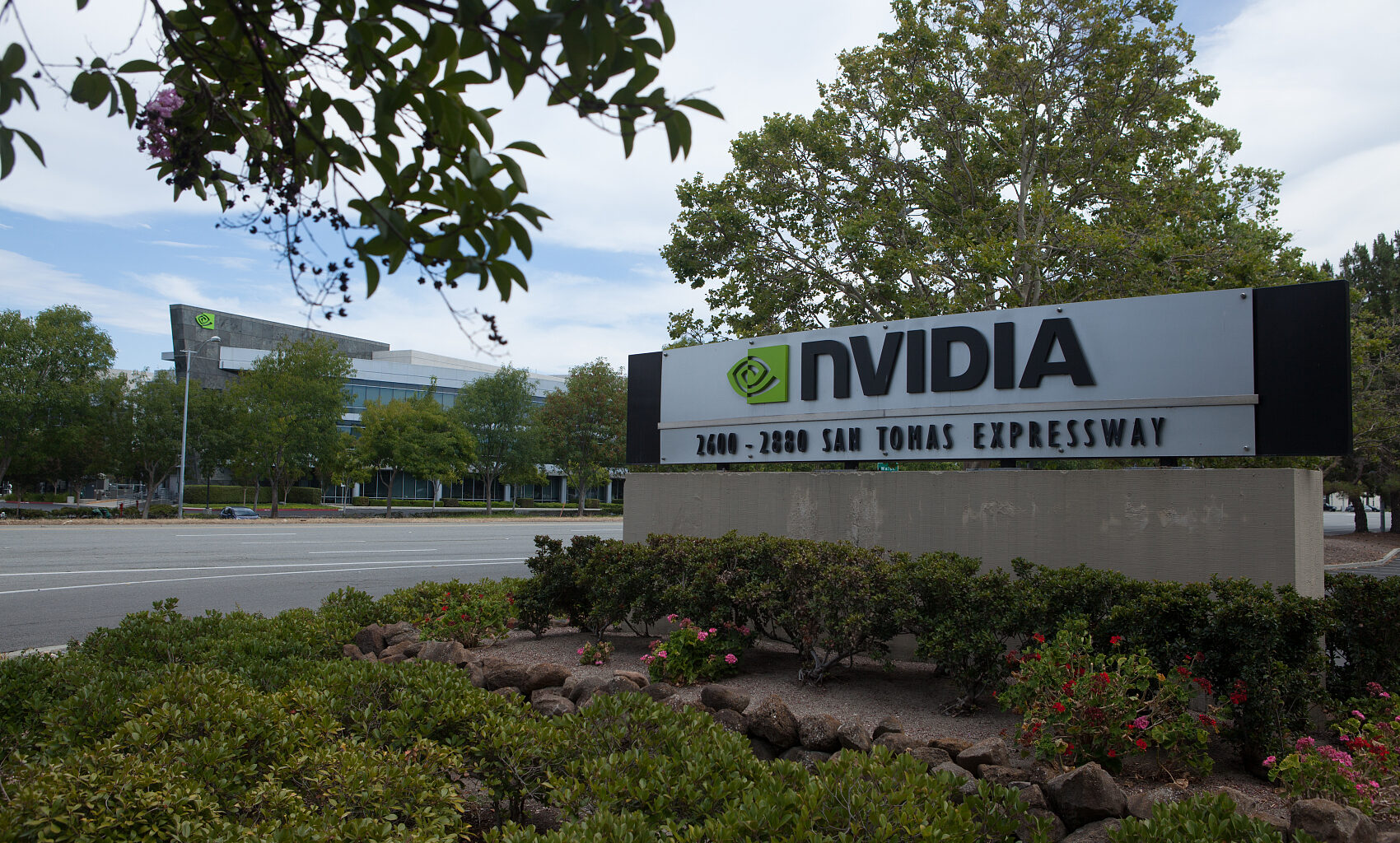
According to reports,$Amazon (AMZN.US)$ Amazon’s Trainium AI accelerators are beginning to gain favor among some AI developers who have historically relied on NVIDIA (NVDA.US) products.
NVIDIA’s GPUs are widely regarded as dominant in the AI accelerator market, and their supply has remained constrained due to strong demand from hyperscale data centers, leading-edge AI model laboratories, and other buyers. Although alternatives to NVIDIA’s products exist—including those from AMD, Amazon, Google, and other custom application-specific integrated circuits (ASICs)—reports indicate that an increasing number of developers are recognizing the appeal of Amazon’s Trainium chips. The Information cited interviews with six individuals who either use or collaborate with these chips.
Daniel Svonava, CEO of Superlinked, told The Information: “We’ve always viewed insufficient software support as a barrier. But that has changed over the past few months—the barrier has now been removed.”
 Another developer, Bojan Jakimovski, Head of Machine Learning at Loka, also noted that interest in Trainium has risen over the past several months, partly due to tight supply of NVIDIA GPUs. He added that one client switched its inference workloads to Trainium’s second-generation chip after tests showed it could reduce costs by up to 35% compared to NVIDIA’s H100 series. However, Jakimovski noted he still recommends using NVIDIA products for large language model training.
Amazon CEO Andy Jassy recently stated that the company’s chip business could generate $50 billion in annual revenue if operated independently. In his latest letter to shareholders, Jassy wrote: “Our custom chip business is now one of the world’s top three data center chip businesses.”
Why Are Developers Shifting from ‘No Choice’ to ‘Active Adoption’?
NVIDIA’s GPUs are widely considered the undisputed leader in the AI accelerator market, with its CUDA software ecosystem forming a formidable moat that competitors struggle to cross. Precisely because NVIDIA holds such a dominant position, its products have long been in short supply—relentless demand from hyperscale cloud providers, cutting-edge AI research labs, and other buyers has kept NVIDIA GPUs in a state of structural shortage.
This persistent supply-demand imbalance has created strong, inelastic demand for alternative solutions. While alternatives such as AMD, Google TPUs, and other custom ASICs are available, Trainium is gaining real-world adoption among developers at a pace exceeding market expectations.
Software Ecosystem: A Fundamental Shift from ‘Barrier’ to ‘Eliminated’
Daniel Svonava, CEO of Superlinked, succinctly captured this turning point in his remarks to The Information: “We’ve always viewed insufficient software support as a barrier. But that has changed over the past few months—the barrier has now been removed.” The significance of this statement lies in the fact that, in the competition among AI chips, hardware specifications often set the floor for performance, while the software ecosystem determines the ceiling. Trainium’s transformation—from a perceived software barrier to a resolved issue—signals that it is no longer merely an experimental alternative but a productivity tool ready for large-scale commercial deployment.
Cost Advantage: The Next-Generation Weapon for “Reducing Costs and Enhancing Efficiency”
Bojan Jakimovski, Head of Machine Learning at Loka, has similarly observed a significant rise in Trainium’s appeal, underpinned by solid economic logic. While some customers have turned to Trainium directly due to difficulties in acquiring NVIDIA GPUs, a more decisive factor emerged when one customer discovered that Trainium’s second-generation chip could reduce costs by up to 35% compared to NVIDIA’s H100 series—and promptly migrated its inference workloads to Trainium.
As AI inference workloads increasingly dominate compute consumption—currently accounting for roughly two-thirds of all AI computing—the 35% cost advantage translates into potential annual savings of several million to tens of millions of dollars for a mid-sized AI company. This is not a marginal shift in a zero-sum game, but a structural advantage substantial enough to reshape procurement decisions.
Architectural First-Mover Advantage: A Unique Moat for MoE Inference
Gavin Baker’s assessment is particularly incisive and technically astute. He notes that today’s leading-edge AI models all adopt the Mixture of Experts (MoE) architecture, and running inference tasks for such models requires infrastructure based on a Switched Scale-up Network. Globally, only two companies currently operate such networks: one powers NVIDIA’s GPU clusters, and the other drives Amazon’s Trainium.
This means that in the rapidly growing and strategically critical domain of MoE model inference, Trainium is not merely a latecomer catching up—it is a first-mover with unique technical barriers to entry. Baker further points out that Google’s TPU lacks comparable capabilities in this area and reveals that although Google invented the MLPerf benchmark, it has never submitted TPU performance results. This revelation has undoubtedly prompted the market to reassess Trainium’s technological distinctiveness. Baker forecasts that following the large-scale production ramp-up of Trainium 3 in the second half of this year, Trainium’s market position in 2026 will be equivalent to that of the TPU in 2025.
Customer Ecosystem: Crossing the Threshold from “Tens of Thousands” to “Hundreds of Thousands”
Trainium’s breakthrough extends beyond technology to the scale validation of its customer base. According to Amazon’s disclosure in April during its deepened strategic partnership with Anthropic, both Trainium and Graviton each serve over 100,000 customers, with the majority of inference workloads on Amazon Bedrock now running on Trainium. Reaching the milestone of 100,000 customers signifies a qualitative leap in Trainium’s adoption since the second half of 2025—it is no longer a niche product tested only in a few laboratories, but a systematically validated, large-scale commercial alternative.
Anthropic and OpenAI: The Ultimate “Seal of Quality”
At the level of key clients, Trainium has secured deep integration with the two most important AI model companies globally. On April 20, Amazon and Anthropic announced an expanded strategic partnership: Amazon committed to invest an additional up to $25 billion in Anthropic on top of prior commitments, while Anthropic pledged to spend over $100 billion on AWS-related technologies over the next decade and to procure up to 5 gigawatts of compute capacity from current and future generations of AWS Trainium chips. Anthropic’s flagship Claude models run on more than one million Trainium 2 chips.
OpenAI’s involvement is likewise highly significant. In February of this year, OpenAI and Amazon established a multi-year strategic partnership, under which Amazon committed a $50 billion investment in OpenAI and will provide it with 2 gigawatts of Trainium computing capacity. OpenAI has pledged to utilize both the Trainium 3 and the next-generation Trainium 4 chips to support its extensive advanced AI workloads.
For chip products, customer quality often carries more signal value than customer quantity. When the world’s most technically discerning AI frontier laboratories choose to run their core workloads on Trainium, this in itself constitutes the strongest possible endorsement of the chip’s performance and ecosystem maturity.
From ‘Leasing Compute Power’ to ‘Direct Chip Sales’: The Blueprint of a $50 Billion Empire
Even more noteworthy is the strategic elevation of the Trainium business model. In April of this year, Amazon CEO Andy Jassy disclosed in a letter to shareholders that the company is considering shifting away from its previous internal-use-only strategy and instead directly selling its custom-designed chips and full server racks to third parties. If this unit were to operate independently and open fully to external customers, its annualized revenue could reach $50 billion.
Jassy further noted that this figure already exceeds the comparable figures for AMD and Intel, explicitly stating, ‘Our custom chip business is now one of the top three data center chip businesses globally.’ This is not mere speculation. As of the disclosure date, Amazon had already secured $225 billion in committed Trainium chip revenue from strategic clients including Anthropic and OpenAI. Trainium 2 already offers 30% better price-performance than comparable GPU products and is nearly sold out; Trainium 3 began shipping in 2026 and delivers an additional 30% to 40% improvement in price-performance over Trainium 2, with nearly all units already reserved; even Trainium 4, which remains approximately 18 months away from mass production, has had the vast majority of its capacity locked in.
Both generations of products are completely sold out, and even the next-generation chip—still not yet in mass production—has already been heavily pre-booked. Such demand signals are exceedingly rare in semiconductor industry history. They indicate that Trainium’s appeal is not driven by short-term hype but by long-term strategic commitments made by customers following thorough evaluation.
Structural Inflection Point for ASICs
The rise of Trainium is reshaping the deepest layer of industry relationships in the AI chip sector—the longstanding ‘supplier-client’ dynamic between Amazon and NVIDIA. This relationship was previously clear-cut: NVIDIA designed and manufactured the most powerful AI chips, while Amazon, as one of the largest cloud service providers, procured them at scale. However, as Amazon began designing and deploying its own AI accelerators, the roles subtly shifted. Recent data shows that Amazon now deploys more Trainium servers than NVIDIA servers, and the company estimates that using its in-house chips instead of externally sourced GPUs saves it billions of dollars in capital expenditures.
Yet this relationship is not a simple substitution. Amazon has neither ceased purchasing NVIDIA chips—its latest procurement commitment continues to expand—nor reduced its heavy investment in Trainium. Instead, the two now coexist in a complex ‘competitive coexistence’ arrangement: Trainium is rapidly gaining share in inference workloads, while NVIDIA GPUs remain dominant in training large foundation models.
From a broader industry perspective, custom ASICs are undergoing a structural inflection point. Data shows that in 2026, custom AI chips from Google, Microsoft, Amazon, and Meta are expanding at a compound annual growth rate (CAGR) of 44.6%, compared to just 16.1% for general-purpose GPUs. The growth of custom ASICs is primarily targeting the inference market—which currently accounts for roughly two-thirds of all AI compute. Although NVIDIA still holds over 90% of the AI accelerator market today, analysts project that its share in the inference segment could decline from above 90% to between 20% and 30% by 2028.
Trainium is one of the most significant variables in this wave of custom ASICs. As industry reports assert, 2026 marks the moment when ‘custom ASICs will no longer be mere experimental projects but will emerge as a productivity-scale alternative to NVIDIA GPU dominance.’
Reality Check: How far is Trainium from ‘full replacement’?
Although Trainium is experiencing significant user growth and performance upgrades, an objective and sober assessment of its market positioning is essential. The most critical point to clarify is this: for most cutting-edge AI labs, Trainium is currently better suited for inference rather than training.
Although Bojan Jakimovski confirmed Trainium’s cost advantages in inference, he still indicated that he would advise clients to continue using NVIDIA products for large language model training. This reflects a reality: NVIDIA’s CUDA ecosystem continues to hold a substantial lead in terms of flexibility for large-scale model training, completeness of operator libraries, and depth of community support.
Moreover, it is worth noting that the surging demand for Trainium is somewhat disconnected from Amazon’s recent stock performance. Despite growing developer interest in Trainium AI chips, Amazon’s share price has recently underperformed relative to other tech giants. The market is undergoing a broad-based repricing of valuations amid intensifying competition in the AI chip space—where NVIDIA, AMD, Google TPUs, Microsoft Maia, and Meta MTIA are all competing head-to-head. Although Gavin Baker holds a positive view on Trainium, he also emphasized, ‘I would never short Google, nor would I short Broadcom,’ indicating that this is a multi-winner market rather than a zero-sum game.
Furthermore, all mainstream AI chips—whether custom ASICs or NVIDIA GPUs—are manufactured using Taiwan Semiconductor’s 3nm process technology. This means Google, Microsoft, Amazon, Meta, and NVIDIA are all competing for limited capacity at the same foundry. Capacity constraints apply equally to all players, and any chip designer’s rapid expansion could hit physical delivery ceilings.