

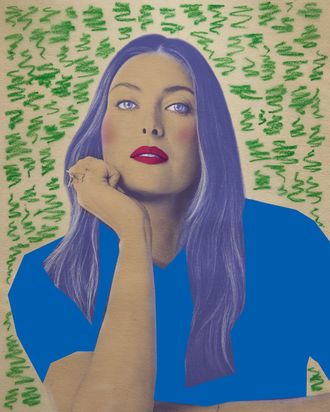
Photo-Illustration: The Cut, Photo/2024 Gotham
Maria Sharapova has spent most of her life understanding discipline in its most literal form: training blocks, match schedules, recovery windows, and the kind of pressure that arrives with a scoreboard. But in her current chapter, the five-time Grand Slam champion is measuring success a little differently. Since retiring from tennis, Sharapova has become an investor, board member, founder, podcast host, and mother — which means her calendar is still structured, just no longer built around forehands and finals.
Her new podcast, Pretty Tough, puts her on the other side of the interview, sitting down with ambitious women to talk about what achievement actually costs and what it requires. It’s a fitting lane for someone who has lived inside excellence for decades and is now applying that same muscle to business, motherhood, investing, and the less glamorous work of learning when to let go.
For How I Get It Done, Sharapova talks about what tennis taught her about business, why women no longer have to choose between being tough and being feminine, and the one boundary she’s still trying to master.
What’s the first thing you do when you wake up?
I usually wake up before 6 a.m. I love to go and make myself a hot cup of water with lemon. I know many women do that, but it’s a little ritual and routine that starts the day on a healthy note. Then I make a very simple coffee with cream. I know that’s not great for you, but I love a little cream in my coffee. Then my son wakes up, and we usually read a few books before I tell him it’s time to have breakfast. We make a little porridge, brush our teeth, and then I take him to school. That’s my daily morning routine when I’m home.
I really love the 15 or 30 minutes before there’s chaos in the house and my son comes in with a pile of books and toys on our bed. That moment to look at my calendar, see what I have ahead, think about my goals and vision, and have a cup of coffee is very nice. It’s a moment for yourself.
You had one of the most structured careers imaginable. What does discipline look like now that no one is handing you a match schedule?
I’ve always relied on discipline. It hasn’t only been for one day or a sequence of a few days. If you create structure in your day and in the way you hold a lifestyle, having routines to go back to is a form of discipline.
I think it’s important to set that routine because mentally, you execute so much better when you know what’s ahead. When you know you’ve experienced certain activities during the day at a certain period of time, you can prepare better. I still like to be structured. I like to have a solid calendar planned in advance. But equally, things change. The calendar shifts, and being able to pivot at any given point is equally important.
You’ve built a second act across fashion, wellness, tech, and now podcasting. What makes something feel worth your time now?
I think it’s really important to have small wins. A lot of my career was about thinking of the bigger picture and holding big Grand Slam trophies, but generally the path to big victories is made up of smaller ones.
That’s been a lesson I’ve taken from sport. You have to think about the little gains every single day, whether they’re physical or mental. Even smaller trophies, not just the Grand Slams, mean so much because that’s where you build confidence. That’s where you grow. Little by little, adding those few percents together ultimately gets you a big victory.
You now sit in rooms as an investor, board member, founder, and former athlete. What part of that transition required the most self-trust?
Anytime you enter new territory, you don’t feel as confident as you do in something you’ve done for many years. One of the greatest lessons sport teaches you is getting comfortable in uncomfortable situations — when you’re not performing at your best, when you’re having a tough day. It’s the gift of letting go. Being a mother of an almost 4-year-old has also taught me this element of letting go and allowing things to happen and evolve. I was so in control of my routines, my schedule, the way I competed, the way I hit forehands and backhands. Motherhood teaches you that you can’t control everything.
Business is similar. You can have a spreadsheet and an idea, but things move and change. Economic conditions change. You think you’re getting funding, and then you no longer have access to that funding. Someone you thought was supportive is no longer backing you up. There are so many ups and downs in both sport and business.
Even though I’m in a new territory as an investor in founders and companies I believe in, it’s also a learning curve. Part of what makes it exciting is that I get to see business through the lens of these founders and brands, and I get to grow with them.
What’s something from tennis that still informs how you work now?
When I sit with founders, I often want to work with people who understand that there will be challenges along the way. We don’t want to avoid them. We want to accept them and find a way to work through them.
As an athlete, you learn how to accept losses and get better from them. You can go into a match prepared and confident, and it still doesn’t go your way. So what do you do? You huddle with your team, go back to the drawing board, revisit a technique or a tactic that didn’t work. Similarly in business, you can plan in advance and have everything lined up, but when it doesn’t go according to plan, you have to feel the challenge and grow from it instead of distracting yourself or avoiding it.
How has your definition of excellence changed since becoming a mother?
My idea of excellence was always about getting better: as a professional athlete, as an entrepreneur, getting smarter and wiser. Not for everyone else, but for myself. It’s about adding tools to your toolbox from which you can grow.
When you’re overwhelmed, what’s the first thing you do to get back to yourself?
There are many times during the day when it’s easy to get distracted and overwhelmed by life’s responsibilities. I try to take an hour or so during the day, when I can, for myself. Sometimes that’s movement. Sometimes that’s taking a 30-minute sauna to reset.
I like focusing on my body because when my body is strong and feels well, my mind will perform. So many things in life are affected when our mindset is not quite there. If we hesitate to make a move or make a decision, it’s usually because we’re overstressed and have a lot going on. That reset looks different for everyone, but when I focus on my body, I know it makes my mind stronger.
What did Sugarpova teach you about knowing when a chapter has done what it needed to do?
It taught me what it’s like to start a business and the things it takes: hiring the right people at the right time, letting go of people, understanding everything from P&L to marketing to scaling a business at a certain price point, wholesale versus online. All the business decisions a founder has to think about.
It also gave me a platform away from the court, and all the lessons I learned along the way I now get to apply to the businesses I invest in.
What money advice would you give women right now?
A lot. Where do I start? Five years ago, during the COVID days, valuations were sky-high. Your company could be in debt several million dollars, but if your valuation was high, you were considered a very strong brand.
That has shifted in the last year or two, where profitability is so much more important than it was five years ago. I would focus on being small and lean, as opposed to remarkably large and not having as much control over your financial assets.
What does negotiating look like for you now?
It always depends on the deal. Negotiation is also a little bit of a game. I always think about worth, whether it’s your worth or the company’s worth, and where both sides are willing to meet so that everyone feels happy.
When you negotiate and start a deal, that’s the beginning of the relationship. You want to be on great terms in the beginning of structuring that deal. You have to know when to push and when to let go. There’s certainly an art to it. But in your mind, you have to have a number that you’re comfortable with and then try to meet there.
You’re regularly talking to ambitious women about achievement, what pattern are you noticing in how women talk about success right now?
Women are certainly more open about telling their stories of getting to the top and becoming successful. I often had to hear that you were either tough or you were female. Now women have permission to be both. That was one of the reasons I started Pretty Tough: to hear from extraordinary women, high achievers in their fields, CFOs we perhaps have never heard of who have remarkable stories, or Oscar winners. Everyone’s path continuously shows that it wasn’t easy. There were moments of doubt from themselves and from others.
We all know the success stories. We all see the final image with a trophy or headlines about IPOs. But what is beneath that? What is under the skin? What did it take, and who did they do it with? What were the lessons, techniques, and takeaways? How do they treat their body? How do they work on their mind? How do they juggle family, children, partners, and taking responsibility for themselves? There are many ways to get to the top. It’s not just one way. One takeaway has been that it is your unique journey. We can have mentors and people we look up to, but don’t forget that you are a force on your own. You are a force of nature, and you have the ability to create your own path.
What feels like the next risk for you?
Entering the podcast space is a risk because I’m on the other side. I’ve become the journalist and the interviewer. Part of that is unlearning, because I’ve answered a lot of questions in my career. Now it’s about engaging with someone so they open up and share their story, and making it feel like an honest, raw, real conversation.
This isn’t about sugarcoating the reality. It’s about breaking through and talking about what it really takes from these powerful women. That’s certainly a challenge and a new way of thinking for me.
Stay in touch.
The latest in style, self, culture, and power in your inbox.
Vox Media, LLC Terms and Privacy Notice
Related