
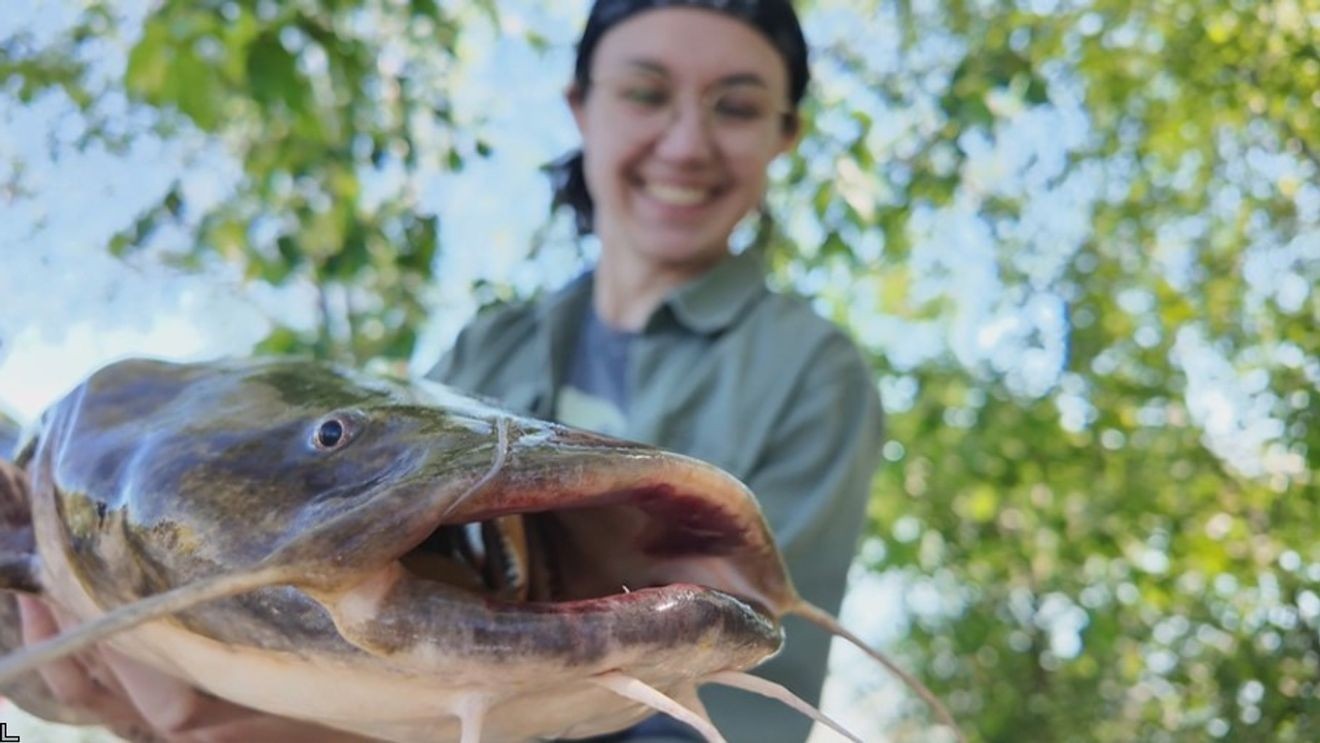
ONTARIO, Oregon (CBS2) — A boat hums to life, nets hit the water, and within minutes, fish begin rising to the surface of the Snake River.
It is part of a field lab that Treasure Valley Community College students participate in alongside the Oregon Department of Fish and Wildlife, using electrofishing to briefly stun fish for study and recording.
For students in the program, the work is tied to conditions impacting rivers across eastern Oregon.
“So we are part of a watershed management class. So that class basically goes over in our area, eastern Oregon. We have a lot of problems with runoff from agriculture, a lot of turbidity in the rivers, which increases temperature of the water,” said TVCC student Allen Crego.
That combination of runoff and warming water can affect which species can survive, something students are able to observe directly during the lab.
“It seems to have changed the habitat there. And so today it wasn’t as successful as it’s been in past years,” said Dave Banks, a district fish biologist with the Oregon Department of Fish and Wildlife.
Banks said variability like that is part of why the same stretches of river are sampled year after year, helping build a clearer picture of what is changing.
“That’s really what a lot of resource management is, is looking at that change over time,” he said.
The partnership between TVCC and Fish and Wildlife has been in place for years, giving students access to the kind of fieldwork they might not otherwise see early in their education.
“The program is really holistic; it involves a lot of different aspects of natural resource management,” said instructor Marcus Nichols. “Students in the program get a lot of exposure to a lot of different outdoor careers and fieldwork, not just fisheries.”
That exposure is intentional, and for some students, it helps narrow down what they want to pursue or what they do not.
“My biggest takeaway I don’t want to be a fish squeezer,” Crego said.
Even so, the lab gives students a better sense of how this kind of work is carried out in real conditions.
“I didn’t expect it to be so controlled, but they’re pretty organized, and they know what they’re doing,” Crego said.
And while the students are learning, the data they collect becomes part of a larger effort to monitor the river, something Oregon Fish & Wildlife do regularly.
“The research we do and the studies that take place at places like this benefit the entirety of not only the ecosystem, but the societies that live next to the ecosystem,” Crego said.
The lab remains part of a long-running collaboration between TVCC and the Oregon Department of Fish and Wildlife, combining classroom instruction with ongoing field research on the Snake River.