
The beaches of the Point Reyes National Seashore in Marin County, Calif., provide key habitat for the western snowy plovers.
Doug Michaels/Getty Images/iStockphoto
Biologists consider every single precious nest from snowy plovers, 2-ounce shorebirds protected under the Endangered Species Act. Storms, wind, dogs, ravens and beachgoers are among the many threats to the next generation’s survival.

On a beach in the Point Reyes National Seashore in Marin County, a designated monitoring team for the minuscule birds found three eggs in one nest on March 16. It marked the earliest start to the breeding season recorded in the area.
Article continues below this ad
The record-shattering March heat wave likely signaled the plovers to get started.
“When we get these early heat waves, it can kick-start the nesting season a bit earlier,” Parker Kaye, a biological science technician for the Point Reyes National Seashore Association, told SFGATE.
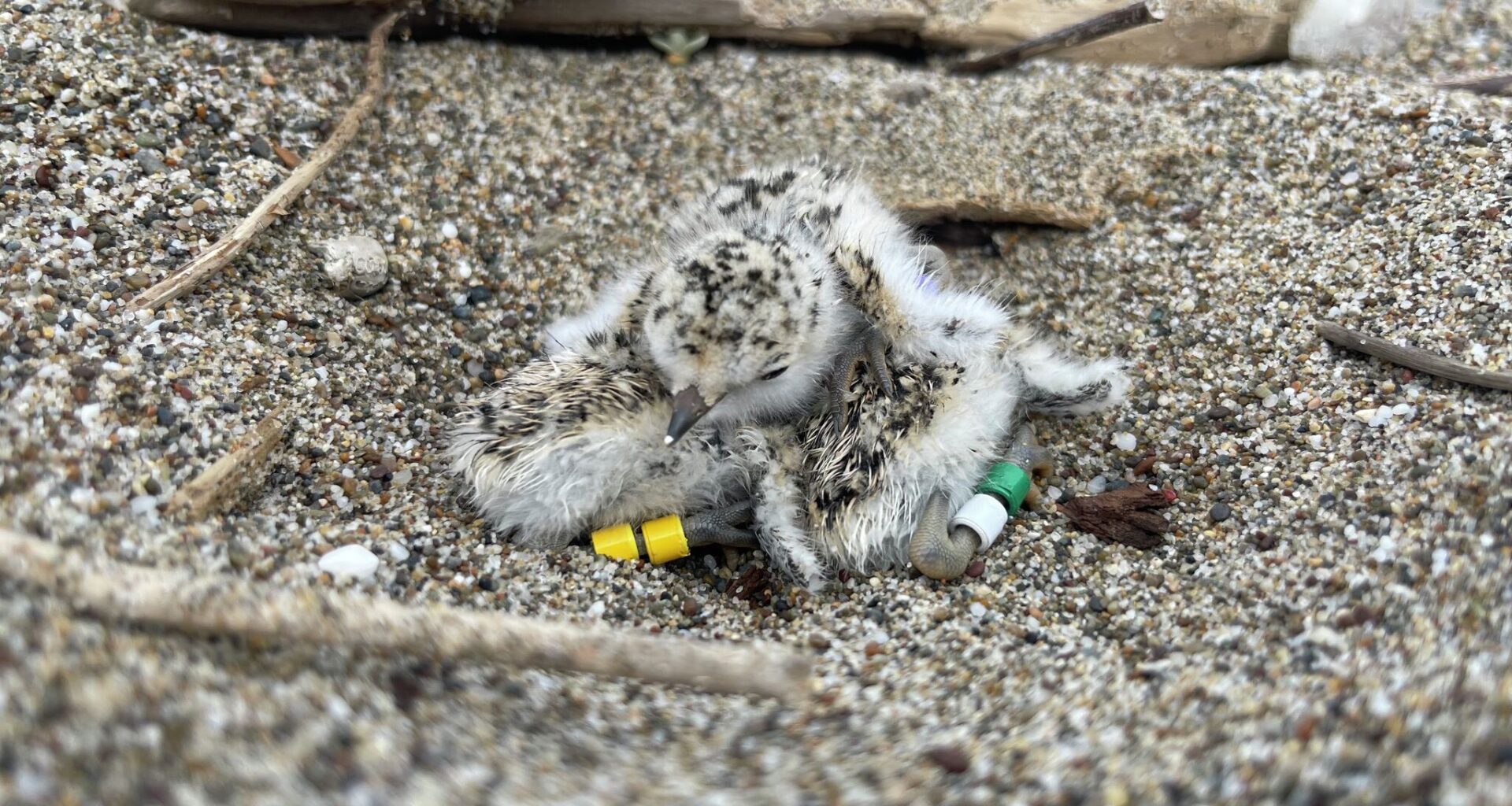
The first snowy plover chicks of 2026 blend in perfectly with the sand in the Point Reyes National Seashore in Marin County, Calif.
Parker Kaye/Point Reyes National Seashore Association
Although the many signs of premature spring in the West were unnerving for scientists, the unprecedented heat may have a silver lining for the plovers. In Point Reyes, the first nests do not typically appear until April.
Article continues below this ad
A western snowy plover chick gets its footing in the Point Reyes National Seashore in Marin County, Calif., in May 2026.
Parker Kaye/Point Reyes National Seashore Association
“This gives them more opportunities to nest, in a way,” Kaye said. “Females can have upward of three, sometimes up to five nests, depending if a nest successfully hatches or not. So now, they have a bit more time.”
In 1993, the U.S. Fish and Wildlife Service listed the western snowy plovers that breed along the coast from Washington to Baja California as threatened due to wild predators, people and habitat loss. Two years later, Point Reyes National Seashore, Point Blue Conservation Science and Point Reyes National Seashore Association formed a recovery effort. This has included protecting nests with cages, fencing off nesting areas on beaches and undertaking habitat restoration.
Article continues below this ad
On Saturday, an annual beach closure begins. From Memorial Day weekend through Labor Day, the stretch of sand between the North Beach parking lot and Abbotts Lagoon will close on weekends and federal holidays to give the plover chicks a fighting chance at survival. Additional parts of the shoreline can temporarily close through September, depending on the plover activity.
In the Bay Area, Point Reyes marks key breeding habitat, though the birds are known to scurry across many popular beaches such as Ocean Beach in San Francisco.
The three eggs in the first nest in Point Reyes have now hatched. As of Friday morning, Kaye reported five more active nests in the seashore. “And today, that number should drop to four, which would be a good thing because that means one of the nests has freshly hatched chicks,” he said.
A roughly 6-inch snowy plover stands tall in Southern California on July 8, 2020.
MediaNews Group/Getty Images
Last year, the researchers found around 50 breeding adults in the seashore. That’s still short of 64 breeding plovers, the recovery goal for Point Reyes. But it’s a positive sign, given the 39 birds recorded in 2016 and the rock-bottom low of nine in 2012.
Article continues below this ad

Stay informed, and entertained.
By signing up, you agree to our Terms Of Use and acknowledge that your information will be used as described in our Privacy Policy.
Conservation efforts seem to be working, with population increases reported at sites across the plovers’ Pacific Coast range, according to Carleton Eyster, an avian ecologist for Point Blue Conservation Science who specializes in plovers.
“We believe that we can get to our recovery goal in Point Reyes with a little bit more luck,” he told SFGATE. “But you can’t have all your eggs in one basket. Plovers need more than one site, which is why we need protections across their entire range.”