
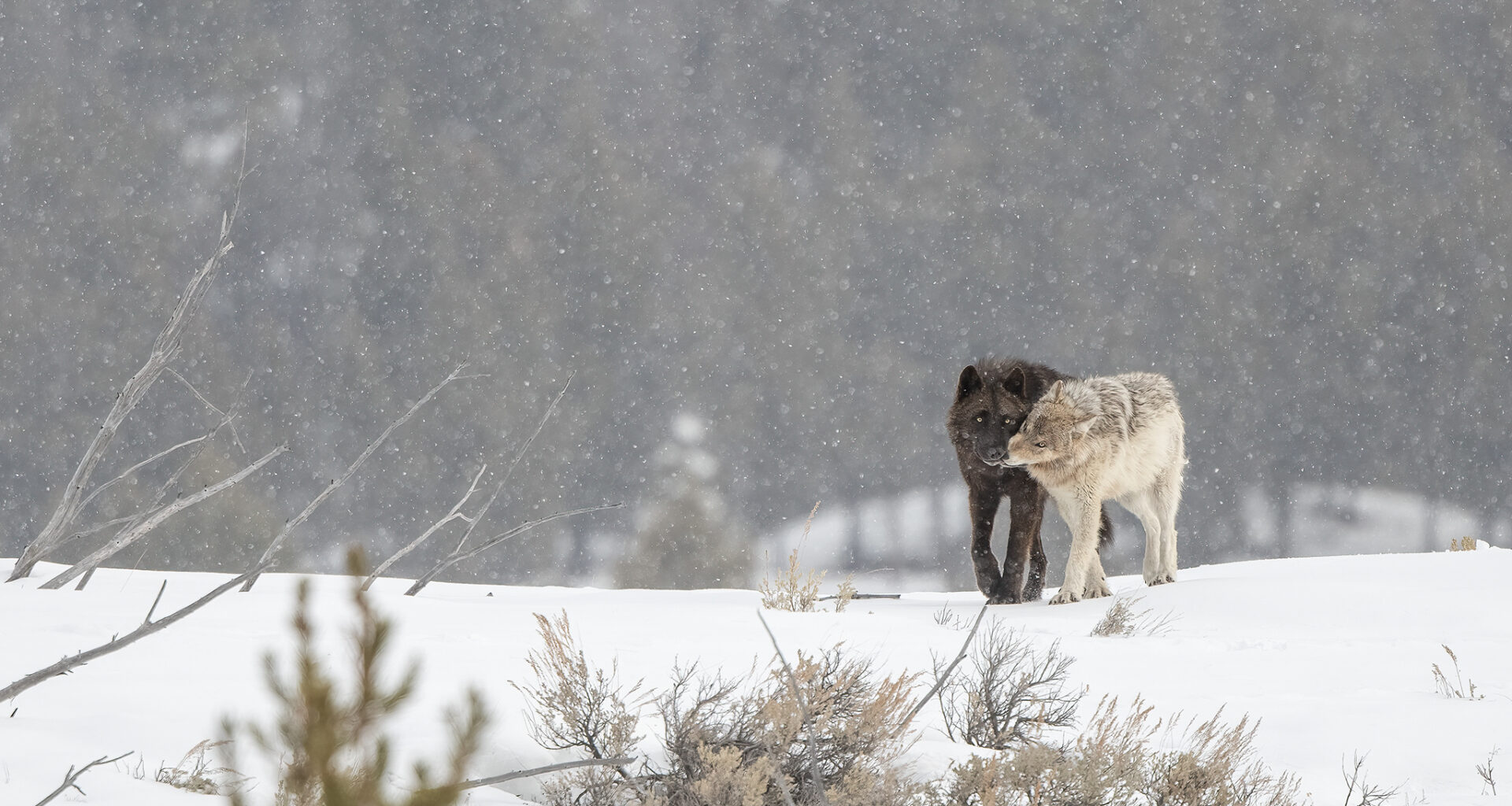
Yellowstone National Park’s famous wolf packs are facing an invisible threat that’s bringing the number of surviving pups to historic lows: a contagious viral disease called canine distemper.
At the end of 2025, Yellowstone National Park had 84 wolves dispersed among seven packs, according to spokesperson Linda Veress. This amounts to an approximately 16% decrease from the average end-of-year population over the past 15 years. Veress told SFGATE that the number of Yellowstone wolves fluctuates and that the park still supports a “healthy population,” but also acknowledged that the virus is likely taking a toll.
“Patterns suggest disease-related pup mortality,” she wrote.
A Wyoming Game and Fish Department report laid out declining numbers in more detail. Yellowstone wolf packs produced at least 36 pups in 2025. Only 17 of those pups — less than half — survived to the end of the year. The actual survival percentage may be even lower, “as several litters died before they could be counted … or were almost certainly undercounted,” the report reads.
No pups survived until December in several Yellowstone packs, including the Bliss Pack, Cougar Creek, Mollie’s and Wapiti packs. The Junction Butte pack, one of the most viewed wolf packs in the world, also saw low survival, according to Veress.
The survival of only 17 pups is the lowest recorded number since wolves were reintroduced to Yellowstone in 1995 and the first litters were born in 1996. The report says the decline is likely a “natural variation due to a combination of factors including a possible disease outbreak.”
Biologists confirmed canine distemper virus in Wyoming from packs outside Yellowstone in 2025. Only 37% of wolf pups born in northwestern Wyoming’s “trophy game management area” survived, according to the report. More than half of the wolves captured here, or 64%, tested positive for the virus.
Veress wrote that the park is in the process of analyzing blood samples. “We have not yet confirmed CDV, but Yellowstone biologists predict similar findings of CDV exposure which is likely a contributor to poor pup production in 2025,” she wrote.
Canine distemper, a measles-like virus, can infect domestic dogs, coyotes, foxes, raccoons, skunks and, of course, wolves. The Wyoming Game and Fish report calls it “a common, naturally-occurring infection which cycles through areas with carnivore populations.” The virus has been documented in Yellowstone four other times since 1995.
While adult and juvenile wolves can die from distemper, the virus primarily afflicts pups in their first year of life. An article in Yellowstone Science, a National Park Service publication, explains that outbreaks of the disease are “particularly lethal for young animals.” But once an animal survives the virus, it’s thought to be immune.
Overall, Yellowstone experts aren’t too worried about the disease. “Past outbreaks show that survivors develop immunity and populations rebound,” Veress wrote. Wolves in the park are currently denned up with pups, and biologists will continue monitoring the packs — and their pups’ survival — throughout the summer and fall.